

This article was written and reviewed by Serge, MSc. I hold degrees in Plant Biology, Environmental Biology and Biogeochemistry, with research experience in plant physiology, ecosystem science, and field-based environmental studies. Every article on this site is grounded in real academic training and genuine scientific research.
Affiliate disclosure: This site has affiliate links, including Amazon. As an Amazon Associate I earn from qualifying purchases, at no extra cost to you.

Walk through any thriving herb garden and you will almost certainly find mint somewhere, probably somewhere it was not supposed to be.
This herb has a reputation for being unstoppable, and that reputation is earned. But here is what most gardening guides miss: mint is not difficult to manage once you understand the biology driving its behaviour. Get that right and growing mint becomes one of the most rewarding things you can do in a kitchen garden.
I have studied plant physiology and biogeochemistry, and mint is one of those plants that genuinely rewards a scientific approach. Let me show you what I mean.
The Real Reason Mint Takes Over Everything
Most plants reproduce through seeds. Mint has a different strategy entirely.
Beneath the soil, mint produces rhizomes, horizontal stems that crawl outward in every direction, generating new shoots wherever they find an opportunity. This underground network is persistent, resilient, and almost impossible to eliminate once it is established. A fragment of rhizome the size of your finger, left behind after weeding, will become a new plant within weeks.
From a plant physiology standpoint this is a textbook example of vegetative propagation, a strategy that prioritises rapid colonisation of available space over genetic diversity. The plant is not being aggressive for the sake of it. It is doing exactly what millions of years of evolution shaped it to do.
Once you see mint as a plant following its biological programming rather than a weed behaving badly, the management strategy becomes obvious: you give it a boundary it cannot cross.
Picking Your Mint Variety
The mint family (Mentha spp.) includes more than 20 species and an enormous number of cultivated varieties. Here are the ones most relevant to home gardeners:
Spearmint (Mentha spicata), gentle and sweet, the go-to choice for cooking, cold drinks, and everyday use
Peppermint (Mentha x piperita), a natural hybrid with significantly higher menthol levels, producing that sharp cooling sensation associated with tea and confectionery
Apple mint (Mentha suaveolens), rounded fuzzy leaves, a softer flavour, and noticeably better tolerance of dry conditions than other varieties
Chocolate mint, a peppermint cultivar producing a mild cocoa undertone in the aroma, popular for use in sweet dishes
Corsican mint (Mentha requienii), extremely low growing, releases fragrance when walked on, suited to planting between paving stones
Spearmint is the variety I recommend for anyone starting out. It establishes quickly, produces generously, and has a flavour profile that works across a wide range of culinary uses.
Finding the Right Growing Spot
In the garden:
A position receiving direct morning light with shade during the hottest part of the afternoon suits mint well. Prolonged exposure to intense heat causes leaf stress and triggers increased production of bitter secondary compounds, the same physiological process that makes basil turn bitter indoors when conditions become too warm.
Soil quality matters more than most guides suggest. Mint performs best in rich, moisture-retentive soil with a pH sitting between 6.0 and 7.0. Waterlogged or bone-dry conditions both cause problems.
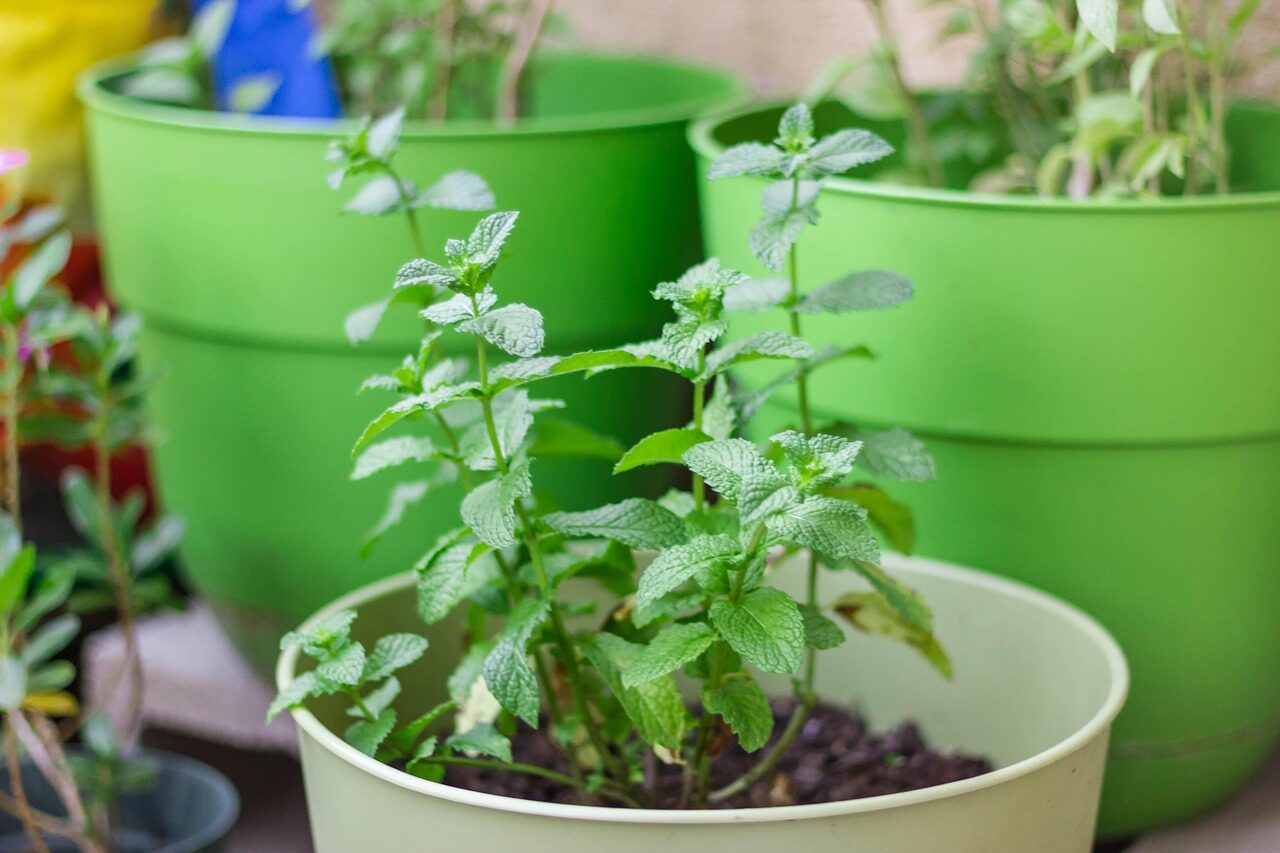
The single most important decision you will make when growing mint outdoors is containment. Plant it inside a large pot buried flush with the soil surface, leaving just a centimetre or two of rim above ground to block rhizome escape. A bottomless bucket works equally well. Without a physical barrier mint will have colonised the surrounding beds before the season ends.
On a windowsill:
Indoor mint needs more light than people expect. A south or west facing window providing 4 to 6 hours of brightness daily is the minimum for productive growth. East facing windows often fall short. If your available light is limited, a basic LED grow light running for 12 hours a day is a straightforward and inexpensive solution.
Choose a container with good depth, at least 20 cm to accommodate root development. Unglazed terracotta is particularly good for mint because it breathes, allowing excess moisture to escape and reducing the risk of root problems.
Getting Mint Established
Water propagation:
Select a healthy stem around 12 cm long and cut cleanly just beneath a leaf node. Strip away any leaves on the lower half of the stem and suspend it in a jar of clean water on a bright windowsill. Within one to two weeks a root system will emerge from the submerged nodes. Refresh the water every few days to prevent stagnation. Transfer to a soil-filled pot once the roots reach a couple of centimetres in length.
Division:
A single pot of mint from a garden centre contains enough plant material to establish three or four separate plants. Pull the root ball apart carefully, ensuring each section retains both roots and shoots, and pot each division individually. Mint re-establishes from division extremely reliably.
Direct from supermarket stems:
Fresh mint purchased for cooking can sometimes be persuaded to root if the stems still carry intact leaf nodes and have not been chemically treated. Trim to around 10 cm, strip lower leaves, and place in water as described above. Success is not guaranteed but it works often enough to be worth attempting before buying new plants.
Starting from seed:
Seed germination is slow and unpredictable compared to vegetative methods. Seedlings take considerably longer to reach a harvestable size. Cuttings or division will always give faster, more reliable results.
Day to Day Care
Consistent soil moisture is the key to keeping mint healthy. Check the surface regularly and water before the soil dries out completely. During warm dry spells outdoor mint may need attention daily. Plants in terracotta containers lose moisture faster than those in plastic or glazed pots and will need more frequent checking.
Feeding requirements are modest. Apply a balanced liquid fertilizer lightly once a month through the active growing season. Resist the temptation to push growth with heavy nitrogen feeding. Mint produces its characteristic flavour compounds, primarily menthol and carvone, as secondary metabolites, and these accumulate most effectively when the plant is not being pushed to grow at maximum speed. Well-fed but not over-fed plants consistently produce better flavour than heavily fertilized ones.
How to Harvest Properly
Regular harvesting is one of the best things you can do for a mint plant. It prevents the plant becoming tall and woody, encourages lateral branching, and keeps leaf production active.
Always cut stems at a point just above a pair of leaves rather than stripping individual leaves from the plant. This single adjustment makes a significant difference to long-term productivity. Work in the morning once surface moisture has evaporated, this is when essential oil concentration in the leaves peaks.
Limit each harvest to no more than a third of the total plant. Mint recovers quickly but removing too much at once slows regrowth noticeably.
Watch for flower development and remove buds as soon as they appear. Flowering is a signal that the plant is shifting its biological priorities from vegetative growth to reproduction. Leaf production slows, essential oil content drops, and the flavour weakens. Removing flowers redirects the plant’s energy back into the leaves.
Problems Worth Knowing About
Mint rust: Distinctive orange pustules appearing on the undersides of leaves indicate a fungal infection. Remove all affected material immediately, improve airflow around the plant, and switch to watering at soil level rather than overhead.
Aphid colonies: New growth at stem tips is a favourite target. Small infestations can be removed physically. A dilute solution of liquid soap and water applied directly to affected areas is effective for larger colonies without harming the plant.
Stretched, weak growth: Almost always a light deficiency. Relocate the plant to a brighter position or supplement with artificial lighting. Cutting the plant back hard at the same time stimulates compact fresh growth.
Flavour loss: Investigate nitrogen levels first, excessive feeding is the most common cause. Insufficient light and infrequent harvesting are the next most likely factors. Reduce feeding, improve light conditions, and harvest more frequently to encourage a constant supply of young, oil-rich leaves.
FAQs
Should I grow peppermint or spearmint?
Think about how you plan to use it. Spearmint suits cooking and fresh preparations, its mild sweetness works in salads, drinks, and savoury dishes without overwhelming other flavours. Peppermint is better suited to hot drinks, baking, and anything where a strong menthol character is desirable. If the choice is genuinely difficult, grow both in separate containers and discover which you reach for more often.
Can mint grow from cuttings placed in water?
Yes, and it is one of the most satisfying propagation experiments you can do on a kitchen windowsill. A healthy stem in a jar of water will produce visible roots within one to two weeks. Keep the water fresh by changing it every couple of days. Move to soil once the root system is a few centimetres long and the plant will establish quickly.
Will mint spread uncontrollably in the ground?
Without physical containment, yes. The rhizome network expands outward continuously through the growing season, sending up new shoots as it travels. A single uncontained plant can colonise a surprisingly large area within one or two seasons. A buried container is the standard and most reliable solution.
When is the right time to plant mint outside?
Spring planting after the final frost is ideal, once soil temperatures have risen above 10°C. Mint can also go in during early autumn in regions with mild winters, giving it time to establish a root system before growth slows for the season. Indoor planting has no seasonal restriction provided adequate light is available.
Does mint do better in containers or open soil?
Containers give most home gardeners better results because they eliminate the spreading problem entirely and make watering and soil management straightforward. Open ground planting produces more vigorous growth but requires a containment barrier. The combination of a large container buried in the ground gives the advantages of both approaches.
Where does mint perform best geographically?
Mint is naturally adapted to temperate climates with reliable moisture and moderate temperatures. It performs particularly well across northern Europe, the UK, and in cooler regions of North America including the Pacific Northwest and the northeastern states. In hot dry climates it requires afternoon shade and more attentive watering to remain productive.
Can supermarket mint stems be rooted at home?
Frequently yes, though results vary depending on how the stems were handled before sale. Fresh stems with visible leaf nodes that have not been treated with growth inhibitors will often root successfully in water within two weeks. It is always worth trying before purchasing new plants separately.
Does mint return after winter?
Yes. Mint is perennial and overwinters through its underground rhizome network even when above-ground growth dies back completely. New shoots emerge reliably each spring. In regions with harsh winters a layer of organic mulch applied over the root zone provides useful insulation for the rhizomes.
Can mint survive in a shaded position?
It will survive but will not thrive. Shade reduces growth rate, leaf size, and crucially the concentration of flavour compounds in the leaves. A minimum of four hours of reasonable light daily is needed for mint that is actually worth harvesting. Deep shade produces thin, flavourless growth that is of little culinary value.
Why has my mint lost its flavour?
The most common causes are flowering, excessive nitrogen fertilization, and insufficient light. Check whether the plant has been allowed to flower, if so, remove all flower heads immediately. Review your feeding routine and reduce nitrogen inputs. Ensure the plant is receiving adequate light. Fresh young growth produced after cutting back an overgrown plant almost always has stronger flavour than old established stems.