


This article was written and reviewed by Serge, MSc. I hold degrees in Plant Biology, Environmental Biology and Biogeochemistry, with research experience in plant physiology, ecosystem science, and field-based environmental studies. Every article on this site is grounded in real academic training and genuine scientific research.
Affiliate disclosure: This site has affiliate links, including Amazon. As an Amazon Associate I earn from qualifying purchases, at no extra cost to you.
Most gardeners know plants need nitrogen to grow. Yellowing leaves, stunted growth, pale color. These are the classic signs of nitrogen deficiency. The usual answer is to reach for a fertilizer bag.
But here is what most gardening guides do not tell you: the atmosphere above your garden is 78% nitrogen. The problem is not a lack of nitrogen. It is that plants cannot access it directly. That job belongs to a group of specialized soil bacteria that have been doing it for billions of years.
As a plant scientist with solid background in Environmental Biology and Biogeochemistry, nitrogen cycling was a core part of my academic training. Understanding how nitrogen moves through soil, plants, and the atmosphere is fundamental to understanding why some gardens thrive with minimal inputs while others constantly struggle despite heavy fertilization.
What Is Nitrogen Fixation?
Nitrogen fixation is the biological process by which certain bacteria convert atmospheric nitrogen gas (N₂) into ammonia (NH₃), a form plants can actually absorb and use to build proteins, enzymes, and chlorophyll.
The chemistry involved is remarkable. The nitrogen molecule (N₂) is held together by one of the strongest chemical bonds in nature. Breaking it requires enormous energy. These bacteria produce an enzyme called nitrogenase that does exactly that, at normal soil temperatures, without industrial equipment, using energy derived from plant sugars or organic matter in the soil.
By comparison, the industrial Haber-Bosch process that produces synthetic nitrogen fertilizer requires temperatures of 400 to 500°C and pressures of 150 to 300 atmospheres. Nature solved this problem billions of years ago with a microscopic organism.
Two Types of Nitrogen-Fixing Bacteria
Symbiotic Nitrogen Fixers
The most efficient nitrogen fixers live inside the roots of specific plants in a symbiotic partnership. The best known are Rhizobium bacteria, which colonize the roots of legumes including beans, peas, clover, alfalfa, and lentils.
When Rhizobium bacteria infect a legume root, the plant responds by forming small swellings called nodules. Inside these nodules, the bacteria fix atmospheric nitrogen and deliver it directly to the plant. In return, the plant supplies the bacteria with carbohydrates from photosynthesis. It is a direct exchange of nitrogen for sugars.
A healthy stand of clover or beans can fix between 100 and 300 kg of nitrogen per hectare per growing season, entirely for free, with no synthetic inputs required.
Non-legume trees also form symbiotic nitrogen-fixing partnerships. Alder trees (Alnus spp.) associate with Frankia bacteria and are among the most powerful nitrogen fixers in temperate ecosystems. This is why alder is often found colonizing disturbed soils and riverbanks. It enriches the soil as it grows.
Free-Living Nitrogen Fixers
A second group of nitrogen-fixing bacteria live independently in the soil without a plant host. These include Azotobacter, Clostridium, and Cyanobacteria in aquatic systems.
Free-living fixers contribute less nitrogen than symbiotic types but still play a meaningful role in soil fertility, particularly in undisturbed soils rich in organic matter. They are part of the reason that natural ecosystems maintain fertility without any external inputs.
What Happens to Fixed Nitrogen in the Soil
Once nitrogen is fixed as ammonia, it enters the broader nitrogen cycle:
Bacteria convert ammonia to nitrite and then nitrate through a process called nitrification
Plants absorb nitrate through their roots and use it to build proteins and chlorophyll
When plants and animals die, decomposer organisms break down organic nitrogen back into ammonia, returning it to the cycle
Some bacteria perform denitrification, converting nitrate back to nitrogen gas and releasing it to the atmosphere.
This cycle is continuous and self-sustaining in healthy, undisturbed soils. The problem in most gardens is that common practices including synthetic fertilizers, tilling, and bare soil disrupt the bacterial communities that drive it.
How to Use Nitrogen Fixation in Your Garden
Understanding this biology gives you practical tools to reduce fertilizer dependence and build long-term soil fertility.
Grow legumes regularly.
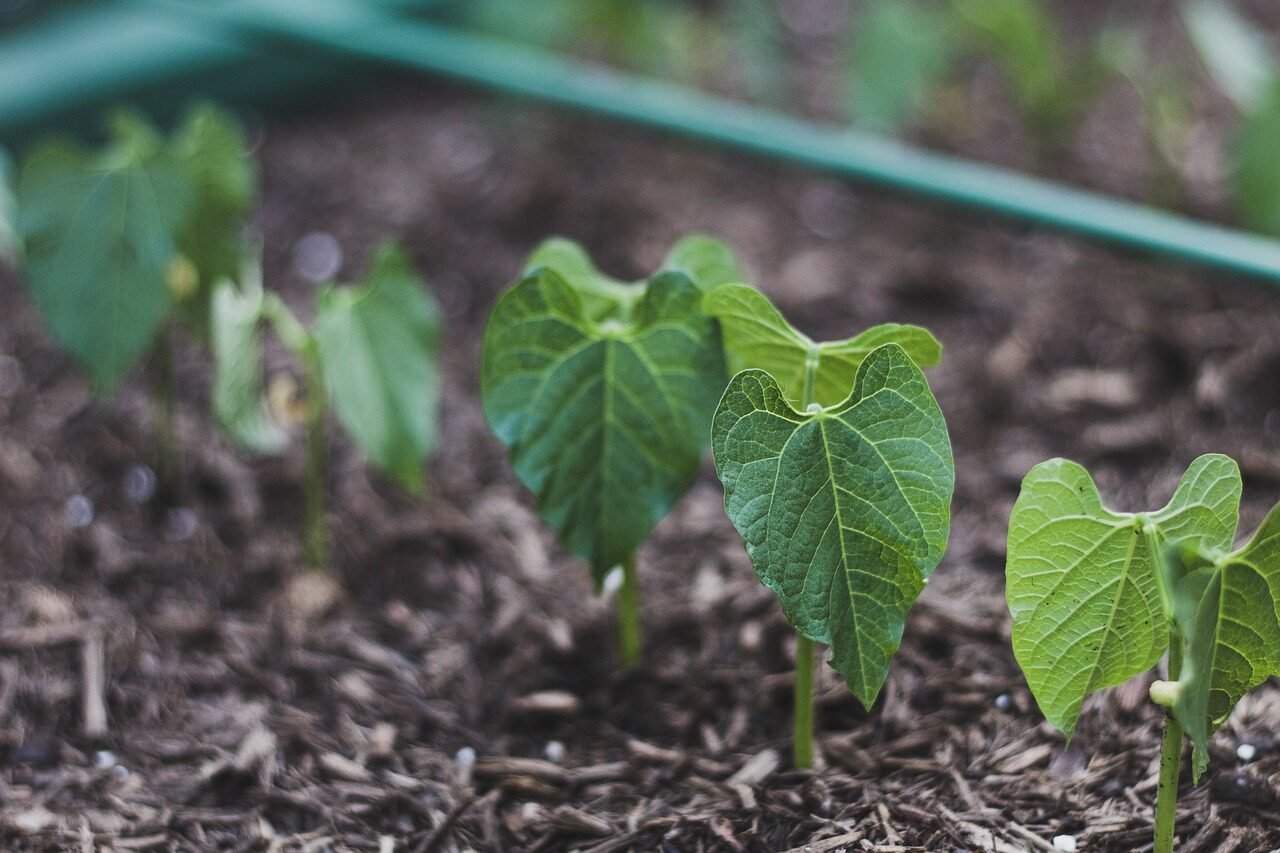
Beans, peas, clover, and alfalfa all fix nitrogen. Rotating legumes into your vegetable beds each season deposits nitrogen for the following crop. After harvesting, cut the plants at soil level rather than pulling them. The roots and nodules decompose and release their stored nitrogen directly into the soil.
Use clover as a cover crop.
White or red clover grown between seasons is one of the most effective and low-cost ways to add nitrogen naturally. It also protects soil structure, feeds soil biology, and suppresses weeds.
Try rhizobial inoculants for new plantings.
In soils that have not grown legumes before, the specific Rhizobium strains needed may not be present. Applying a legume inoculant, available as a seed coating or powder, introduces the right bacteria and ensures nodule formation from the start.
Avoid excess synthetic nitrogen.
Just like high phosphorus suppresses mycorrhizal fungi, high nitrogen in the soil signals to legumes that fixation is unnecessary. The plant reduces its investment in nodule formation and the bacterial partnership weakens. If you are growing legumes specifically for nitrogen fixation, do not fertilize them with nitrogen.
Protect soil organic matter.
Free-living nitrogen fixers depend on organic carbon in the soil for energy. Compost, mulch, and reduced tillage all support the broader bacterial community that contributes to soil nitrogen cycling.
Frequently Asked Questions
Which plants fix nitrogen?
The most important nitrogen-fixing plants for gardeners are legumes including beans, peas, lentils, chickpeas, clover, alfalfa, and lupins. Among trees, alder (Alnus spp.) is the most significant nitrogen fixer in temperate climates. Wisteria, a popular garden climber, also fixes nitrogen through a Rhizobium partnership.
Can I see nitrogen-fixing nodules on my plants?
Yes. If you carefully pull up a healthy bean or pea plant and examine the roots, you will see small round or oval bumps attached to the roots. These are the nodules. Slice one open and if it shows a pink or reddish interior, it is actively fixing nitrogen. A white or grey interior means the nodule is not yet active or has stopped functioning.
Do all soils have nitrogen-fixing bacteria?
Most soils contain some free-living nitrogen fixers, but the specific Rhizobium strains needed for legume symbiosis may be absent in soils that have not grown legumes before, or in heavily disturbed or sterilized soils. This is why inoculants are particularly useful in new garden beds or raised beds filled with commercial potting mix.
Is nitrogen fixation affected by soil pH?
Yes, significantly. Most nitrogen-fixing bacteria including Rhizobium function best in a pH range of 6.0 to 7.0. In acidic soils below pH 5.5, nodule formation is reduced and nitrogen fixation declines. If you are growing legumes on acidic soil, liming to raise pH is often more effective than applying nitrogen fertilizer.
How does nitrogen fixation relate to fertilizer use?
Nitrogen fixation is nature’s alternative to synthetic nitrogen fertilizer. A well-managed rotation including legumes and cover crops can supply a significant portion of a garden’s nitrogen needs without purchased inputs. However, it requires planning since fixation happens over a season, not overnight. For immediate nitrogen deficiency in established plants, a fast-acting organic source like fish emulsion or composted manure is more practical while the longer-term biological system is being built.