

This article was written and reviewed by Serge, MSc. I hold degrees in Plant Biology, Environmental Biology and Biogeochemistry, with research experience in plant physiology, ecosystem science, and field-based environmental studies. Every article on this site is grounded in real academic training and genuine scientific research.
Affiliate disclosure: This site has affiliate links, including Amazon. As an Amazon Associate I earn from qualifying purchases, at no extra cost to you.

Basil is one of the most common indoor herbs, yet it is also one of the most misunderstood. When its leaves begin to taste bitter indoors, the usual explanation is care mistakes such as overwatering or poor light. That interpretation is incomplete. Bitterness in basil is not a simple cultivation error. It is a physiological response to how herbs regulate metabolism under controlled indoor environments.
Among culinary herbs, basil is particularly sensitive because its flavor profile is directly tied to how it manages environmental inputs such as airflow, light variation, and temperature stability. When these signals are altered indoors, its internal chemistry shifts in a way that becomes detectable in taste.
This makes basil a useful reference point for understanding how many common herbs behave under indoor conditions, not just basil alone.
When basil is moved indoors, the change is not just spatial. It is physiological. The plant enters an environment that removes most of the variability it evolved to interpret. That shift alone is enough to alter its chemical output.
Indoor environments remove the regulatory signals herbs depend on
In natural environments, basil exists in a constantly shifting system. Airflow is not stable. Light intensity changes throughout the day. Temperature and humidity fluctuate in response to weather, soil conditions, and surrounding vegetation. These variables are not background noise for the plant. They are regulatory inputs that shape how it manages gas exchange, water loss, and metabolic allocation.
Indoors, that variability is compressed. Air becomes static. Light is predictable in both intensity and spectrum. Temperature remains relatively constant. From a human perspective, this looks like an optimized environment. From a plant physiology perspective, it is a reduction in environmental information.
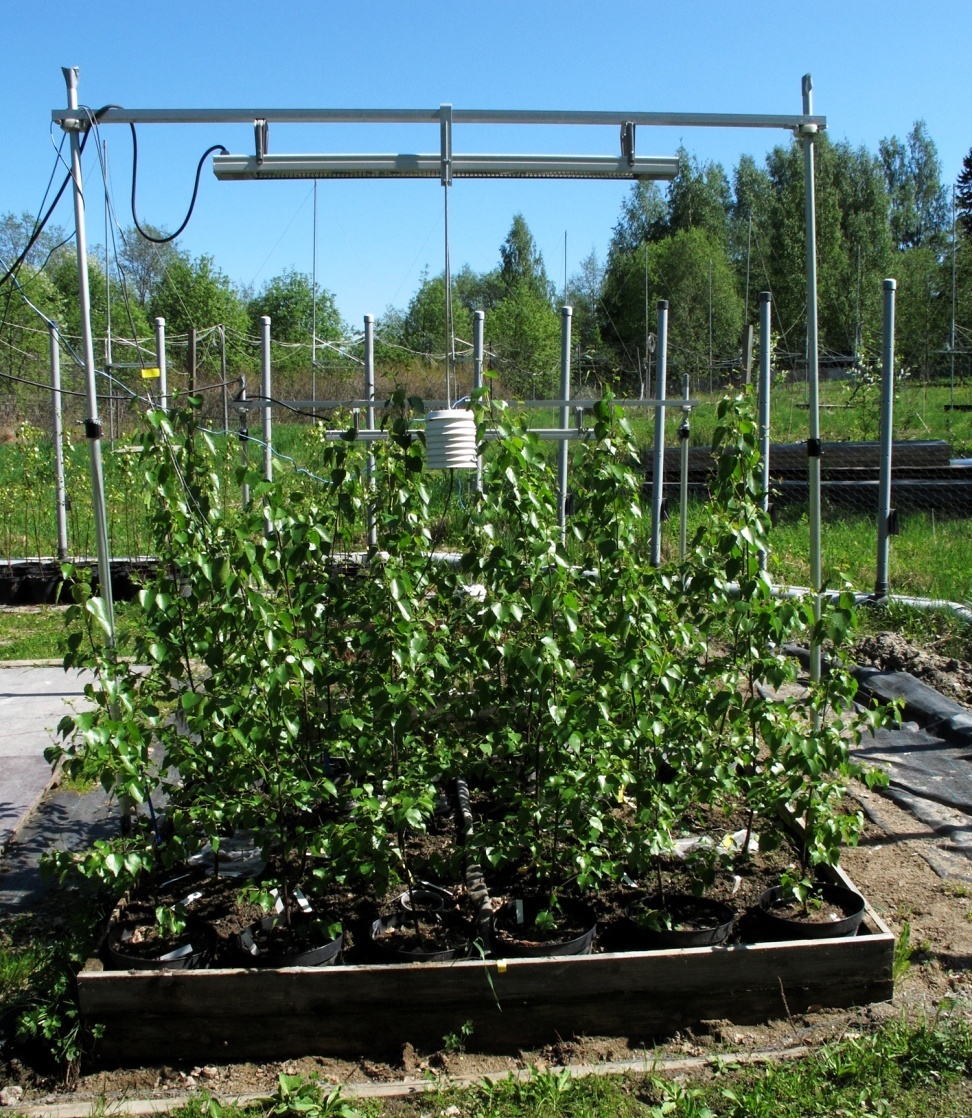
In my field experiments with Betula pendula under controlled warming and elevated tropospheric ozone conditions, a similar principle became very clear. Even when average conditions remained within what would be considered moderate stress, plants still adjusted their internal processes significantly.
The key driver was not visible damage but the removal or alteration of environmental variability itself. Small shifts in temperature and atmospheric composition were enough to change carbon allocation patterns between growth and maintenance, even when external symptoms were minimal.
This same principle applies broadly to herbs grown indoors. They are not reacting to extremes, but to the absence of environmental structure.
Plants do not wait for failure to respond. They continuously recalibrate based on environmental conditions.
Bitterness as a metabolic outcome of altered gas exchange in herbs
The bitterness observed in indoor basil is primarily linked to changes in secondary metabolite production. These compounds, including phenolics and volatile oils, are part of the plant’s defense and regulation system. Their synthesis is not constant. It shifts depending on environmental conditions that influence gas exchange and energy balance.
One of the most important but least visible indoor factors is airflow. When air movement is limited, a stable boundary layer forms around the leaf surface. This reduces the efficiency of both CO₂ uptake and water vapor release. Stomatal behavior adjusts in response, often shifting toward more conservative opening patterns.
This creates a subtle imbalance. Light energy continues to reach the leaf surface, but carbon assimilation becomes less efficient relative to that input. The plant is operating under a mismatch between energy availability and carbon fixation capacity. The response is to redirect metabolic activity away from growth and toward protective chemistry.
Bitterness is the result of that shift. It is not a flaw in basil specifically, but a general expression of how herbs regulate metabolic stability under constrained airflow conditions.
What my field experiments reveal about hidden physiological shifts in plants
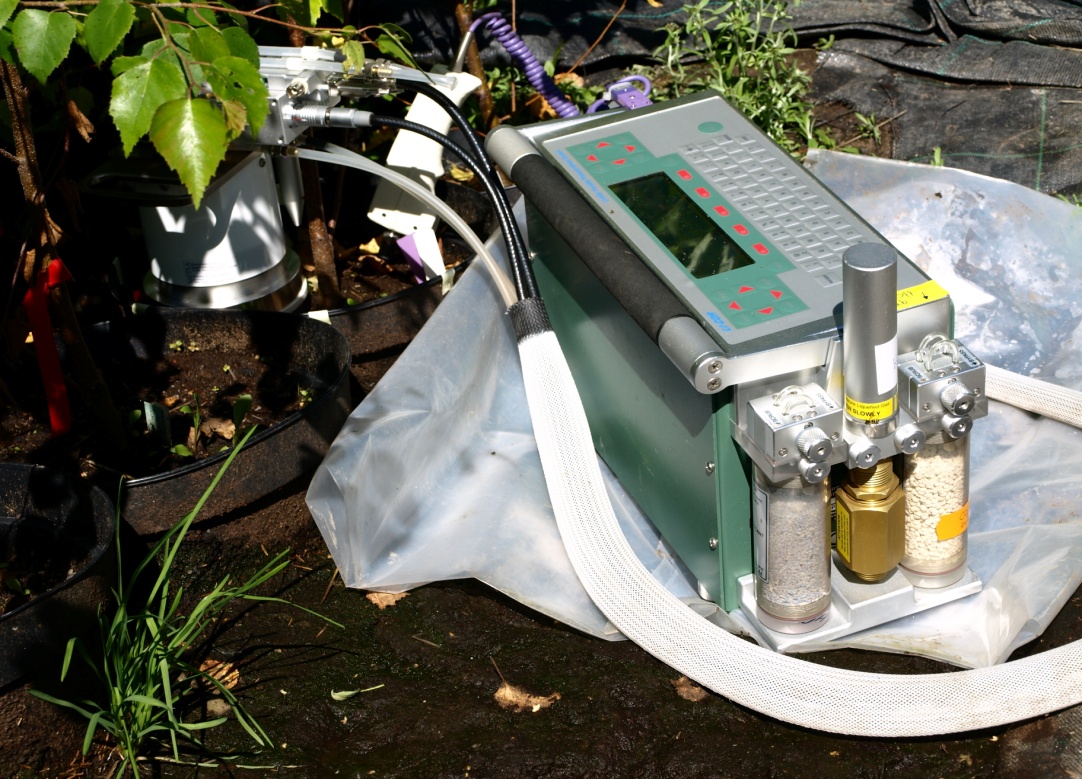
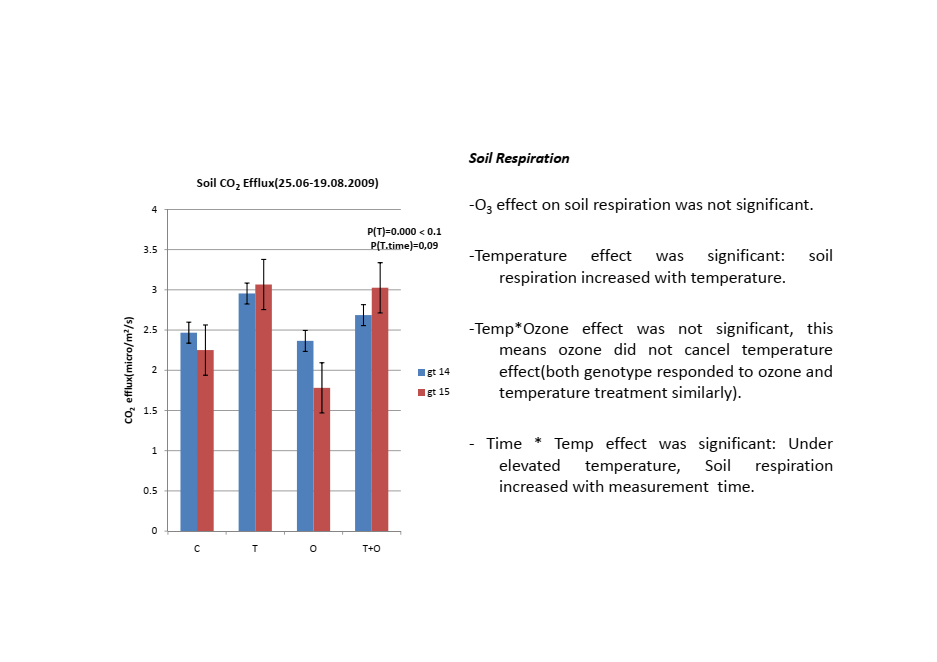
In my field experiments with silver birch, plant responses to environmental change rarely appeared first in visible structure. Under combined warming and ozone exposure, stem growth, leaf area, and soil respiration all changed, but not at the same rate or in the same layer of the system.
Soil respiration responded strongly to temperature increases, indicating a shift in belowground metabolic activity. Ozone introduced genotype-dependent constraints that were not immediately visible in aboveground morphology. Instead, carbon allocation patterns shifted internally between growth, maintenance, and stress buffering.
This matters for herbs because it shows a general rule: sensory changes like flavor are late-stage expressions of internal physiological adjustment, not early warning signs.
Indoor microclimates create persistent low-level stress conditions for herbs
Even in stable rooms, herbs are exposed to uneven microclimates. Light sources generate localized heat zones. Windows introduce daily radiation shifts. Electronics and appliances create subtle thermal gradients.
These variations are small, but plants integrate them over time. In field systems, even temperature differences of less than one degree Celsius were sufficient to alter growth and respiration dynamics when applied consistently. What matters is not intensity alone but persistence and pattern.
Indoors, basil and similar herbs experience a compressed environmental system with irregular micro-variation layered on top of overall stability. This combination often results in subtle metabolic adjustments that prioritize internal regulation over growth efficiency.
Secondary metabolite production becomes part of that adjustment.
Basil as a representative herb tuned to environmental variability
Basil is often described as adaptable, but its adaptation is specifically to variability. Many herbs share this trait. They evolved in environments where wind, light fluctuation, and humidity change continuously. These are not stressors in isolation. They are the information system the plant uses to regulate itself.
When grown indoors, herbs still operate under the same biological logic, but the input signals are reduced and flattened. The plant responds by adjusting internal chemistry to compensate for missing environmental structure. Flavor changes, including bitterness, are one of the most direct outputs of that compensation.
Flowering and chemical shifts in culinary herbs
When basil enters flowering, its internal resource distribution shifts. Energy is redirected from leaf maintenance toward reproductive development. This change alters leaf chemistry because secondary metabolites are no longer balanced purely around growth efficiency.
The result is a stronger and often more bitter flavor profile. This is not degradation. It is a predictable phase shift in plant allocation strategy that applies broadly across many herb species.
Bitterness as early physiological information in herbs
One of the key principles in plant systems is that visible or sensory changes appear late in the regulatory chain. Before any structural change occurs, internal chemistry has already shifted.
Bitterness in basil is one of those early signals. It reflects adjustments in gas exchange, carbon balance, and metabolic allocation before any visible decline is present. In field systems, similar early-stage shifts occur long before morphological changes can be measured.
Understanding this makes herb flavor variation indoors more predictable rather than random.
Summary
When basil turns bitter indoors, it is not indicating failure. It is reflecting how herbs interpret controlled environments through metabolism. Reduced airflow, altered light dynamics, and compressed variability all shift regulatory balance within the plant.
This behavior is not unique to basil. It is representative of how many culinary herbs respond to indoor conditions where environmental structure is simplified.
The result is a change in chemical expression that becomes visible in flavor.
Once understood this way, basil serves as a clear model for interpreting how herbs behave under indoor cultivation conditions, where environmental control replaces natural variability.
Frequently Asked Questions
Why does basil taste bitter indoors?
Bitter taste in indoor basil is mainly caused by reduced airflow and altered gas exchange. These conditions shift how the plant allocates energy, increasing protective secondary compounds that change flavor.
Can basil become bitter even if it looks healthy?
Yes. Bitterness is not always linked to visible stress. Basil can appear healthy while still adjusting its internal chemistry in response to subtle environmental differences.
Does basil turn more bitter after flowering?
Yes. During flowering, basil reallocates energy from leaves to reproduction. This naturally increases the concentration of secondary compounds, which intensifies bitterness.
Why does indoor basil often turn yellow before it tastes different?
Yellowing is an earlier physiological signal related to chlorophyll and photosynthetic adjustment. Flavor changes typically appear later in the stress response sequence.
Why does basil turn black in the fridge?
Basil is sensitive to cold temperatures. Refrigeration causes chilling injury, breaking down cell structure and leading to dark discoloration.
Can basil grow indoors year-round without losing quality?
Yes, but only if airflow, light quality, and temperature stability are sufficient to prevent chronic metabolic stress responses.
Why does basil taste different even when care seems correct?
Because basil responds to environmental structure, not just visible care inputs. Small differences in airflow, light distribution, or microclimates can significantly alter its internal chemistry.