



This article was written and reviewed by Serge, MSc. I hold degrees in Plant Biology, Environmental Biology and Biogeochemistry, with research experience in plant physiology, ecosystem science, and field-based environmental studies. Every article on this site is grounded in real academic training and genuine scientific research.
Affiliate disclosure: This site has affiliate links, including Amazon. As an Amazon Associate I earn from qualifying purchases, at no extra cost to you.
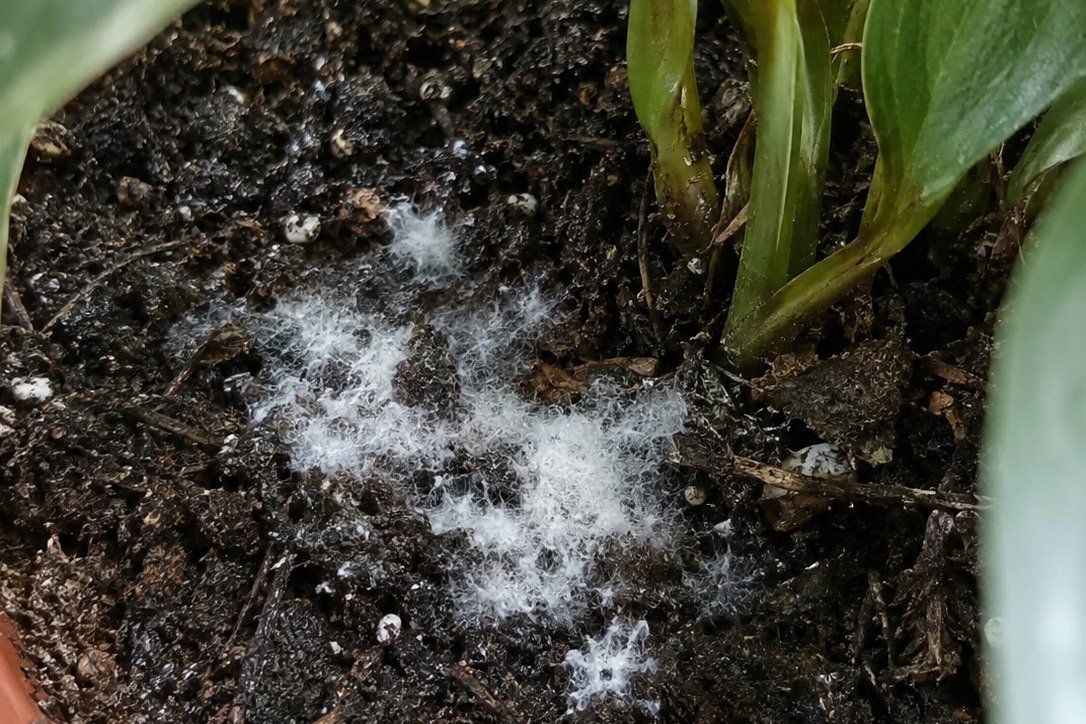
You water your plant, get on with your week, and next time you look there’s a patch of fuzzy white stuff spreading over the soil. It looks like the plant is rotting from the top, and your first thought is to panic or throw it out.
Don’t…
Nearly every time, this is harmless. Let me show you what it is and what to do.
This is one I can clear up fast, because it’s close to what I studied. I spent time on soil biology and the way fungi break things down in the ground, and separately on how microbes behave inside our homes. So when I say that white fuzz isn’t out to hurt your plant, I’m not guessing.
What the white fuzz is
That white, cottony growth is a type of fungus that feeds on dead and rotting bits in the soil, old root, bark and peat in your potting mix. The important word is dead. It doesn’t feed on living plant tissue, so it leaves your plant alone. It’s doing the same thing fungi do on the ground in a wood, slowly breaking down dead material.
And here’s what most people don’t realise: this fungus is a normal part of healthy soil. As it breaks that dead material down, it puts nutrients back into the soil for the roots to use. I studied how this works, how these fungi turn dead matter back into plant food, and it’s one of the ways soil stays healthy and fertile.
So the fuzz on top isn’t a sign your plant is sick. It’s a sign the soil is alive and doing its job. University of Minnesota Extension makes the same point: these fungi live only on decaying plant matter, so they don’t harm living plants.
So the mould itself isn’t the problem. But it is trying to tell you something, and that part is worth knowing.
Why it showed up
This kind of fungus grows when the soil is damp, still, and out of the light. So when you see it, it’s telling you the soil is staying wetter than it should. A few things cause that, and often more than one at a time:
The soil stays too wet. This is the main one. If you water before the top has dried out, or the pot drains badly, the surface stays damp long enough for the fungus to grow. It’s the same problem behind overwatering and the harm it does.
The air doesn’t move. A plant in a quiet corner with no air moving past it keeps moisture on the surface for much longer.
Not much light. A plant in a dim spot dries slowly, so the soil stays damp for days.
A humid room. A damp room, like a bathroom, or a shelf packed with plants, keeps the surface moist.
None of these are serious, and none mean you’ve done something wrong. They just add up to a soil surface that stays wet, and that’s all the fungus needs.
How I get rid of it
It’s an easy fix, and most of it is about changing the conditions so the fungus has no reason to grow back.
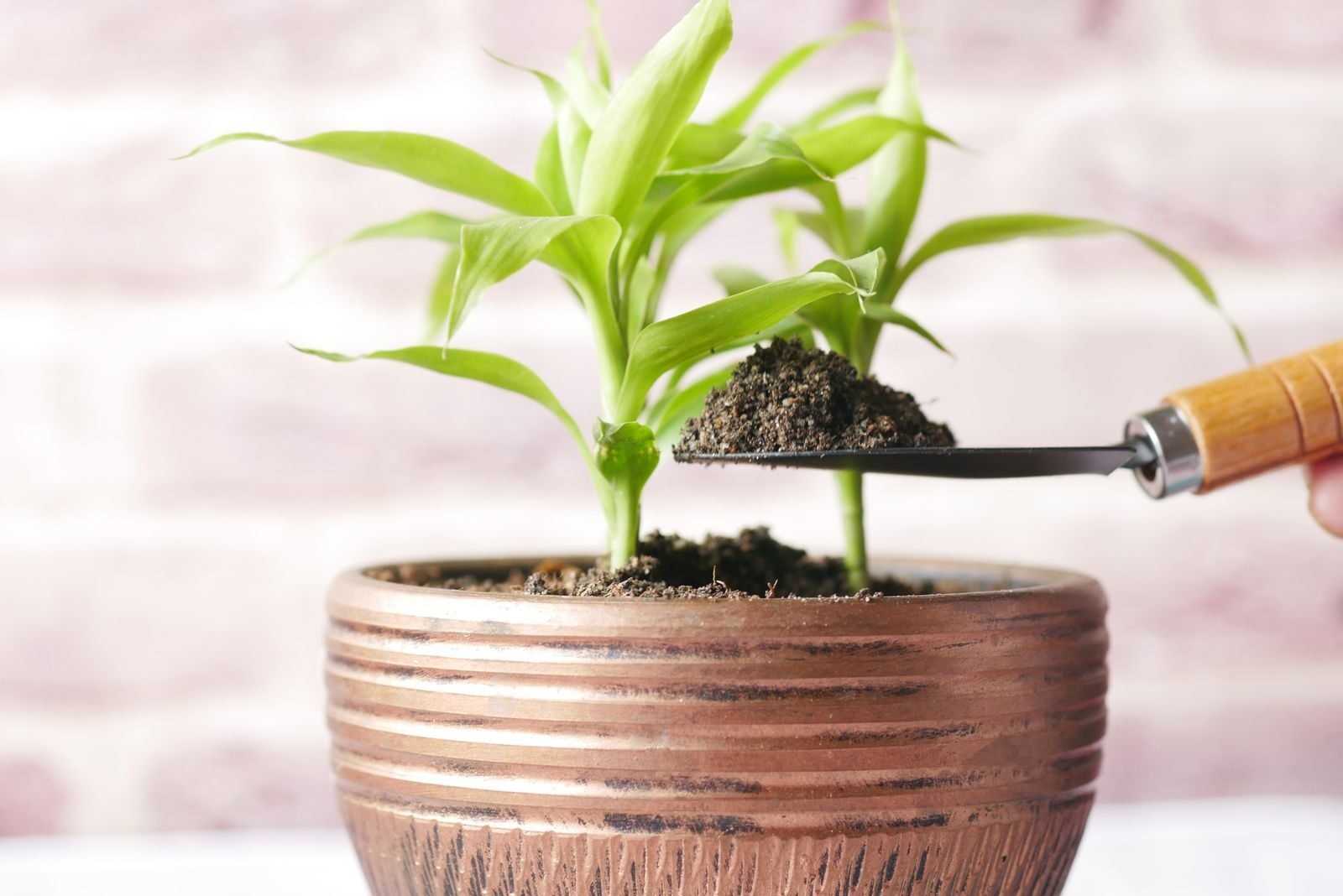
First, remove what’s there. Scoop the fuzzy layer off with a spoon and throw it away. If the patch is thick, take the top centimetre of soil with it. That clears what you can see.
Then stop it coming back, which is the part that matters. Let the soil dry out more between waterings. I push a finger in and only water when the top couple of centimetres feel dry, the same way I explain in how I water houseplants.
Check the pot drains well, and tip out any water left in the saucer. If the plant is in a dark, stuffy corner, move it somewhere brighter with a bit of air moving. If the surface dries out between waterings, the fungus can’t take hold.
If it keeps coming back, try one more thing. A light sprinkle of cinnamon on the soil works as a gentle natural anti-fungal, or scrape off the top layer and replace it with fresh potting mix. If the plant has been sitting in soggy soil for a long time, repotting into fresh mix gives it a clean start.
One thing I’d avoid: a strong chemical fungicide. It’s far too much for something harmless, and it kills off the good soil life along with the fungus. The real fix is drier soil and better airflow, not chemicals.
When to take a closer look
Almost always, white fuzz on the soil is the harmless fungus I’ve described. But a couple of other things show up in the same damp conditions, so they’re worth knowing about.
If you also see tiny flies coming off the soil when you water, those are fungus gnats. They breed in soil that’s kept too wet, the same wet soil feeding the mould. And if the plant itself is wilting, going yellow, or the base smells sour, the problem isn’t the fuzz on top, it’s down at the roots, and it may be heading toward root rot.
The surface mould is harmless. A plant that’s actually going downhill is a separate thing, and it’s usually about water at the roots.
Quick answers
Is white mould on soil bad for my plant?
No. It’s a soil fungus that feeds on dead matter, not on your plant. It won’t hurt it.
So why is it there?
The soil is staying too damp, from overwatering, poor drainage, low light, still air, or a humid room, usually a few of these together.
How do I get rid of it?
Scoop off the fuzzy layer, then fix the damp: let the soil dry more between waterings, improve drainage, and give the plant more light and air.
Can I just leave it?
You can, it won’t harm the plant. But it’s a sign the soil is too wet, and that can lead to bigger problems at the roots, so it’s worth sorting out.
Will cinnamon or repotting help?
Yes. Cinnamon is a gentle natural anti-fungal you can sprinkle on top, and repotting into fresh mix gives a mould-prone plant a clean start.
So if you spot that white fuzz, take a breath. Your plant isn’t dying, and nothing needs throwing out. Clear it off, let the soil dry out a bit more, and give the plant a brighter, airier spot. There’s plenty more plant science and guides on the site whenever you want to read on.