










This article was written and reviewed by Serge, MSc. I hold degrees in Plant Biology, Environmental Biology and Biogeochemistry, with research experience in plant physiology, ecosystem science, and field-based environmental studies. Every article on this site is grounded in real academic training and genuine scientific research.
Affiliate disclosure: This site has affiliate links, including Amazon. As an Amazon Associate I earn from qualifying purchases, at no extra cost to you.
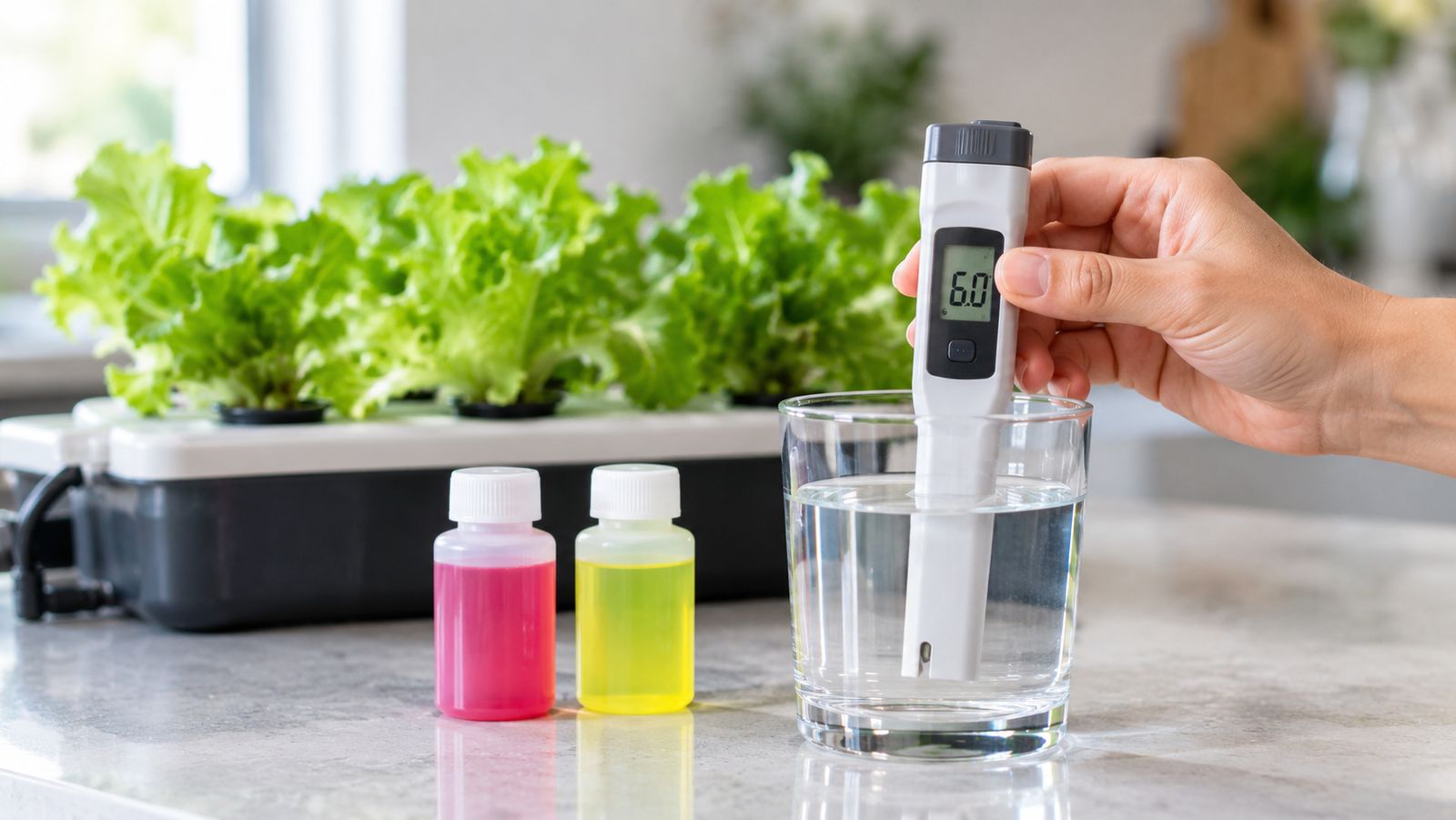
A pH or EC meter has one purpose: to give you a number you can trust. And here is the awkward truth. A lot of the meters sitting in grow rooms are handing out confident numbers that are quietly wrong, not because they were cheap, but because nobody ever calibrated them.
So before you go and buy one, let me tell you what these meters really measure, and the one thing that decides whether yours is worth anything at all.
Why I trust a reading only after I’ve calibrated it
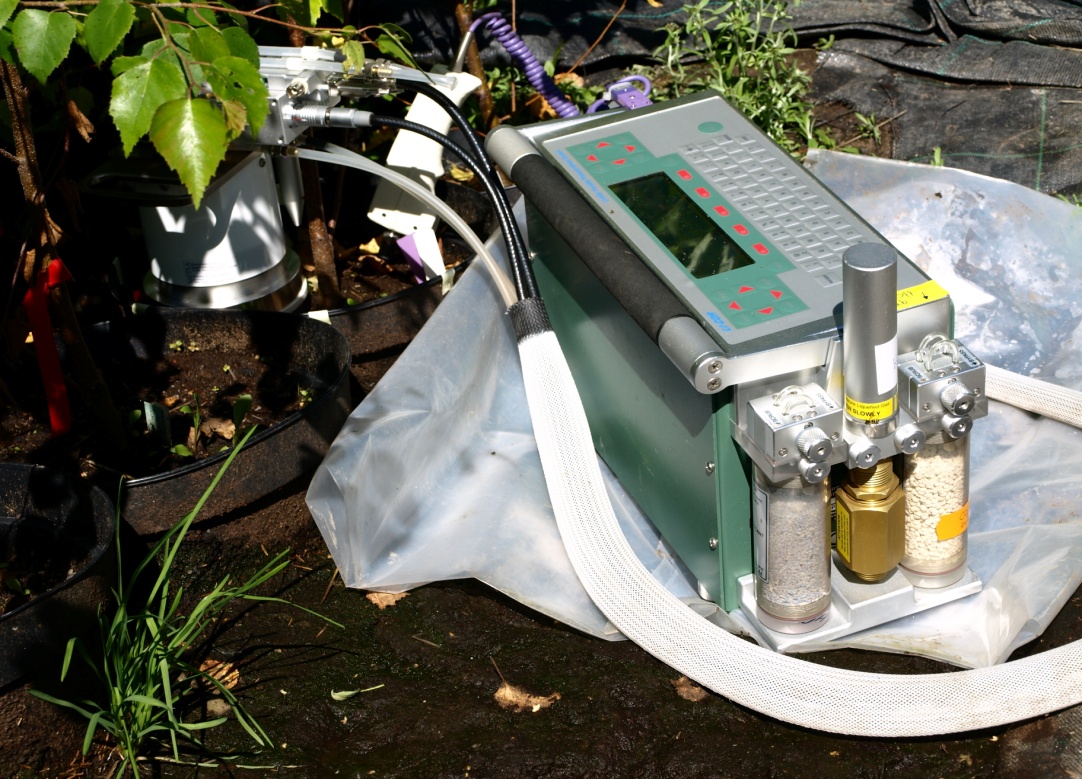
I have spent a lot of time with measurement instruments, calibrating probes before taking a single reading, season after season. The first thing I learned, and the one I leaned on most, is simple: a meter does not give you the truth, it gives you a reading, and a reading is only as good as the calibration behind it.
An electrode drifts as it ages. Its response shifts with use, with temperature, and with time spent sitting on a shelf. Leave it alone and it carries on showing numbers to two decimal places that look precise and are slightly wrong, and slightly wrong is enough to send you chasing a problem that was never there. So I never trust a probe I have not calibrated.
In hydroponics that care counts for even more, because the plant feeds entirely from the water, and you are steering the whole system by these two numbers. If the numbers are off, every decision you build on top of them is off too.
There is a second thing I brought with me from the field. When I measured soil moisture and humidity with probes, I never acted on a single reading. One reading is noisy. It can be thrown by where the probe is sitting, by a stray bubble, by the exact moment you caught it.
So I took several, looked at how much they jumped around, and worked from the average instead of one number. You do not need formal statistics at a home reservoir, but the idea carries straight over: if a pH or EC reading surprises you, take it two or three times, let the probe settle in between, and trust the pattern rather than the first number on the screen.
What each meter is really telling you
The two meters answer two different questions, and you want both.
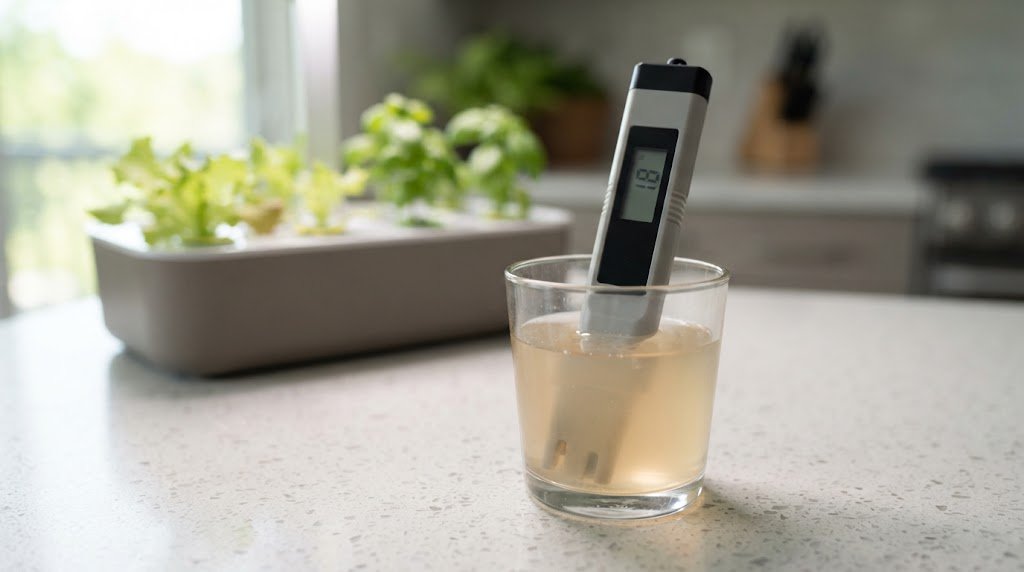
A pH meter tells you whether the food in your water is available to the plant. pH is the gatekeeper of the chemistry: get it wrong and the nutrients can be sitting right there in the reservoir while the roots cannot take them up. For most crops the solution wants to sit somewhere around 5.5 to 6.5, the range Oklahoma State University gives for hydroponics.
An EC meter, reading electrical conductivity, tells you how much dissolved salt is in the water, which is another way of saying how strong your nutrient solution is. More dissolved nutrient carries more electricity, so EC is a direct read on feed strength. Too high and you stress the roots, too low and the plant goes hungry.
The target numbers crop by crop are a whole subject on their own, so rather than repeat them here I keep them in my Fix Your Hydroponics guide, which has the full pH and EC chart. This post is about the meters themselves, and about getting them to read true.
Calibration, the part everyone skips and nobody should
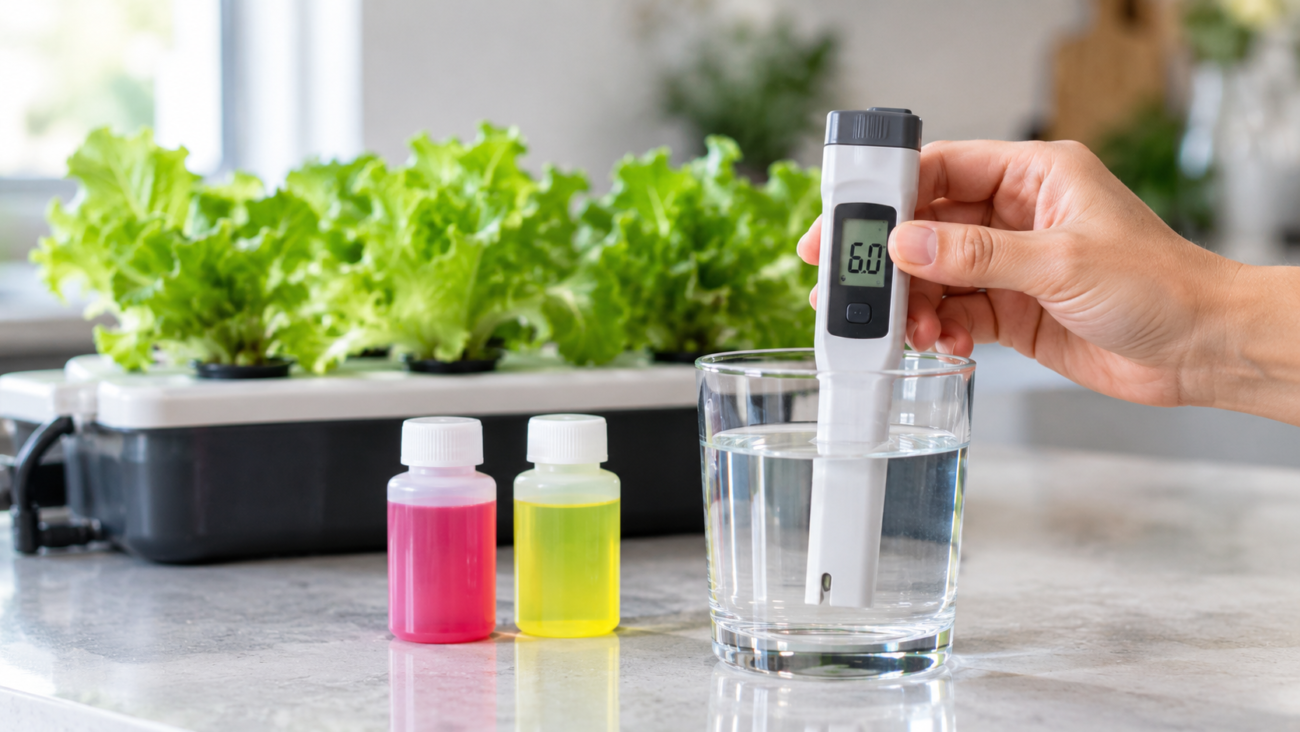
This is where it all comes together. A meter calibrates against solutions of a known value, called buffers, so it can correct its own drift.
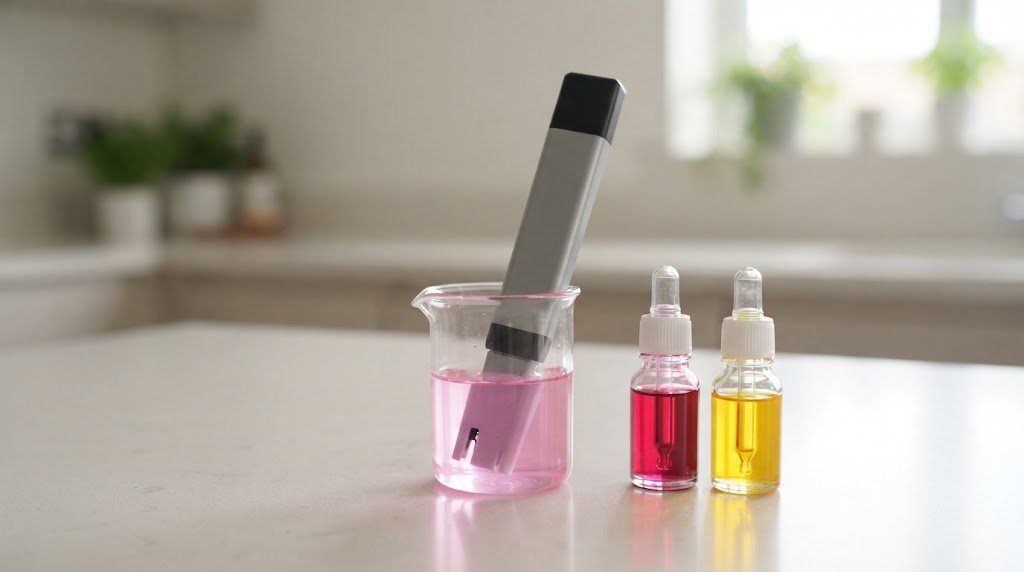
For pH you calibrate against buffer solutions that come at set values, usually pH 4, 7, and 10. For EC you calibrate against a standard buffer, most often 1.41 mS/cm, as Oklahoma State notes. You dip the probe, let it settle, and set the meter to the known value. That is the whole thing, and it takes a couple of minutes.
How often? More than people like to. I calibrate a pH probe often, because it wanders fastest, and I check it against fresh buffer any time a reading looks strange. A good rule is to calibrate before anything that counts, and never to believe a reading that argues with what you expect until you have ruled out the probe. Buffers go off once opened, so I use fresh solution and never pour it back into the bottle.
EC, PPM, and why the numbers seem to disagree
EC causes far less grief than pH, except for one thing, and that thing is PPM. The same solution reads a different PPM on different meters, because PPM is converted from EC using a scale, and there are several scales in use (500, 640, 700). Two meters can read the very same water and show two different PPM numbers, which sends people round in circles.
My advice is to work in EC wherever you can, because it is the raw measurement and it does not care which scale your meter happens to use. When you do need to move between EC and PPM, or work out a mix, my EC and PPM mixing calculator does the conversion so you are not left guessing.
Looking after the probe
A meter lives or dies by its probe, and most meters that people say “broke” were really just neglected probes. A pH electrode in particular must never dry out. The University of Kentucky puts it plainly: store the electrode in storage solution, not in water and not dry, and keep distilled water on hand to rinse it between readings.
So I rinse the probe after every use, store it wet in its proper solution, and keep it clean. Even looked after well, a pH electrode is a consumable. It ages, and in the end it stops holding its calibration no matter what you do, and that is the moment to replace the probe rather than fight it. Treating it as something that wears out, right from the start, saves a lot of head-scratching later on.
Buying one: what is worth paying for
A few things are worth the money, and a few are not.
Get temperature compensation, usually written as ATC. Both pH and EC shift with temperature, and a meter that corrects for it quietly removes one more source of error. Buy a meter you can actually calibrate, which rules out the sealed, no-calibration pens, they feel cheap because they are, they drift, and you have no way to bring them back.
Past that, a simple calibratable pen is plenty for a home setup, and a combo meter that reads both pH and EC is tidy if you would rather carry one tool than two. The pricey bench meters are built for scale, not for a reservoir on your shelf.
If you are putting a first system together and want the measuring side set up sensibly from the start, I build that in to my guide to starting a hydroponic garden, and the meters work alongside whichever of the types of hydroponic systems you are running.
The order that saves you a headache
One small sequence prevents a lot of going in circles: set your EC first, then check your pH, as Oklahoma State advises. Adding nutrients moves the pH, so if you fix pH first and then stir in feed, the pH shifts and you are back at the start. Strength first, then pH, then read both daily.
Common Questions
How often should I really calibrate?
The pH meter often, because it drifts fastest. EC holds longer. The real rule is to calibrate before any reading you are going to act on, and to recalibrate the moment a number looks wrong.
A reading looks weird, do I believe it?
Not on its own. Take it two or three more times and let the probe settle between each. If they agree, believe them. If they jump around, it is usually the probe or old buffer, not your reservoir.
Can I skip the EC meter if I measure carefully?
Not really. Even a perfect mix drifts as the plants drink and feed at different rates, so EC is how you catch the solution creeping too strong or too weak over the days between changes.
Why does my pH reading keep wandering?
Usually a tired or dried-out probe, or old buffer. Recalibrate with fresh solution first. If it still wanders, the electrode is probably near the end of its life.
What it all comes down to
A pH and EC meter are the two instruments that turn hydroponics from guesswork into something you can actually steer. But they only help if you trust them, and you can only trust them if you calibrate them.
Buy meters you can calibrate, keep the probes wet and clean, calibrate before the readings count, take more than one reading when something looks off, and work in EC rather than PPM. Do that, and the numbers stop being something to second-guess and start being something you can act on.