

This article was written and reviewed by Serge, MSc. I hold degrees in Plant Biology, Environmental Biology and Biogeochemistry, with research experience in plant physiology, ecosystem science, and field-based environmental studies. Every article on this site is grounded in real academic training and genuine scientific research.
Affiliate disclosure: This site has affiliate links, including Amazon. As an Amazon Associate I earn from qualifying purchases, at no extra cost to you.
We’ve all done it…
A plant looks a bit tired, so you move it into a lovely big new pot to give it room, and instead of perking up, it slowly gets worse. If that sounds familiar, the pot wasn’t the fix, and its size was most likely the trouble. Repotting catches people out more than almost any other part of plant care, nearly always because they do it at the wrong time, for the wrong reason, or into a pot that’s far too big.
So let me talk you through it the way I would if you were stood next to me with a sad-looking plant in your hands.
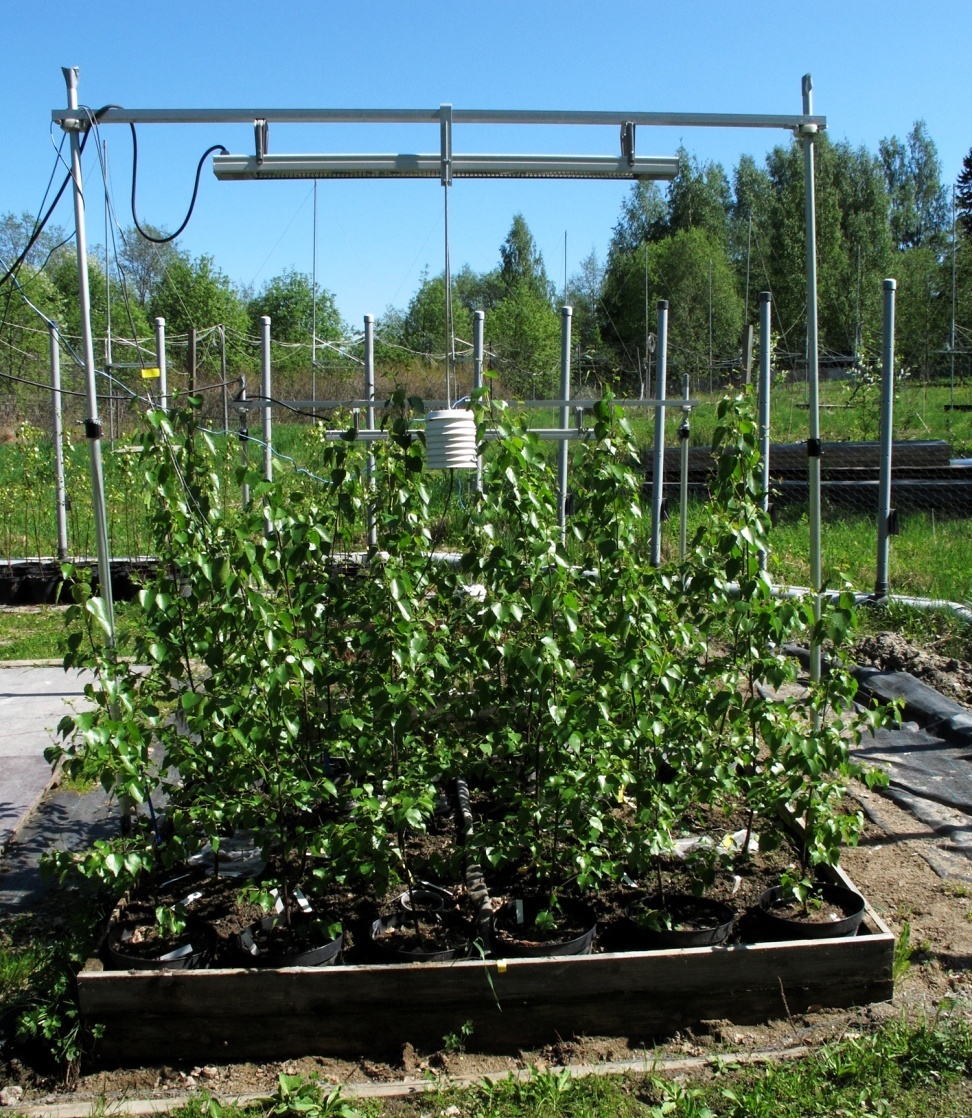
I’ve moved plenty of young plants from one container to another in my own work, and the same thing holds for a tree in a field and a pothos on your shelf. I repot when the roots have run out of room, and I do it gently enough that the plant hardly notices.
Most of the time, I leave it be
I’ll start here, because it saves a lot of needless fuss: your plant probably doesn’t need repotting as often as you think. For most of mine, once every year or two does it, and a fair few are happier left a bit cramped. So I don’t go pulling a settled plant out of its home without a reason.
And there are real reasons I look for.
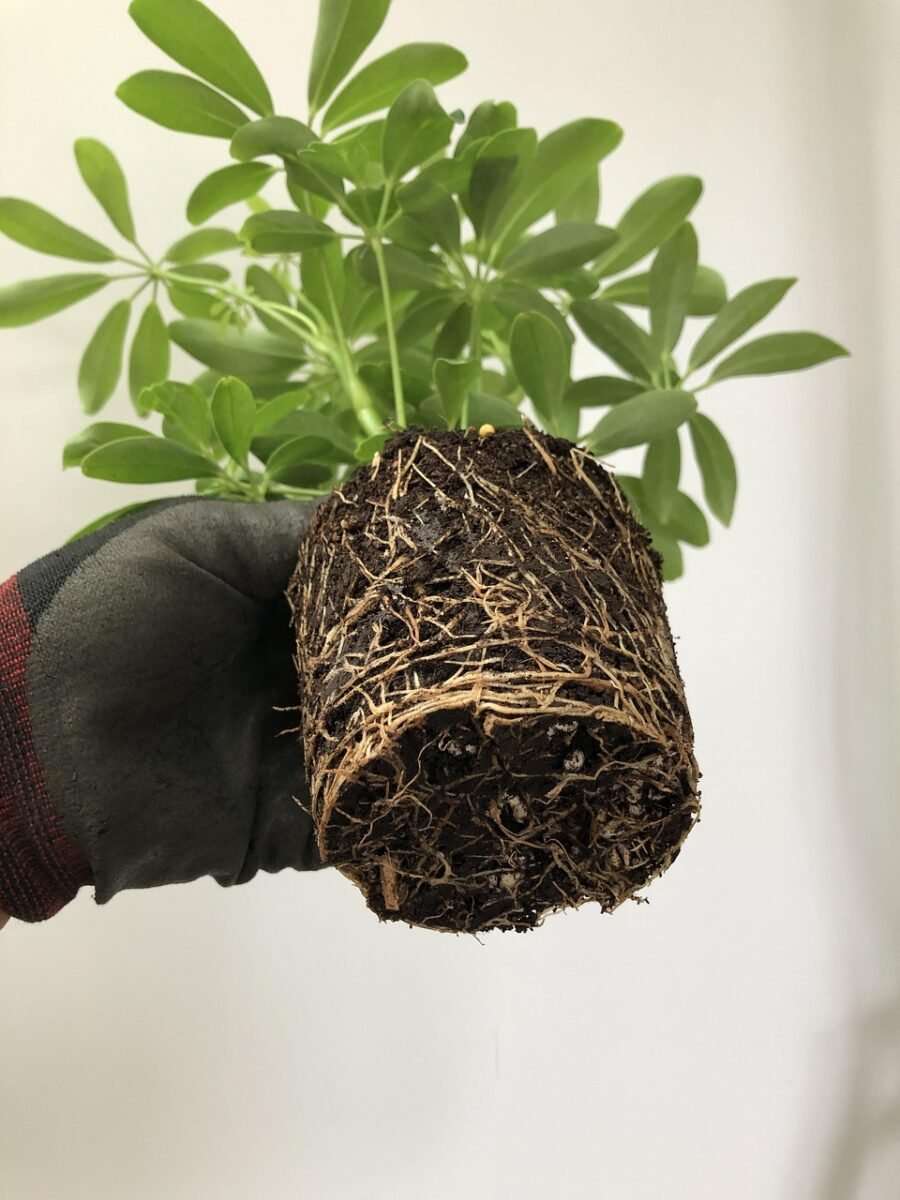
Roots poking out of the drainage holes, or coiling thickly across the top of the soil, tell me the pot is full. Water gives it away too, if it pours straight through the second I add it, or the pot dries out quicker than it used to, the roots have crowded out the soil that should be holding that water.
A plant that’s simply stopped growing through spring and summer, in decent light and with decent care, is often pot-bound as well. NC State Extension points to the same signs: roots through the drainage holes or over the soil surface, and the mix drying out fast.
Now, what I don’t treat as a reason…
A droopy, off-colour plant is not automatically a plant that needs a bigger home. I see people grab a new pot the way they grab the fertilizer bottle, hoping it’ll rescue a plant that’s unwell, and it rarely does.
Yellow or wilting leaves usually point to how you’re watering or the light the plant is getting, so I’d rule out the usual causes of yellowing leaves first. Uproot a sick plant and you often knock it back even further.
Timing: I go for spring, but it’s not the whole story
When people ask me the best time, my short answer is spring. A plant waking up into its growing season shrugs off the disturbance and sends fresh roots out into the new soil in no time. Do the same job in the depths of winter, when the plant’s resting, and it just sits there sulking for weeks, because it hasn’t the energy to recover.
That said, I’d never tell you to leave a plant suffering just because the calendar says the wrong month. If I brought home something badly pot-bound in November, or a plant slowly drowning in soggy soil and sliding toward root rot, I’d deal with it then and there. Spring is the easy option, not the only one.
The big-pot trap
If there’s one thing to take from me here, it’s this: don’t move your plant into a much bigger pot.
I know it feels like a kindness, giving it all that room to grow into, but it works against the plant. A small root ball sitting in a big pot of soil can’t drink all the water that soil holds, so the soil stays wet for days. And wet soil with no roots growing through it is how you end up with waterlogged, airless roots.
So I only ever go one size up, a couple of centimetres wider, no more. NC State says much the same, no more than two inches bigger than the pot it’s in. And I’m not just repeating advice here. When I moved young plants on in my own work, the ones I gave a little more room settled in and rooted out fast, because their roots could reach all the new soil. A small step up beats a big one every time.
How I do it, start to finish
None of this is hard, and you don’t need any special kit.
Water the plant about an hour before you start. If the root ball is a little damp it comes out in one piece. Too dry and it crumbles apart in your hands, too wet and it turns to mud.
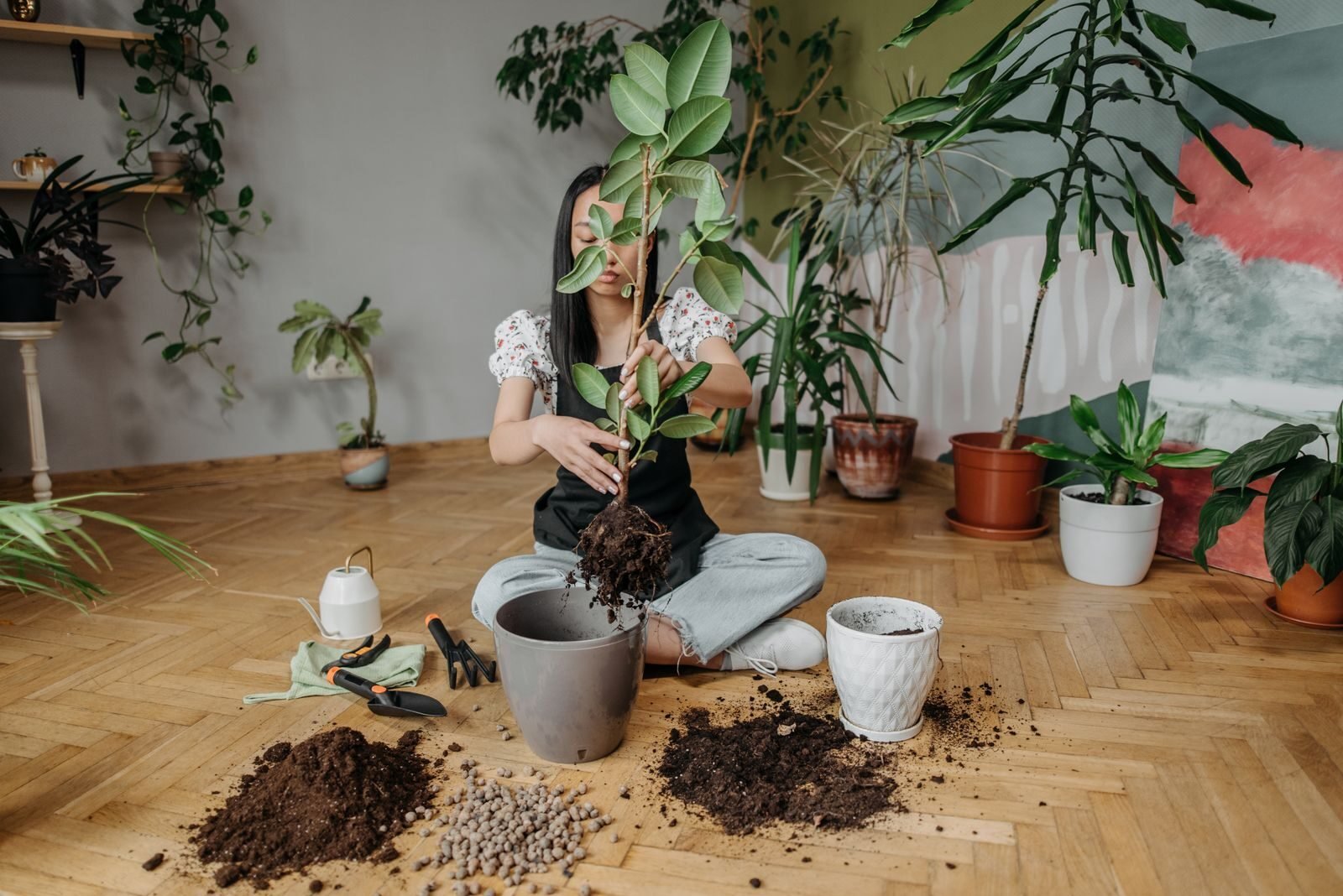
Get it out gently, don’t pull on the stem. Tip the pot on its side, hold the base of the plant, and let it slide out. If it’s stuck, run a knife around the inside of the pot, or squeeze a plastic one to loosen it.
Now look at the roots. You want them firm and pale. If they’ve grown into a tight spiral at the bottom, loosen them with your fingers. For a really matted ball, cut a few shallow lines down the sides so the roots grow out into the new soil instead of round and round. Don’t skip this, a tightly wound root ball will often just keep growing in the same knot in its new pot. Anything soft, dark and mushy, cut it off. That’s rot, and it’s no use to the plant.
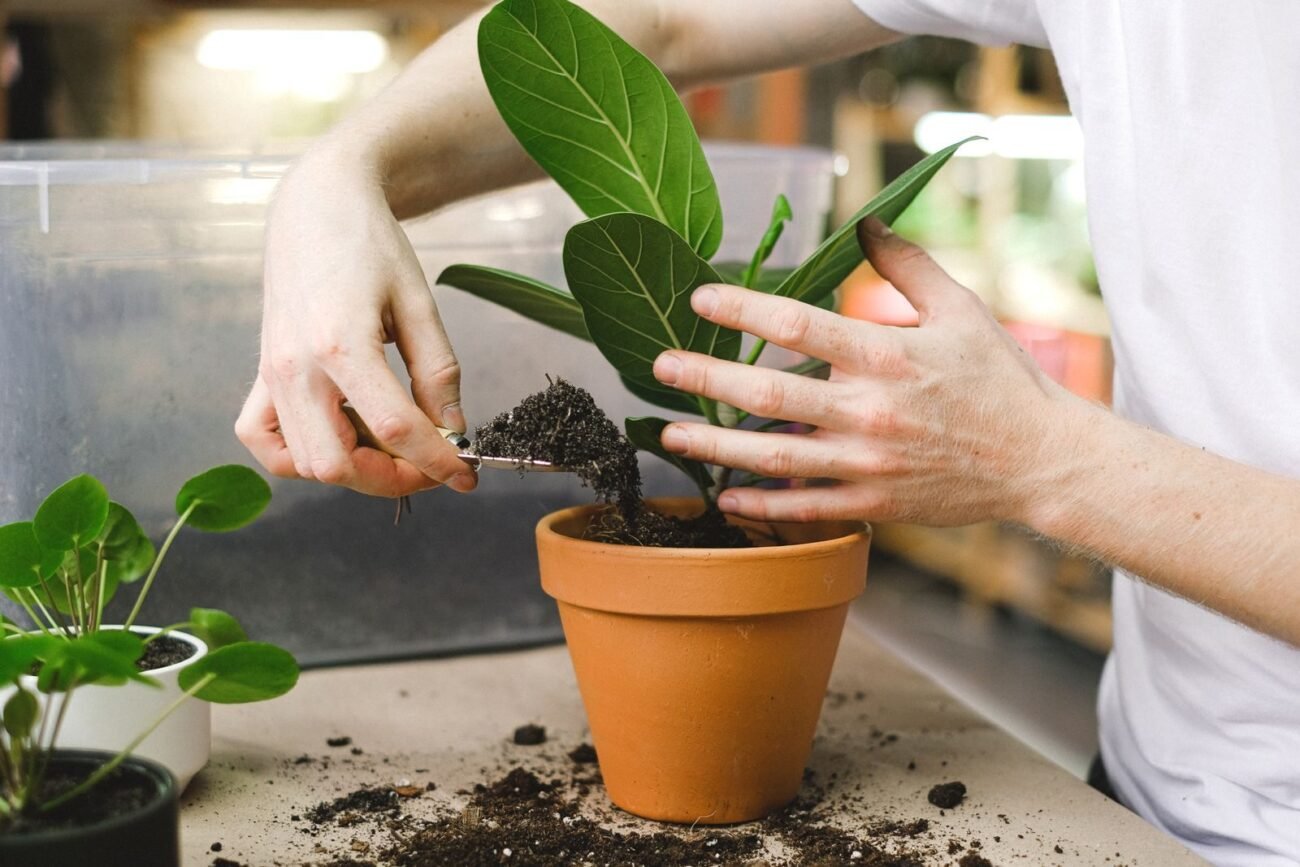
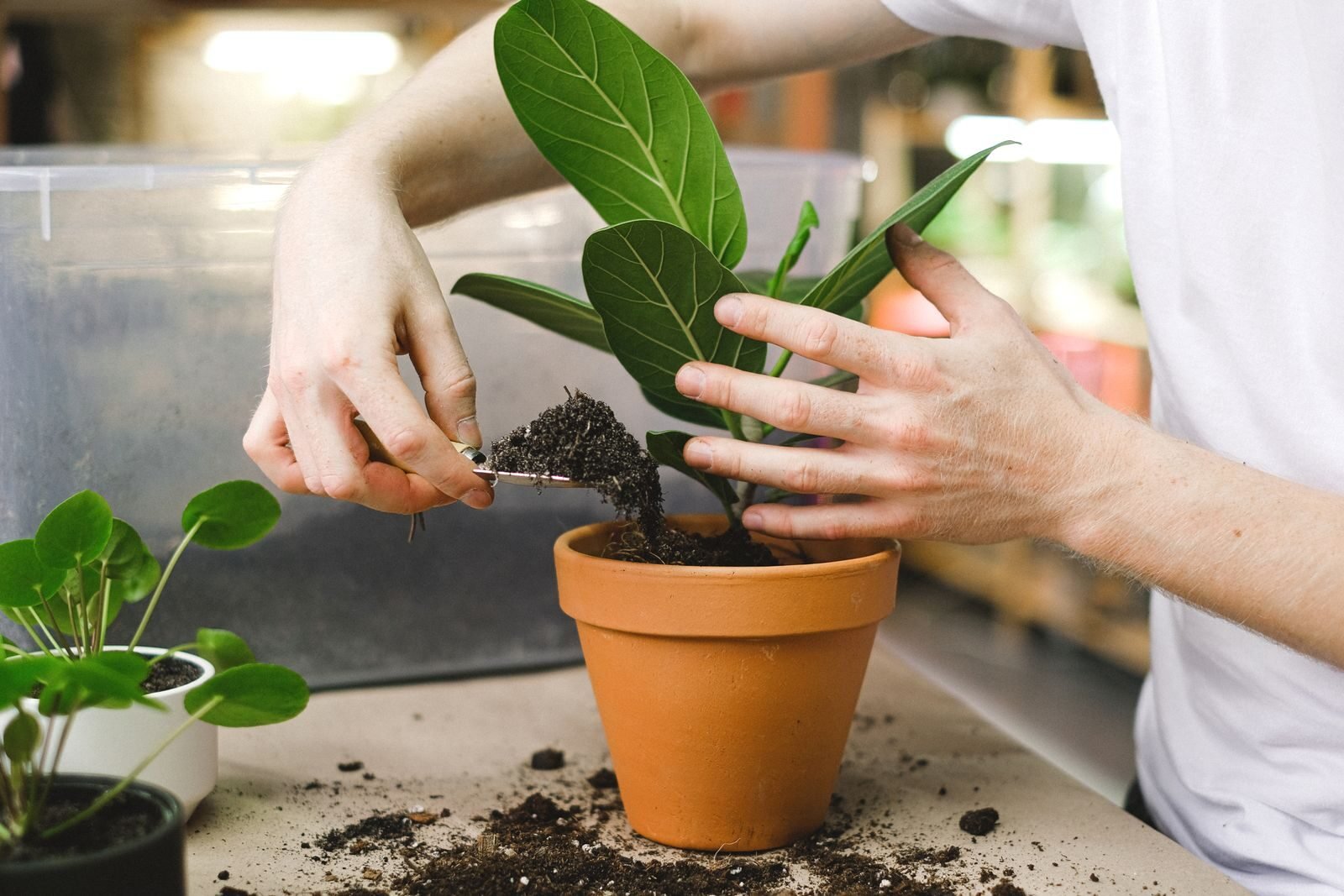
Now put it in fresh soil. A layer of fresh potting mix in the bottom, sit the plant at the same depth it was before, then fill around the sides with more mix and press it down gently so there are no big air gaps. Leave a bit of room at the top for watering, and check the pot drains.
Then water it well and leave it alone. A good soak settles the soil around the roots. After that, keep it out of strong sun for a week or two and don’t feed it. The fresh mix already has what it needs, and the roots have to settle before they can take up any more. That’s why I always tell people to hold off, as I explained in the guide to feeding houseplants.
What to expect in the first couple of weeks
Don’t worry if your plant looks a bit unhappy for the first week or two. This is the part that panics people, they repot, the plant droops or drops a leaf, and they assume they’ve done something wrong and start fussing over it. Usually it’s fine. The roots were disturbed, and they need a little time to settle into the new soil and start drinking normally again. A pause in growth, a drooping leaf, a bit of a sulk, all of that is normal while it adjusts.
What helps most here is leaving it alone. Keep your watering steady, the same as you would any other week, and keep it out of harsh direct sun while it recovers. Don’t be tempted to feed it or water it extra to help it along, that does more harm than good at this stage.
Most plants are back to themselves within two weeks or so. If yours is still clearly struggling a month down the line, that’s when I’d start looking for another cause, but a short rough patch straight after repotting is just the plant finding its way.
A few things people always ask me
So how do I know it’s time? Roots out the bottom, roots over the top, water running straight through, or a plant that’s stopped growing in good conditions. Those are the signs I trust. A plant that just looks a bit off has usually got a watering or light problem, not a pot problem.
Is winter really off the table? Not off the table, just second-best. The plant’s resting and slow to heal, so spring is easier on it. The one time I’d ignore that is a plant that’s badly cramped or rotting in wet soil, which won’t thank you for waiting.
How much bigger, exactly? One size, a couple of centimetres wider, and no more. Go too big and you’re left with a mass of wet soil the roots can’t reach, which is how rot sets in.
Do I have to touch the roots? If they’re wound round tightly, yes, loosen them, and cut a few shallow lines down a really matted ball. Leave them as they are and they’ll just keep growing in the same knot.
Can I feed it straight after? Water, yes. Feed, no, not for a few weeks. Fresh mix has food in it already, and the roots need to settle before they’ll use more.
Why’s it drooping now I’ve repotted it? Almost always just settling in. Give it a week or two of steady watering and no harsh sun. If it’s still unhappy well past that, then it’s worth a closer look.
Get the timing roughly right, read the roots instead of the calendar, keep the new pot sensible, and give the plant a quiet couple of weeks afterwards. Do that and repotting does what it’s meant to, it keeps your plant growing instead of setting it back. There’s plenty more plant science and guides on the site whenever you want to dig deeper.