

This article was written and reviewed by Serge, MSc. I hold degrees in Plant Biology, Environmental Biology and Biogeochemistry, with research experience in plant physiology, ecosystem science, and field-based environmental studies. Every article on this site is grounded in real academic training and genuine scientific research.
Affiliate disclosure: This site has affiliate links, including Amazon. As an Amazon Associate I earn from qualifying purchases, at no extra cost to you.
The first time I tried planting aquatic plants without proper tools I used my fingers.
I had spent two hours laying out the hardscape exactly how I wanted it. Rocks positioned just right. Substrate sloped perfectly toward the back. I was genuinely excited to start planting.
Then I pushed my hand into the water.
Everything moved. The substrate clouded instantly. Plants I had just placed floated back up to the surface. The rocks shifted. Two hours of careful work looked like a disaster in about forty seconds.
I sat there staring at the tank feeling like an idiot. Not because I had done something wrong exactly. Just because I had tried to do a precise job with completely the wrong tool. Your hand is not an aquascaping instrument. It is a wrecking ball.
That afternoon I ordered a basic set of aquascaping tools. The next planting session was a completely different experience. Calm, precise, satisfying. The kind of session that makes you want to do it again immediately.
Here is what each tool does and what to look for when you buy.
Why a Clean Cut Actually Changes How Your Plants Grow
When you cut a plant stem cleanly the cut surface seals fast and the plant immediately redirects energy into producing new shoots from the nearest node. You get compact bushy regrowth right where you want it.
When you tear or crush a stem the damaged tissue starts to break down. Bacteria move in. The plant spends its energy dealing with the wound rather than growing. You get slow recovery, yellowing at the cut, and sometimes the stem just dies back entirely.
Clean cuts heal faster than torn tissue. That is basic plant biology and it applies just as much to aquatic plants as to anything growing in your garden. Sharp precise tools are not a luxury in a planted aquarium. They are what separates a tank that looks better every week from one that looks worse.
This page contains affiliate links. If you purchase through these links I may earn a small commission at no extra cost to you.
Shop Aquascaping Tools on Amazon →
The Tools That Actually Get Used
Straight scissors
Your workhorse. Use these for trimming stem plants, cutting back mosses, and general maintenance across the whole tank. The straight blade lets you make clean horizontal cuts across the top of a stem plant group which pushes the plant into producing multiple side shoots rather than one tall leggy stem.
Look for blades that close completely with no visible gap. Hold them up to light when closed, if you can see daylight along the blade edge they will crush plant tissue rather than cut it. That matters more than any other specification on the box.
Curved scissors
These became my favourite tool faster than I expected.
The curved blade lets you get right in at substrate level and trim carpeting plants, foreground species, and anything growing close to the ground, without your whole hand entering the water and disturbing everything around it. The handle stays comfortably above the waterline while the blade works parallel to the substrate below.
Once you use curved scissors for detailed work you wonder how you managed without them.
Spring scissors
Self-opening scissors that bounce back open after every cut. A small thing that sounds almost unnecessary until you spend forty minutes trimming a dense moss wall by hand and your fingers start cramping.
Spring scissors turn repetitive trimming from something you dread into something that just gets done. Fast, comfortable, and your plants get a cleaner result because you are not rushing to finish.
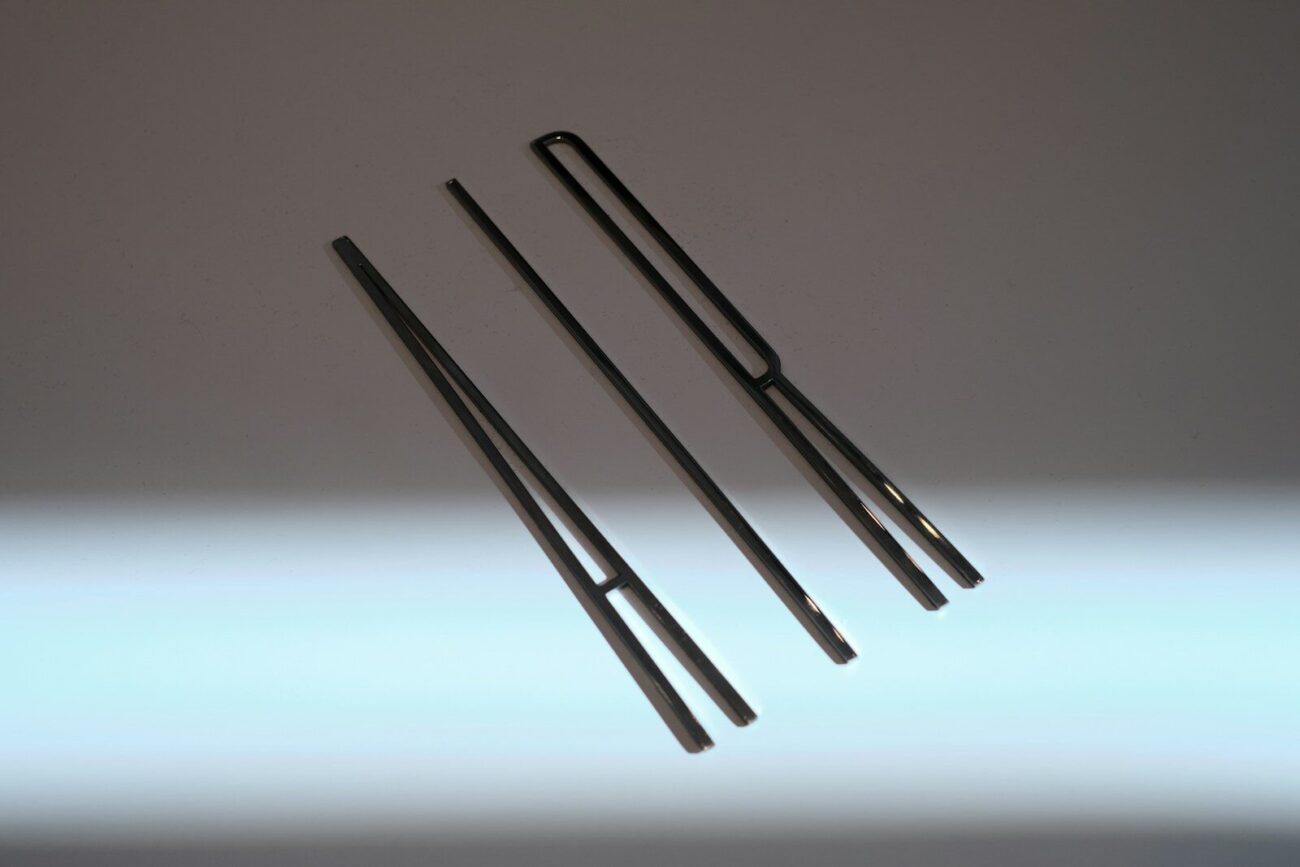
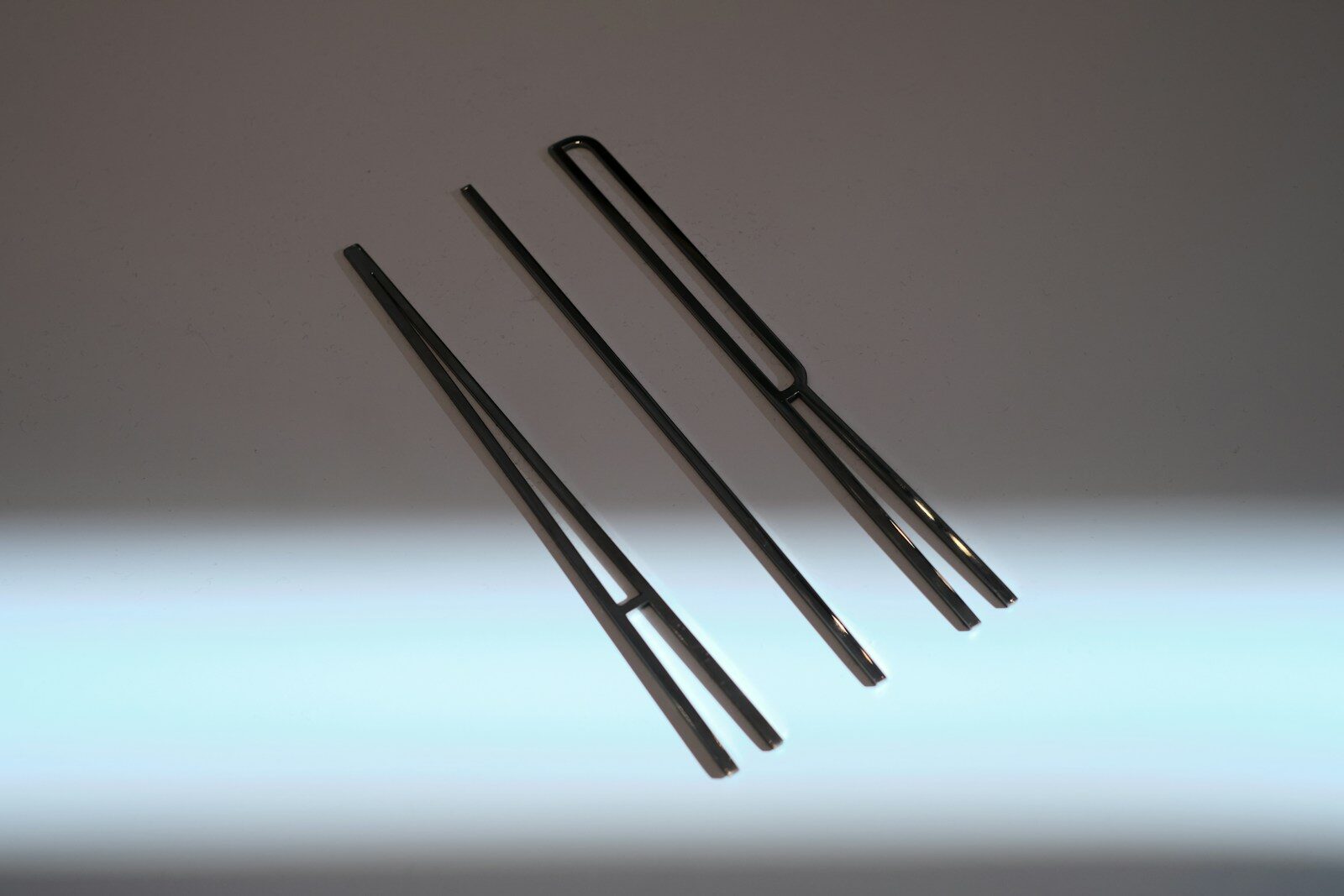
Straight tweezers
If you only ever buy one aquascaping tool buy a good pair of straight tweezers and buy them long.
Long straight tweezers let you place individual stems precisely at substrate level, push roots into position, and seat foreground plants exactly where you want them, with your hand staying well above the water. No clouds of disturbed substrate. No floating plants. No accidentally nudging the rock you spent ten minutes positioning.
I plant with nothing else now. They changed how I approach the whole process.
Curved tweezers
The same idea as straight tweezers but with an angled tip for reaching into places straight tweezers physically cannot get to. Behind rocks, into the back corners, tucked in alongside a piece of driftwood. Complex layouts need curved tweezers. Simple layouts can live without them until you find yourself wishing you had a pair.
Spatula
Underestimated by almost everyone and genuinely useful from the first session.
A flat-ended spatula lets you level substrate, nudge hardscape into position, and rearrange the bottom of the tank without putting your hand in. During the initial setup of a new tank a spatula saves you from resetting the substrate slope four times because your hand keeps flattening it every time you reach in.
What I Look for When Buying
Full stainless steel
Aquascaping tools live in water. Anything that rusts becomes useless fast and leaves residue in your tank. Full stainless steel construction throughout is the only option worth considering. Check the spring mechanisms on spring scissors specifically — some cheaper sets use stainless blades but carbon steel springs that rust within weeks.
Blade quality
Run the scissors through a piece of thin paper before using them on plants. Clean sharp scissors cut without dragging or tearing. If they snag, skip, or require any real force on soft paper they will damage plant stems rather than cut them. Send them back.
Length
Tool length determines how deep into the tank you can comfortably work without your sleeve going in with you. For tanks up to 40 cm deep standard tools around 25 cm work fine. For deeper tanks go longer. It sounds like a small thing until you are doing maintenance with a wet elbow every single session.
Grip
You are working with wet hands over water. Smooth polished metal handles become genuinely slippery immediately. Look for tools with textured grip sections or a wider handle profile that gives you real control when your hands are wet.
Sets
A set of straight scissors, curved scissors, straight tweezers, and curved tweezers covers almost everything. Sets are usually better value than buying individual tools and ensure the steel quality matches across everything you use. Add a spatula and spring scissors when you know you need them.
Frequently Asked Questions
What tools do I need for aquascaping?
Start with straight tweezers for planting, straight scissors for general trimming, and curved scissors for detailed work close to the substrate. Those three cover almost everything in most planted tanks. Add curved tweezers and a spatula as your layouts get more complex.
What are aquascaping tools used for?
Planting stem plants and foreground species without disturbing the substrate, trimming plants to shape and encourage bushy growth, attaching mosses to hardscape, and general maintenance without putting your hands in and undoing everything you just set up.
How do I use aquascaping tweezers?
Grip the plant stem gently near the base. Push the tip into the substrate at a slight angle to the depth you want. Release the plant and withdraw the tweezers slowly, using the tip to hold the plant lightly in position as you pull back so it does not come out with the tool.
Can I make DIY aquascaping tools?
Long kitchen tweezers and small sharp scissors work well enough for a first simple planted tank. The limitations show up over time, rust with lower quality steel, handles too short for deeper tanks, and less precise blade geometry for detailed work. For a serious layout dedicated tools pay for themselves quickly in time and frustration saved.
How much does a basic aquascaping tool set cost?
Entry level stainless steel sets start around $15 to $30. Mid-range sets with better steel and more precise blades typically cost $30 to $60. Professional grade tools cost more but last years with proper care.
How do I care for aquascaping tools?
Rinse with clean water after every session and dry completely before storing. Leaving tools wet corrodes even stainless steel over time. A tiny amount of food-safe oil on scissor pivot points keeps the action smooth and prevents stiffness building up.
The Right Tools Make You Want to Do It Again
That is the real test of good aquascaping tools. Not whether they look impressive on a shelf. Whether they make the session feel satisfying enough that you want to start planning the next one before you have even finished the current one.
Sharp stainless steel scissors and tweezers long enough to reach the substrate without your arm following them in. That is genuinely all you need to start.
Browse aquascaping tools on Amazon and compare options at every price point.
This page contains affiliate links. If you purchase through these links I may earn a small commission at no extra cost to you.