


This article was written and reviewed by Serge, MSc. I hold degrees in Plant Biology, Environmental Biology and Biogeochemistry, with research experience in plant physiology, ecosystem science, and field-based environmental studies. Every article on this site is grounded in real academic training and genuine scientific research.
Affiliate disclosure: This site has affiliate links, including Amazon. As an Amazon Associate I earn from qualifying purchases, at no extra cost to you.
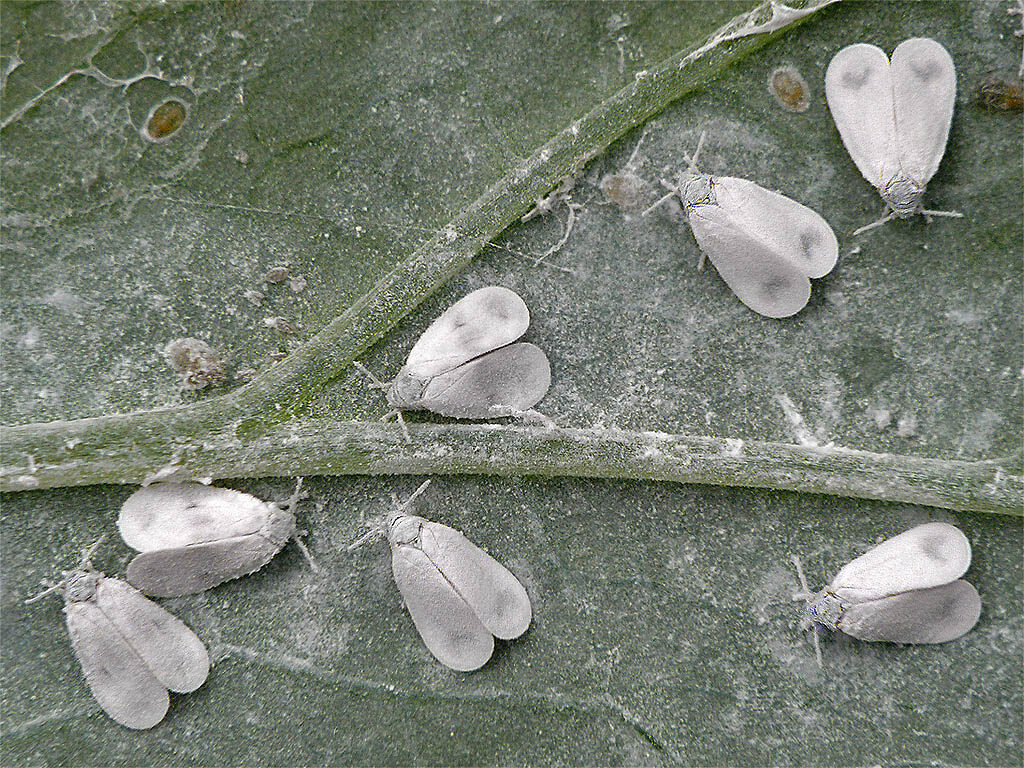
Brush a leaf and a puff of tiny white insects lifts into the air, swirls around, and settles back down.
That cloud is what everyone chases. It is also the wrong target.
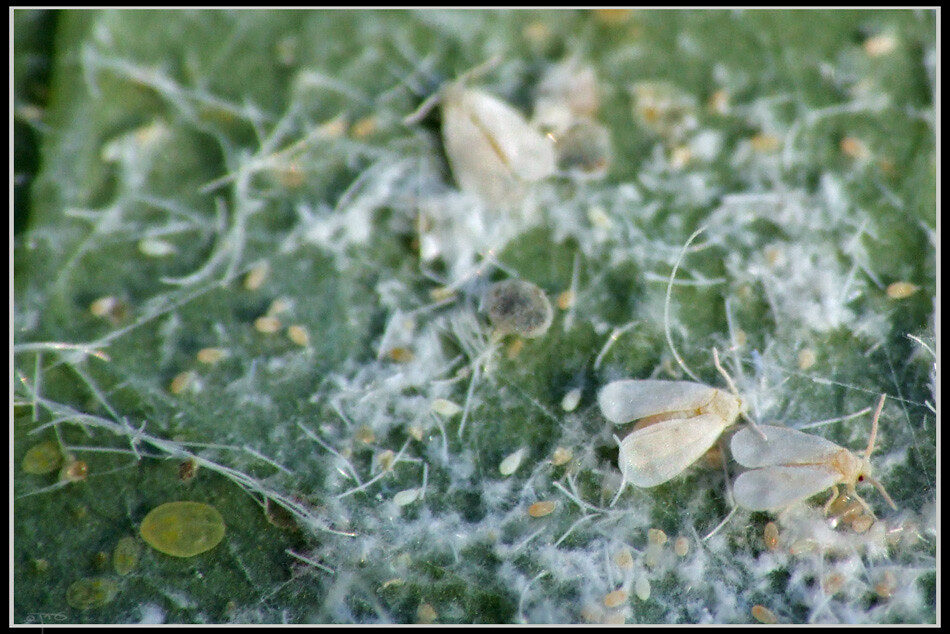
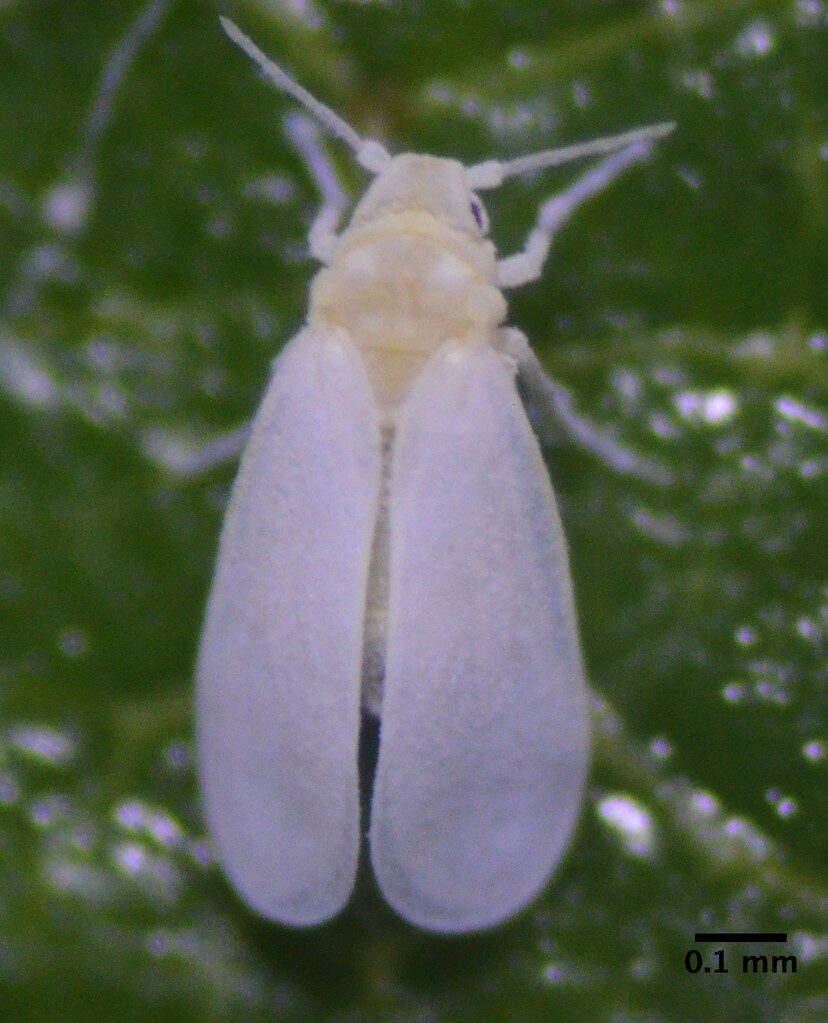
Whiteflies are not flies. They are sap-suckers, close cousins of aphids, scale, and mealybugs, and like all of those they spend most of their lives stuck to a leaf drinking from it. The adults you see flying are the smallest part of the problem. The part doing the damage is glued to the underside of the leaf, does not fly, and does not even move.
That is why spraying the cloud feels satisfying and changes nothing. Let me show you where the infestation actually lives.
The stage that does the damage
A female whitefly lays her eggs on the underside of a leaf, often in a neat circle. Those eggs hatch into a tiny mobile young called a crawler, which walks a short distance, picks a spot, pushes its mouthpart into the leaf, and then settles down for good.
From that moment it stops moving. It sits flat, pale, and almost see-through against the leaf, feeding without pause. If that sounds familiar, it should. This is the same trick scale insects use, and it works for the same reason: an insect that does not move and does not look like an insect is one you will not find.
These settled nymphs are where the sap loss and the honeydew come from. They are also where your treatment has to land. Kill every adult in the room and the nymphs carry on feeding, mature, and hand you a fresh cloud a week later, which is why people feel like whitefly never ends.
So when I treat a plant, I am not aiming at the air. I am aiming at the underside of every leaf.
Why they all pick the underside
There is a reason whitefly, aphids, scale, and mealybugs all end up on the same surface, and it is not shyness. The underside of a leaf is a different world to the top of it.
Leaves do their gas exchange through tiny pores that sit mostly on the underside, and a lot of my training dealt with how leaves trade gas and water with the air around them. That constant traffic of water vapour leaving the leaf keeps a thin layer of humid, still air pressed against the underside, and that layer is sheltered from sun, wind, and rain in a way the top of the leaf never is.
For a small soft insect that dries out easily, that is the best spot on the whole plant. Cool, humid, hidden, and sitting directly on the tissue it wants to drink from. The pests are not hiding from you. They are sitting in the one place the leaf itself makes comfortable.
This is the most useful thing I can tell you about spraying. A treatment that only touches the tops of leaves is treating the one surface the pests are not on. Turn every leaf over.
What whitefly does to a plant
The sap loss is the first cost. A heavy population drinking from the same leaves leaves you with yellowing, curling, wilting foliage and slow growth, and badly hit leaves drop off. On a small plant or a young seedling, a big population can be fatal.
Then comes the sticky mess. Like every sap-sucker in this family, whiteflies excrete the sugar they cannot use as honeydew, and that honeydew coats the leaves below and grows black sooty mould. If your tomato leaves are shiny and going black underneath a whitefly cloud, that is the same insect causing all three problems.
The one that worries me most is the one you cannot wash off. Whiteflies carry plant viruses from plant to plant as they feed, and on tomatoes this is a serious matter, since some of these viruses stunt and deform the plant permanently. No spray cures a virus once it is in, so keeping whitefly numbers down on vegetables is not about tidiness, it is the only defence you have.
How I get rid of whitefly
The plan is simple to say and easy to get wrong: hit the undersides, hit them on a schedule, and stop wasting effort on the adults in the air.
Use yellow traps to measure, not just to catch
Yellow sticky traps pull in adult whiteflies in numbers, and every stuck adult is a batch of eggs never laid. That much is standard advice.
What I do differently comes from a research habit: I use them as a measuring instrument. I put a trap in, then check it every few days and compare it to the last check, because a trap is not just a killing tool, it is a count. Rising numbers mean the nymphs are still hatching and my spray schedule is not working. Falling numbers mean it is. That is the difference between guessing whether you are winning and knowing.
Traps alone will never clear an infestation, since they cannot touch the nymphs. But they tell you exactly when to keep going and when you are done, which no amount of eyeballing the plant will.
Blast or vacuum the adults
Before I spray, I knock the adults down so they are not just laying fresh eggs behind me. A firm jet of water on the leaf undersides does it, and outdoors that alone keeps numbers low.
Indoors, a small handheld vacuum is startlingly effective. Go over the plant in the early morning while the adults are cold and slow, and you will take out most of the flying population in one pass. Empty it outside straight afterwards.
Spray the undersides on a schedule
This is where the infestation actually dies. Insecticidal soap or a mild soap spray kills the nymphs and eggs on contact, but only where it lands, and the nymphs are all on the underside.
So I turn every leaf and coat it. Every leaf, every time, undersides first. Then I repeat every five to seven days for at least three or four rounds, because eggs keep hatching after each spray and one pass never reaches them all. Skipping the repeats is the single most common reason whitefly comes back.
Two things I do not do: I do not spray in strong sun, and I do not use dish detergent. Modern washing-up liquids carry degreasers and scents that scorch leaves. A mild liquid soap or a proper insecticidal soap does the same job without the risk, and I test one leaf and wait a day before I go over a whole plant.
Neem oil for the longer game
Neem works on their feeding and breeding rather than killing on contact, and it keeps working after it dries, which suits a pest that keeps hatching in waves. Coat the undersides, repeat weekly, and keep it off plants in strong sun or stressed by drought.
Let the predators do the work outdoors
Ladybirds, lacewings, and hoverfly larvae all eat whitefly, and outdoors they will handle a light population if you leave them alone and stop spraying broad insecticides that kill them too.
In a greenhouse there is a better option. A tiny parasitic wasp called Encarsia formosa lays its eggs inside whitefly nymphs, and it is used commercially in tomato greenhouses because it works. You can buy them, and in an enclosed space they are the most effective control I know of.
Strip the worst leaves
If the lower leaves of a tomato plant are crusted with nymphs and going yellow, take them off and bin them. You remove hundreds of feeding insects in one cut, and those tired lower leaves were not doing much for the plant anyway. Do not compost them.
How I stop them coming back
Check the undersides of leaves on any new plant before it joins the others, and keep it apart for a couple of weeks. Whitefly walks in on shop-bought plants and on seedlings from the garden centre, and the eggs are small enough to miss unless you turn the leaf over and look.
Keep a yellow trap up all season in a greenhouse or near your indoor plants, even when things look clean. It gives you two or three weeks of warning before you would notice a cloud, and catching whitefly early is a different job to catching it late.
Go easy on high-nitrogen feed too, since soft sappy growth is the easy meal every sap-sucker wants. And do not pack plants leaf to leaf, because still air and touching foliage is how they move house.
If whitefly keeps returning no matter what you do, the answer is nearly always the same. You are treating the adults and missing the nymphs, or you stopped spraying after two rounds. Turn the leaves and finish the schedule.
FAQs
How do you get rid of whiteflies?
Knock the adults down with a water jet or a handheld vacuum, then spray the undersides of every leaf with insecticidal soap and repeat every five to seven days for three to four rounds. The repeat sprays are what actually clear it, since they catch each new batch of nymphs as the eggs hatch. Yellow sticky traps help by removing egg-laying adults and by showing you if numbers are falling.
What causes a whitefly infestation?
Most often a new plant carrying eggs or nymphs on its leaf undersides. Warm, still air with no predators lets them breed fast, which is why greenhouses and indoor plants get hit hardest. Heavy nitrogen feeding makes it worse by producing the soft sappy growth they prefer.
Will Dawn dish soap kill whiteflies?
Soap does kill the soft nymphs and eggs on contact, so the idea works. But dish detergents carry degreasers and scents that burn some leaves, so I use a mild liquid soap or a proper insecticidal soap instead, and test one leaf before doing the whole plant.
Are whiteflies harmful to humans?
No. They do not bite, sting, or live on people or pets, since they feed only on plant sap. They are a plant problem and nothing more.
Can I eat vegetables that had whitefly on them?
Yes. Wash kale, basil, or any leafy crop well under running water and it is fine to eat, since whitefly and its honeydew are not toxic to people. Just check the label and the waiting time before harvest if you have sprayed anything on it.
Will whiteflies kill my plants?
A heavy infestation can kill a small plant or a seedling through sheer sap loss. Established plants usually survive but grow poorly, drop leaves, and look tired. The bigger danger on tomatoes is the plant viruses whitefly spreads, which can do lasting damage even after the insects are gone.
Will whiteflies go away on their own?
Outdoors, sometimes, if predators like ladybirds and lacewings move in and take over. Indoors and in a greenhouse, almost never, since there is nothing to eat them and the warm still air suits them. Waiting it out indoors usually means a bigger problem in a month.
Will whiteflies die in winter?
Outdoors, cold kills most of them off in a hard winter, though eggs and adults can survive on plants in sheltered spots. Indoors and under glass they breed all year round, so winter does nothing for you there.
Can whiteflies live in soil?
No. Whitefly lives on the leaves, mainly the undersides, and treating the soil does nothing for it. If you have small flies rising off the potting mix rather than the leaves, you are dealing with fungus gnats instead, which is a different pest with a different fix.
What is the difference between whitefly and aphids?
Both are sap-suckers from the same family, and both leave honeydew and spread viruses. Whitefly adults are small, white, and winged, and they fly up in a cloud when you disturb the plant. Aphids are pear-shaped, wingless for most of their lives, and come in many colours, and they stay put rather than taking off.
Will vinegar kill whiteflies?
I would not use it. Vinegar strong enough to kill the insects will also scorch the leaves, and weak enough to be safe it does very little. Soap and neem oil do the job without damaging the plant.
What eats whiteflies?
Ladybirds, lacewings, and hoverfly larvae all eat them, and in greenhouses the parasitic wasp Encarsia formosa is used commercially because it targets the nymphs specifically. Encouraging predators outdoors, and not spraying broad insecticides that kill them, is the cheapest long-term control there is.
Stop chasing the cloud
The cloud is a distraction. Every whitefly you swat in the air has already laid eggs, and the ones that will replace it are sitting on the underside of a leaf right now, not moving, doing all the actual damage.
So turn the leaves over. Spray what you find there, do it again in five days, and keep going for a month. That one change, aiming at the leaf instead of the air, is the whole difference between a whitefly problem you fight forever and one you finish.