




This article was written and reviewed by Serge, MSc. I hold degrees in Plant Biology, Environmental Biology and Biogeochemistry, with research experience in plant physiology, ecosystem science, and field-based environmental studies. Every article on this site is grounded in real academic training and genuine scientific research.
Affiliate disclosure: This site has affiliate links, including Amazon. As an Amazon Associate I earn from qualifying purchases, at no extra cost to you.
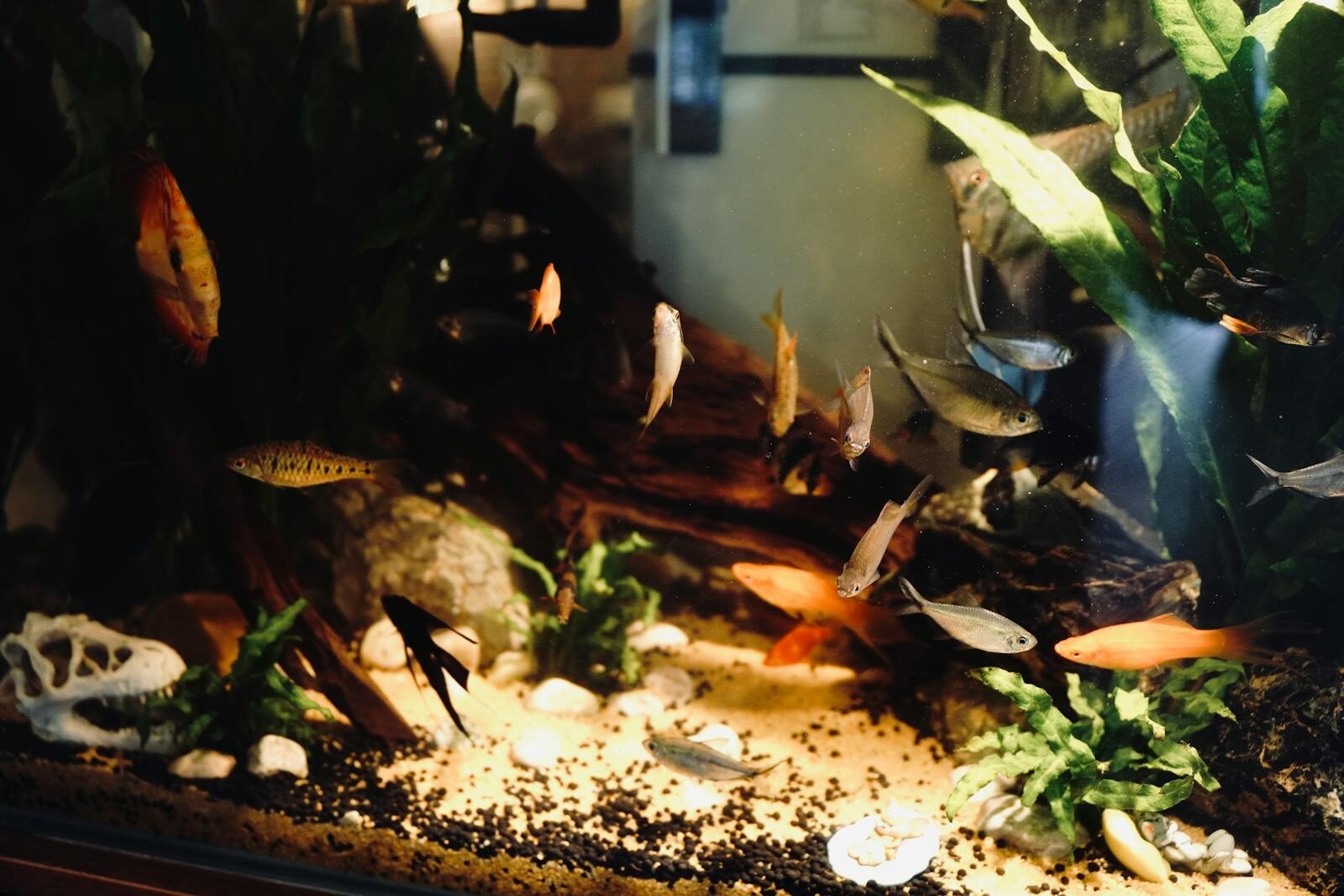
There is a common assumption in the aquarium hobby that more filtration is always better. Run the biggest filter you can fit, turn it up as high as it goes, and your tank will be healthier for it.
In a planted tank that thinking causes problems.
Filtration in a planted aquarium is a balance. You need enough biological filtration to process waste and keep the nitrogen cycle running. But too much surface agitation from a powerful filter drives off the CO₂ your plants depend on. Get that balance wrong and you fight algae and poor plant growth without understanding why.
Here is what I look for when choosing a filter for a planted tank and why.
What a Filter Actually Does in a Planted Tank
Most people think of a filter as something that removes dirt from water. That is the mechanical part. The biological part is what actually keeps your tank healthy.
Filter media provides surface area for colonies of nitrifying bacteria. These bacteria convert toxic ammonia from fish waste into nitrite, then into nitrate that plants can absorb directly. Without a well-established bacterial colony in your filter media your tank cannot process waste fast enough to stay safe for fish.
During my postgraduate biogeochemistry studies I covered in detail how nitrogen moves through water systems and how it shifts between its different chemical forms. We looked at nitrification specifically, the bacterial conversion of ammonia through nitrite to nitrate, as a core process in aquatic ecosystems. What struck me was how dependent that process is on stable conditions. The bacterial communities driving nitrification are sensitive to temperature, pH, and oxygen availability. Disrupt any of those and the whole conversion chain slows down or stops.
That same sensitivity applies directly in an aquarium filter. The bacteria living in your filter media are not just cleaning water. They are running a continuous biochemical process that your fish depend on. Understanding that changes how you think about filter choice, flow rate, and maintenance completely.
In a planted tank this biological filtration works alongside the plants themselves. Dense plant growth absorbs nitrate and other nutrients directly, reducing the load on the filter. A well-planted tank with healthy growth needs less filtration intensity than a fish-only tank of equivalent size. The plants and the filter work together rather than one replacing the other.
This page contains affiliate links. If you purchase through these links I may earn a small commission at no extra cost to you.
Shop Aquarium Filters on Amazon →
Types of Filters for Planted Tanks
Canister filters: The best choice for most planted tanks. The filter sits outside the tank in a sealed canister, drawing water through multiple layers of media and returning it via an outlet pipe. Canister filters offer large media volume for excellent biological filtration, flexible outlet positioning to minimise surface agitation, and quiet operation. They are the standard choice for serious planted tank setups.
Hang-on-back filters:
Hang on the back of the tank with the filter body outside the water. Easier to access and clean than canister filters. Adequate biological filtration capacity for smaller tanks. The main limitation for planted tanks is that most hang-on-back filters create significant surface agitation as water returns to the tank which drives off CO₂. Some models allow you to submerge the return outlet to reduce this.
Sponge filters:
Simple air-driven filters with a sponge providing both mechanical and biological filtration. Very gentle flow and minimal surface disturbance, good for shrimp tanks and low-tech planted tanks where CO₂ loss is a concern. Limited filtration capacity for larger or heavily stocked tanks.
Internal filters:
Sit inside the tank fully submerged. Compact and inexpensive but take up space in the tank, have limited media volume, and most create more surface agitation than a well-positioned canister filter outlet. Fine for smaller low-tech setups.
What I Look for When Choosing
Flow rate matched to tank size:
A general guideline is to turn over the tank volume 4 to 10 times per hour. A 100 litre tank needs a filter rated for 400 to 1000 litres per hour. For planted tanks I lean toward the lower end of this range to minimise CO₂ loss from surface agitation. An oversized filter running at full power drives off CO₂ faster than your injection system can replace it.
Outlet positioning flexibility:
The outlet pipe position determines how much the returning water disturbs the surface. For CO₂-injected tanks I look for filters that allow the outlet to be positioned below the surface pointing along the tank rather than breaking the surface. This circulates water effectively without driving off CO₂.
Media volume and flexibility:
More media volume means more surface area for bacterial colonies and better biological filtration. I look for canister filters with multiple media chambers, biological media like ceramic rings or bio balls for bacterial colonisation, mechanical media like sponges and filter floss for particle removal, and optionally chemical media like activated carbon if needed temporarily.
Ease of maintenance:
A filter you find difficult to clean gets cleaned less often. That leads to reduced filtration capacity and potential bacterial die-off when you do eventually clean it. Look for filters with straightforward access to media, easy priming after cleaning, and clear maintenance instructions.
Build quality and seal integrity:
Canister filters sit outside the tank under pressure. A poor quality seal means leaks. Check reviews specifically mentioning long-term seal integrity rather than just initial performance.
Do Planted Tanks Need a Filter?
A heavily planted tank with very low fish stocking can theoretically maintain water quality through plant uptake of nutrients alone. In practice most planted tanks benefit significantly from filtration.
It provides biological processing capacity beyond what plants alone can manage, keeps water clear, and maintains stable water chemistry between water changes.
The planted tank reduces the filtration load. The filter handles what the plants cannot. They work together.
How to Clean a Filter Without Destroying It
This is one of the most misunderstood aspects of filter maintenance. Cleaning a filter too thoroughly and too frequently destroys the bacterial colonies that make it work.
I completed a formal course in quality control of chemical and environmental measurements that covered in detail how biological and measurement systems respond to disturbance. One of the core principles was that when you intervene in a biological system too aggressively you do not just pause it, you reset it. The recovery time can be weeks. The data gap, or in this case the water quality gap, that follows is the real cost of heavy-handed intervention.
Filter media works exactly this way. The bacterial colonies living in it are a biological processing system that takes weeks to establish. Rinse them in tap water and you expose them to chlorine and chloramine that kill them outright. Replace all media at once and you remove every established colony simultaneously.
Clean too frequently and you never allow colonies to reach stable population levels. In every case the result is the same, rising ammonia in a tank that was previously stable, because the biological processing capacity has been reduced or eliminated.
For canister filters in planted tanks cleaning every 2 to 3 months is typically sufficient. When you do clean, rinse media in old tank water collected during a water change. Replace different media types on a rotating schedule, biological media one month, mechanical media the next, so established bacterial colonies always have familiar media to recolonise from.
Signs a filter needs cleaning: noticeably reduced flow rate, increased cloudiness, or rising ammonia or nitrite in a normally stable tank.
Frequently Asked Questions
What filter is best for a planted tank?
A canister filter is the best choice for most planted tanks. It offers large biological filtration capacity, flexible outlet positioning to minimise CO₂ loss, and quiet operation. For smaller low-tech tanks a hang-on-back filter or sponge filter works well.
Can I use a filter in a planted aquarium?
Yes and for most setups you should. Filtration provides biological processing capacity that plants alone cannot fully replace, keeps water clear, and maintains stable water chemistry. Dense planting reduces the filtration load but does not eliminate the need for a filter in most tanks.
Is a canister filter good for a planted aquarium?
Canister filters are the standard choice for planted aquariums. Their large media volume, external placement, and flexible outlet positioning make them well suited to planted tank needs. Position the outlet below the surface to minimise CO₂ loss from surface agitation.
How often should I clean the filter in a planted tank?
Every 2 to 3 months for canister filters in typical planted tanks. Always rinse media in old tank water rather than tap water to preserve bacterial colonies. Replace different media types on a rotating schedule rather than all at once.
Do canister filters cause high nitrates?
No. Canister filters convert ammonia to nitrate as part of the nitrogen cycle, nitrate is simply the end product of that process regardless of filter type. What can contribute to rising nitrate is a filter left too long without cleaning, where accumulated organic waste decomposes inside the media. Regular gentle cleaning and consistent water changes keep nitrate in check. Dense plant growth helps significantly too since plants absorb nitrate directly.
How do canister filters work in an aquarium?
Water is drawn from the tank through an intake pipe into a sealed external canister. It passes through multiple layers of filter media, mechanical media removing particles, biological media hosting bacterial colonies that process nitrogen compounds, then returns to the tank via an outlet pipe. The sealed design allows large media volume and flexible flow direction.
What size canister filter do I need?
Choose a filter rated to turn over your tank volume 4 to 10 times per hour. For planted tanks aim toward the lower end of this range to reduce CO₂ loss from surface agitation. A 100 litre tank suits a filter rated for 400 to 600 litres per hour well.
Are canister filters worth it for a planted aquarium?
For tanks above 60 litres with CO₂ injection yes. The combination of large biological filtration capacity and outlet positioning flexibility that minimises CO₂ loss makes canister filters the most practical choice for serious planted tank setups. For smaller low-tech tanks simpler options work well enough.
Get the Filter Right and Let the Biology Work
A good filter running at the right flow rate with well-maintained media is something you set up once and largely forget about. It processes waste quietly in the background while your plants grow and your fish thrive.
Match flow rate to tank size without over-filtering, position the outlet to protect your CO₂ levels, and clean gently and infrequently enough to preserve the bacterial colonies doing the real work.
Browse aquarium filters on Amazon and compare options at every price point.
This page contains affiliate links. If you purchase through these links I may earn a small commission at no extra cost to you.