

This article was written and reviewed by Serge, MSc. I hold degrees in Plant Biology, Environmental Biology and Biogeochemistry, with research experience in plant physiology, ecosystem science, and field-based environmental studies. Every article on this site is grounded in real academic training and genuine scientific research.
Affiliate disclosure: This site has affiliate links, including Amazon. As an Amazon Associate I earn from qualifying purchases, at no extra cost to you.
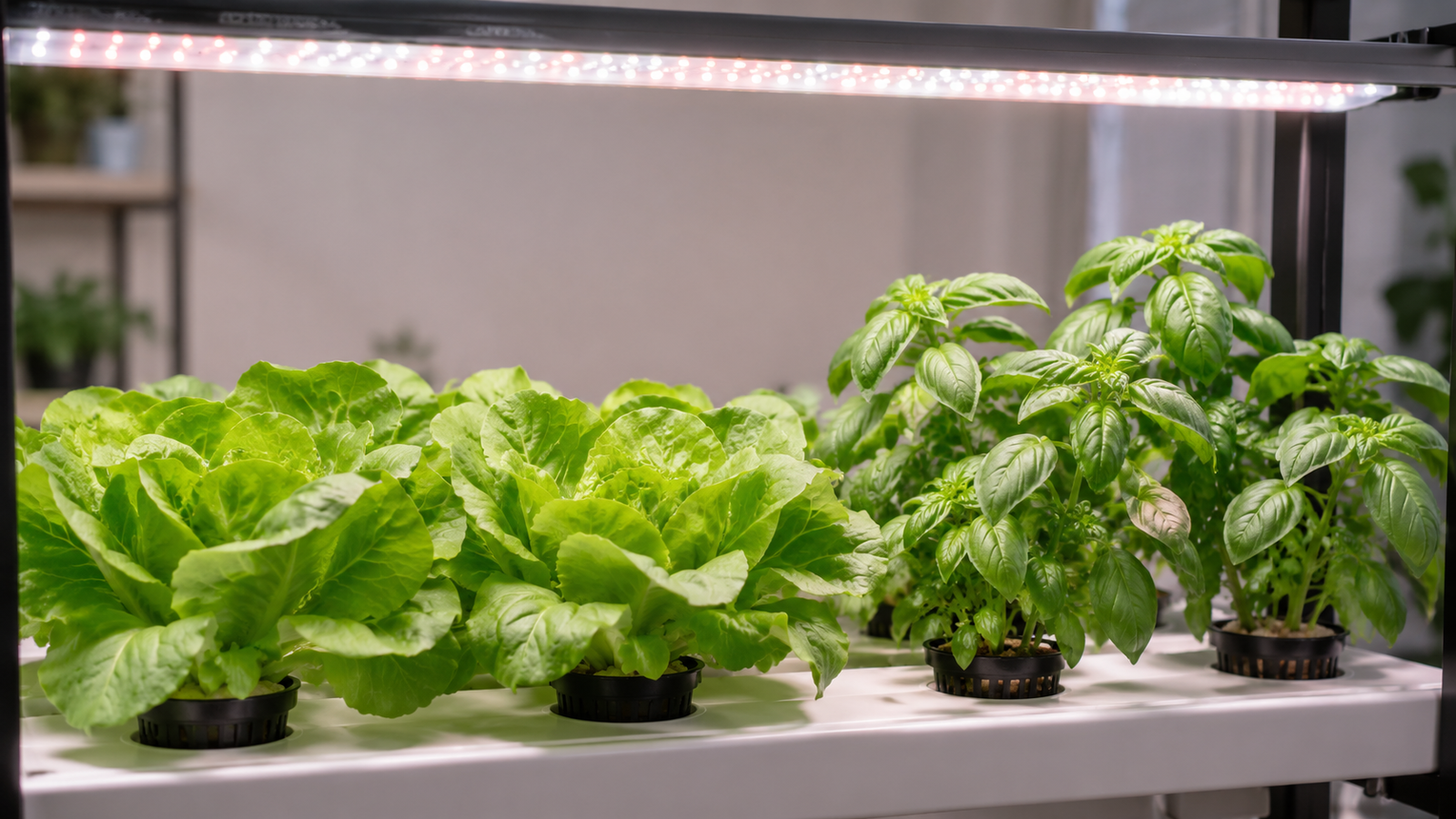
When there is no sun, the grow light does all of it….
A windowsill rarely does the work alone, and a grow light is how you replace what the sun gave your plants for free.
Here is the problem: grow lights are sold on watts and glossy marketing, and neither tells you what a plant can use.
So what should you get?
Why I see light differently
Most people know one thing about plants and light: plants need the sun. True, but it stops right where it gets useful. The question that counts is what the plant does with that light, and which parts of it it can even use.
I learned this from the other end…
In my plant biology studies I spent a long time on carbon metabolism, the stage of photosynthesis where a plant turns light energy into sugars from carbon dioxide. To get there, you first have to understand how a leaf catches light at all, and that is pigments: chlorophyll and a few others, each one grabbing certain colours and reflecting the rest.
Plant biochemistry took me deeper into those pigments. Plant ecophysiology taught me how plants react to their conditions, and light is one of the biggest.
So I do not look at the lamp. I look at the leaf…
A grow light is a stand-in for the sun, and the plant cannot tell the difference, as long as the light covers the colours its pigments absorb. That is the whole point. The sun gives a full range of light. A good grow light copies the useful part.
Photosynthesis runs either way. If you want to see it with your own plants, I put together a step-by-step home experiment on how light colour changes plant growth that walks you through seeing it for yourself.
Here is where the marketing falls apart.,,
A light can look blinding to your eye and still feed a plant poorly, because your eye and a leaf’s pigments do not rate the same colours. That gap, between what looks bright to us and what a plant can use, is what decides whether a light is worth your money. So I keep it to three questions: what kind of light, how much reaches the plant, and how long you run it.
What a plant can use from light
A plant does not use all light equally. The slice it uses for photosynthesis sits between 400 and 700 nanometres, called PAR. Oklahoma State University Extension says it plainly: “wavelengths in the range of 400 and 700 nm are considered to be optimum for plants.”
Inside that band, blue and red do the heavy lifting. Blue builds chlorophyll and keeps growth compact and leafy. Red drives growth and flowering. A good light covers the whole band, and most do, because they are full-spectrum white LEDs that already include both.
How much light, and why I ignore watts
This is where people go wrong. Watts measure electricity used, not light delivered. Two lights at the same wattage can feed a leaf very differently.
I go by two numbers. PPFD is the intensity reaching the plant. DLI is the total light it gets in a day. Iowa State gives clear DLI targets: 3 to 6 for low-light foliage, 6 to 10 for medium, 12 to 16 for high-light plants, and 18 to 30 for herbs and fruiting crops, in mol per square metre per day (Iowa State University Extension).
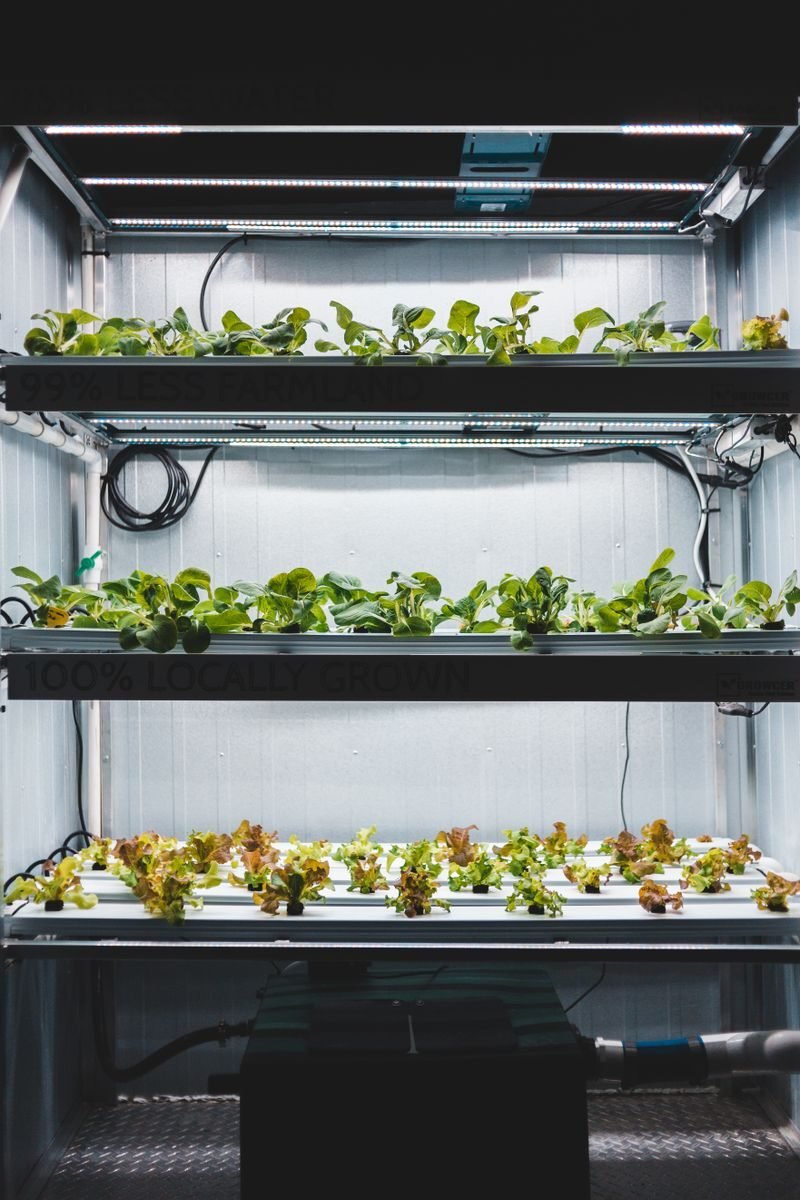
For leafy greens and herbs, I aim mid-range. Fruiting crops like tomatoes need the high end, which is why I tell beginners to start with lettuce. Check any light and run-time against your target with my daily light integral calculator.
Full-spectrum, or the purple blue-and-red kind?
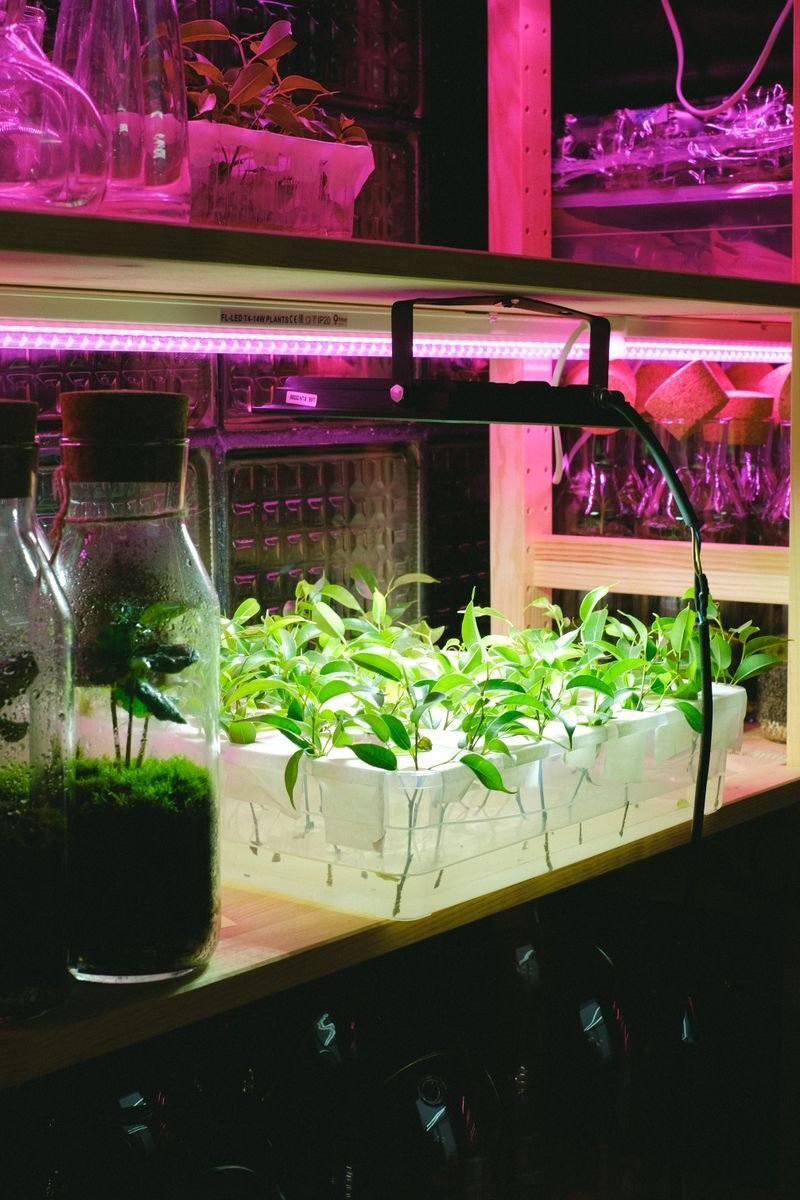
You will see white “full spectrum” lights and purple blue-and-red ones. For a home grow, I pick full-spectrum white. It covers everything the plant needs, and it is easy to live with in a room. The purple ones are not.
The blue-and-red mix can be a touch more efficient. For leafy greens and herbs, you do not need to tune ratios. Full spectrum does the job.
Why I buy LED
Old setups used fluorescent tubes or high-intensity discharge lamps. For home growing, I pick LED every time. More efficient. Runs cool, so it sits close without scorching. Lasts years. Full spectrum as standard. Unless you already own something else, buy LED.
How long to run it
More hours is not better. Most leafy greens and herbs want 12 to 16 hours a day, and Iowa State suggests 12 to 14 to start. Plants need darkness too, so never run a light around the clock. Put it on a cheap timer and forget it.
What I check before buying
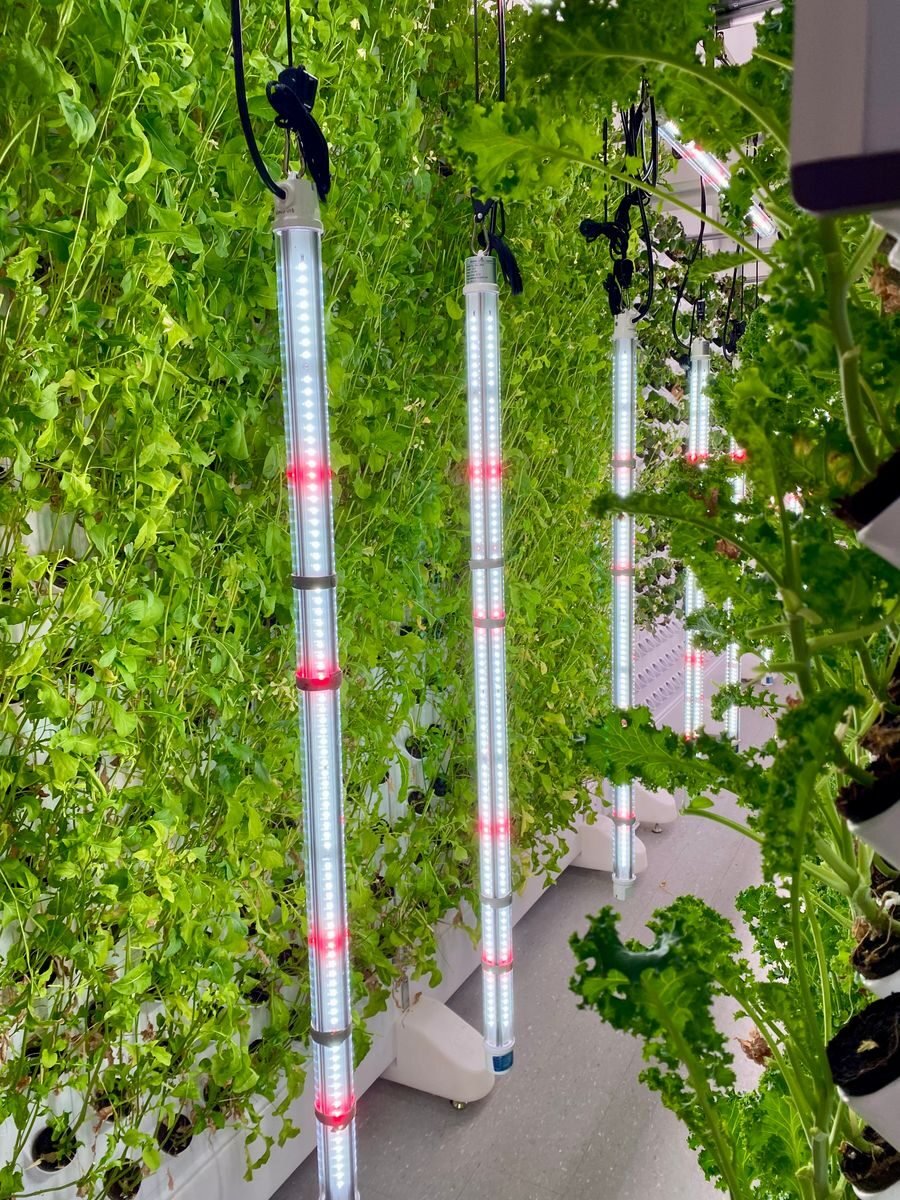
Before you buy, run four checks. Match the light’s rated area to your grow space, because a small light will not feed a big tray evenly. Look for PPFD or DLI in the specs, not just watts. If a seller quotes only watts, they are hiding the number I want to see.
Follow the maker’s hanging height too: closer gives more intensity but less coverage and more heat. And add a cheap timer. It costs a couple of dollars and does the one job you would otherwise forget.
Setting up your first system? I treat light as a basic alongside water and nutrients, and my guide Start Your First Hydroponic Garden shows how they fit together. It helps to know how plants cope in low indoor light before you judge your spot, and if you have not chosen a system yet, start with the types of hydroponic systems.
What people wonder about grow lights
Can I just use a normal LED bulb?
No. Household bulbs do not put out enough usable light at the right intensity. Use a light built for growing, with a stated PPFD or DLI.
How far above the plants?
Follow the maker’s height, usually 15 to 60 centimetres. Closer gives more intensity but less coverage and more heat, so do not just shove it as close as it goes.
How many hours a day?
Twelve to sixteen for most greens and herbs. Use a timer, and give the plants a dark period.
Do I need the purple blue-and-red kind?
Not for a home grow. Full-spectrum white covers what greens and herbs need and is nicer to live with.
So what should you buy
Never buy on watts or brightness. Buy on what reaches the plant: a full-spectrum LED, with a stated PPFD or DLI to match your crop, on a timer for 12 to 16 hours. Get that right and light stops being your problem.