

This article was written and reviewed by Serge, MSc. I hold degrees in Plant Biology, Environmental Biology and Biogeochemistry, with research experience in plant physiology, ecosystem science, and field-based environmental studies. Every article on this site is grounded in real academic training and genuine scientific research.
Affiliate disclosure: This site has affiliate links, including Amazon. As an Amazon Associate I earn from qualifying purchases, at no extra cost to you.
A female aphid is born already pregnant…
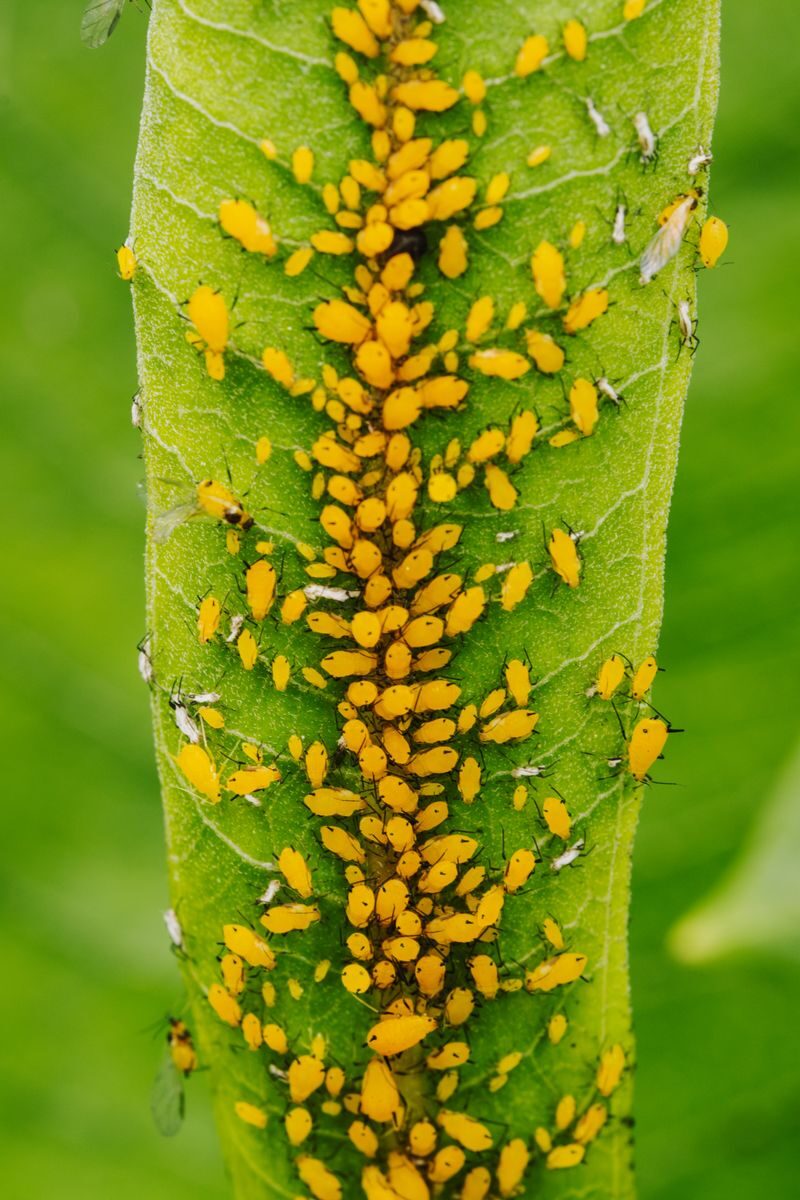
She carries live young inside her, and those young already have the next generation forming inside them. That is how a handful of aphids on plants turns into a colony coating your stems in under a week.
Aphids are one of the most common plant pests I get asked about, and one of the most misunderstood. Most people kill the ones they can see and wonder why more show up two days later. I want to show you what aphids actually do to a plant, and the order I work through to clear them without wrecking the good insects already on your side.
What aphids are and why they multiply so fast
Aphids are small soft-bodied insects, usually 1 to 3 mm long, with pear-shaped bodies and two little tubes sticking out the back called cornicles. They come in green, black, grey, pink, white, and brown, so colour is a poor way to tell them apart. The cornicles are the giveaway.
They feed by pushing a needle-thin mouthpart into the plant and drinking sap straight from the phloem, the tubes that carry sugars around the plant. A few doing this is harmless. A colony doing it is a drain the plant struggles to keep up with.
For most of the growing season aphids skip males entirely. Females clone themselves, giving birth to live daughters that already carry their own daughters inside them. One female can produce dozens of offspring, and those offspring mature in about a week, which is why a colony seems to appear overnight.
When a plant gets crowded or stressed, some aphids are born with wings. Those winged females fly off to find fresh plants, and that is how the problem jumps from one pot to the next and from garden to garden.
Where aphids come from and what attracts them
People often ask me where aphids came from when there were none the day before. Usually it is those winged females landing after a flight, pulled in by soft new growth. Aphids love tender young shoots, because the sap there is easiest to reach and richest in nitrogen.
That nitrogen point is worth knowing for how you feed your plants. A lot of my training dealt with how nitrogen moves through a plant, and the short version is that heavy nitrogen feeding pushes out fast soft leafy growth full of easy sap. That soft growth draws aphids straight in, which is why over-fed plants often carry the heaviest colonies.
Indoors, aphids usually arrive on a new plant you brought home, on cut flowers, or through an open window. They also hitch a ride on herbs and vegetables you bring in from the garden.
The damage aphids do
A few aphids will not hurt a healthy plant. The trouble starts when the colony grows and their constant sap-drinking pulls resources faster than the plant can replace them. You see it as curled, yellowing, or twisted leaves and stunted new shoots. Even a plant that shrugs off the attack often grows more slowly for a while, because fighting back costs it energy it would otherwise spend on new growth.
Then there is the mess they leave behind. Aphids drink far more sap than they can use, and they excrete the excess sugar as a sticky liquid called honeydew. That honeydew coats the leaves below the colony and becomes food for a black fungus called sooty mould. My background in microbiology taught me to read that black film for what it is: not a disease attacking the plant, but a fungus feeding on the sugar the aphids dropped. It blocks light from the leaf and makes the plant look far sicker than the aphids alone would.
The honeydew draws ants, too. Ants farm aphids for their sugar and will defend them from predators to protect the supply, so a trail of ants running up a stem is often a sign of aphids above.
The last problem is the one you cannot see coming. As an aphid moves from plant to plant, probing each one with that needle mouthpart, it can carry plant viruses from an infected plant into a healthy one. Aphids are the most important insect spreaders of plant viruses in the world, and that is why I never let a colony sit on vegetables or fruit. Killing the aphids does not cure a virus once it is in, so keeping their numbers down is the only real defence.
How I get rid of aphids
I work from the gentlest method up, and most of the time I never reach the top of the list. Starting soft protects the ladybirds and other helpers already doing the job for free.
Blast them off with water
The first thing I do is hit the colony with a firm jet of water from a spray bottle or hose. Aphids are soft and weakly attached, so a strong spray knocks most of them off, and once they are on the ground they rarely climb back up. Do it in the morning so the leaves dry through the day, and repeat every couple of days to hold the numbers down with zero chemicals.
Soap spray
When water is not enough, I move to a soap spray. Mix about one teaspoon of mild liquid soap into a litre of water and spray it straight onto the aphids, covering the undersides of leaves where they hide. The soap breaks down their soft outer coating and they dry out.
People always ask me if Dawn dish soap works. It can, but modern dish liquids are detergents packed with degreasers and scents that can burn some leaves. I prefer a pure liquid soap or a proper insecticidal soap, I test on a few leaves first, and I rinse after a few hours. Never spray in strong sun.
Neem oil
For a heavier or repeat problem, neem oil works well and keeps working after the spray dries. It disrupts feeding and the aphid life cycle rather than just killing on contact. I have written a full guide to using neem oil on plant pests if you want the mixing ratios and timing.
Bring in the predators
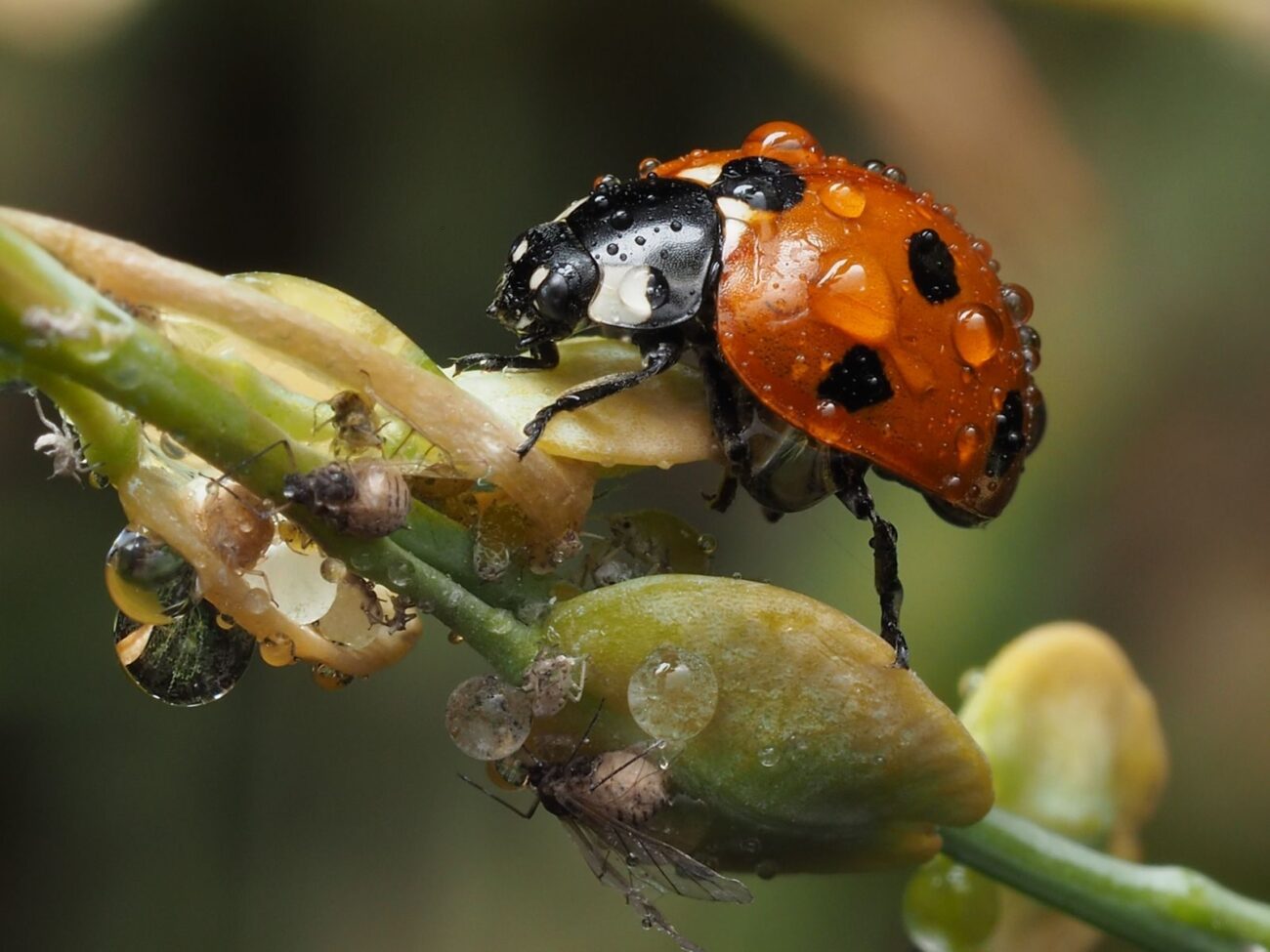
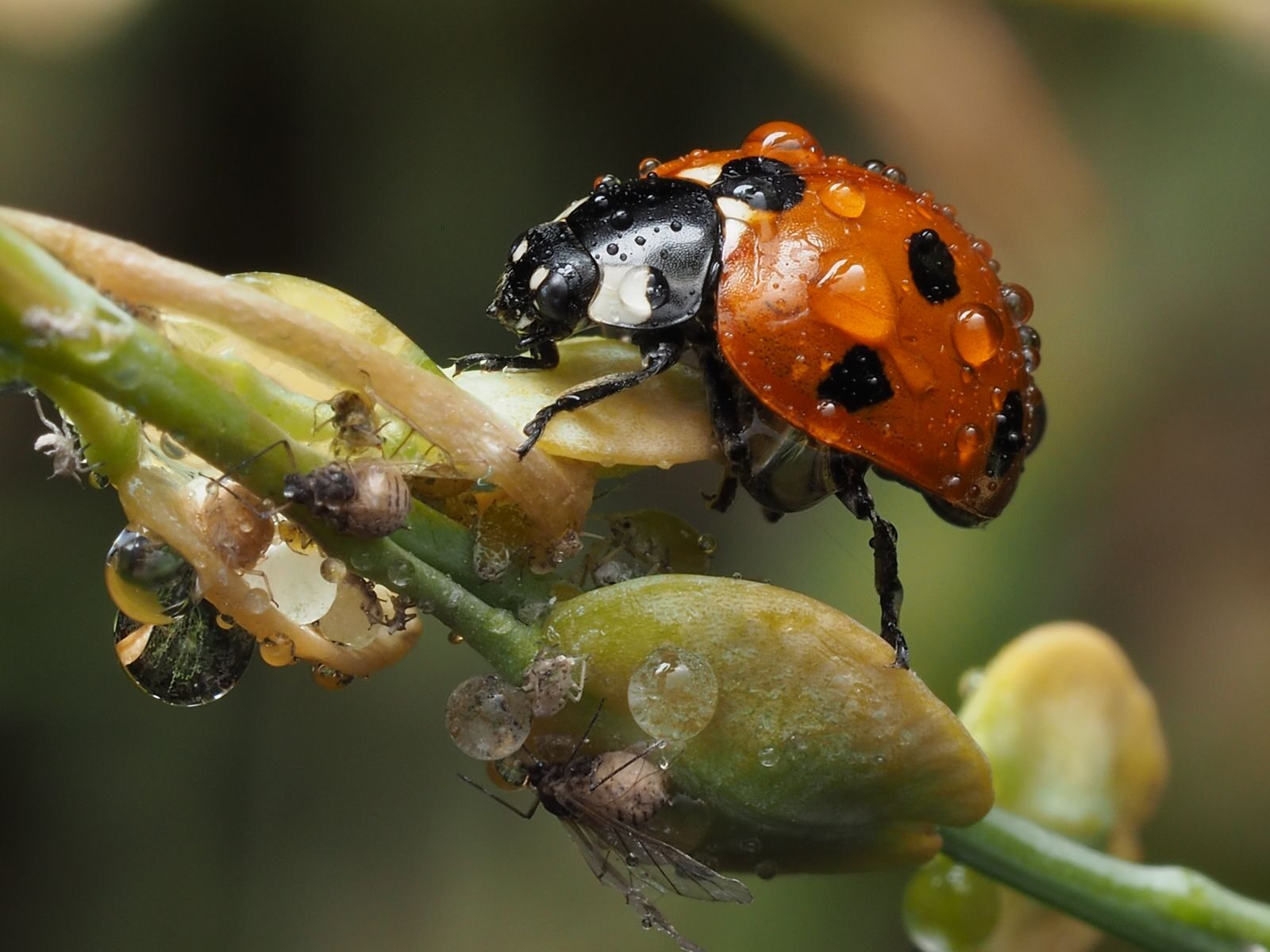
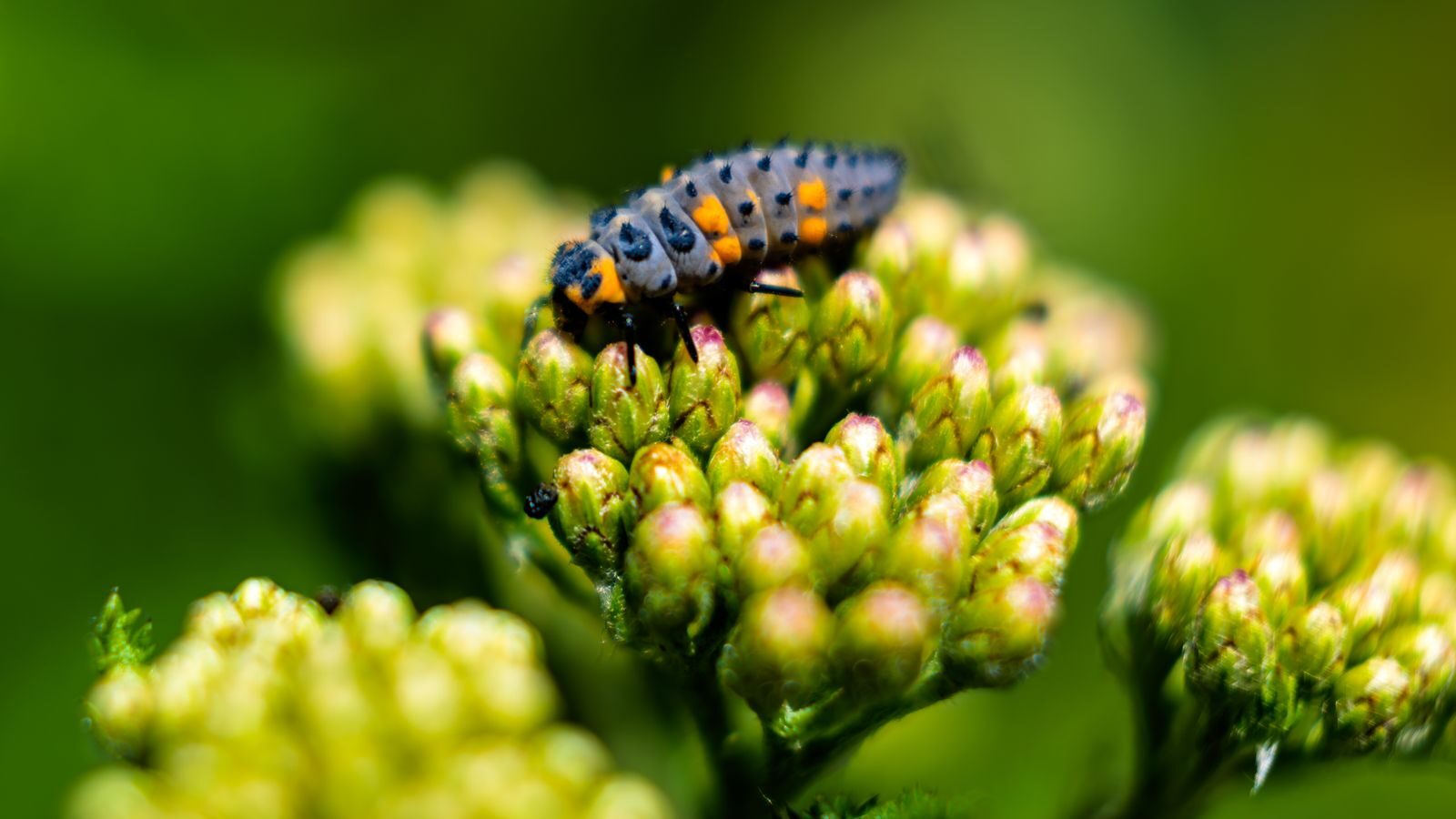
This is my favourite method, because it does the work for me. Ladybirds and their larvae, lacewings, hoverfly larvae, and tiny parasitic wasps all eat aphids in large numbers, and a single ladybird larva can get through hundreds before it pupates. You can buy them to release, or invite them in by planting flowers they like and laying off broad insecticides that kill them along with the pests.
When to reach for more
I rarely recommend strong chemical insecticides for aphids, since they wipe out the predators too and leave you worse off next time round. If you have to, spot-treat only the worst plants instead of spraying everything, and pick a product cleared for what you are growing. For anything you plan to eat, check the label and the waiting time before harvest.
How to stop aphids coming back
Check your plants often, especially the soft new tips and the undersides of leaves, since catching ten aphids is far easier than clearing ten thousand. A quick look twice a week through the growing season saves a lot of grief.
Go easy on high-nitrogen feed, as we covered, because lush soft growth pulls aphids in. Steadier feeding gives you tougher growth they find harder to work.
Planting to help works too. Strong-smelling herbs and flowers like chives, garlic, marigolds, and nasturtiums can throw aphids off or draw them away from your main plants, and flat open flowers bring in the predator insects. Keep any new plant apart for a week or two before it joins the rest, since new arrivals are the most common way aphids get in.
Roses earn a special mention, since they draw aphids more than almost any other plant. If you keep roses, start checking the buds early in spring and stay on top of them, and you will dodge the heavy colonies that pile up by summer.
FAQs
Are aphids harmful to humans?
No. Aphids do not bite people, spread disease to us, or infest homes the way some pests do, since they feed only on plants. The worst they do indoors is fly around and leave sticky honeydew on leaves and nearby surfaces.
Should I remove aphids or leave them alone?
A few aphids on a healthy established plant can be left, since predators often move in and handle them. Step in once the colony is growing fast, the leaves start curling, or the plant is young, edible, or a rose. On milkweed grown for monarchs, many gardeners tolerate the specialist orange aphids rather than spray near caterpillars.
Will aphids kill my plants?
A strong plant usually survives them, though it may grow slowly and look rough. Seedlings, young transplants, and badly infested plants are the ones at real risk. The bigger danger is the plant viruses aphids spread, which can do lasting harm even after the aphids are gone.
Can aphids spread to my other plants?
Yes, easily. Winged aphids fly between plants and crawling ones move along touching leaves. This is why I keep a new or infested plant away from the rest until it is clean.
Where do aphids go in winter?
In cold climates most aphids lay eggs in autumn on stems, bark, or the base of plants, and those eggs hatch in spring. Some carry on all year on indoor and greenhouse plants. Clearing old plant debris in autumn cuts down next year’s numbers.
Can I kill aphids with vinegar?
I do not recommend it. Vinegar strong enough to kill aphids will also scorch plant leaves, and weak enough to be safe it does little. A mild soap spray is safer and works better.
Are aphids attracted to certain plants?
Yes. They love soft new growth and are drawn to roses, beans, tomatoes, milkweed, honeysuckle, and over-fed leafy plants of all kinds. Different aphid species favour different hosts, but tender nitrogen-rich shoots are the common thread.
Can aphids live in soil?
Most feed on leaves and stems, but a few kinds feed on roots underground. Root aphids show up as a white waxy coating on roots and slow, wilting plants that do not perk up after watering, and they need a soil drench rather than a leaf spray.
Can aphids fly?
Some can. When a colony gets crowded or the plant declines, a generation is born with wings and flies off to start colonies elsewhere. Most aphids in a colony are wingless, so seeing winged ones tells you the population is peaking and spreading.
Why are aphids worse in some years?
A mild winter lets more eggs and adults survive, and a warm early spring lets colonies get going before their predators catch up. Weather that suits the aphids but delays the ladybirds gives you a bad aphid year, and numbers usually settle once predators build up later in the season.
Catch them early and you win!
Aphids only get out of hand when you leave them. A colony that looks frightening today was five aphids on one shoot last week. Hit them with a jet of water the moment you spot them and you rarely need anything stronger.
The stronger sprays are there when you need them, but most infestations never get that far. Two minutes checking the soft new tips twice a week is all it takes to stay ahead of them.