


This article was written and reviewed by Serge, MSc. I hold degrees in Plant Biology, Environmental Biology and Biogeochemistry, with research experience in plant physiology, ecosystem science, and field-based environmental studies. Every article on this site is grounded in real academic training and genuine scientific research.
Affiliate disclosure: This site has affiliate links, including Amazon. As an Amazon Associate I earn from qualifying purchases, at no extra cost to you.
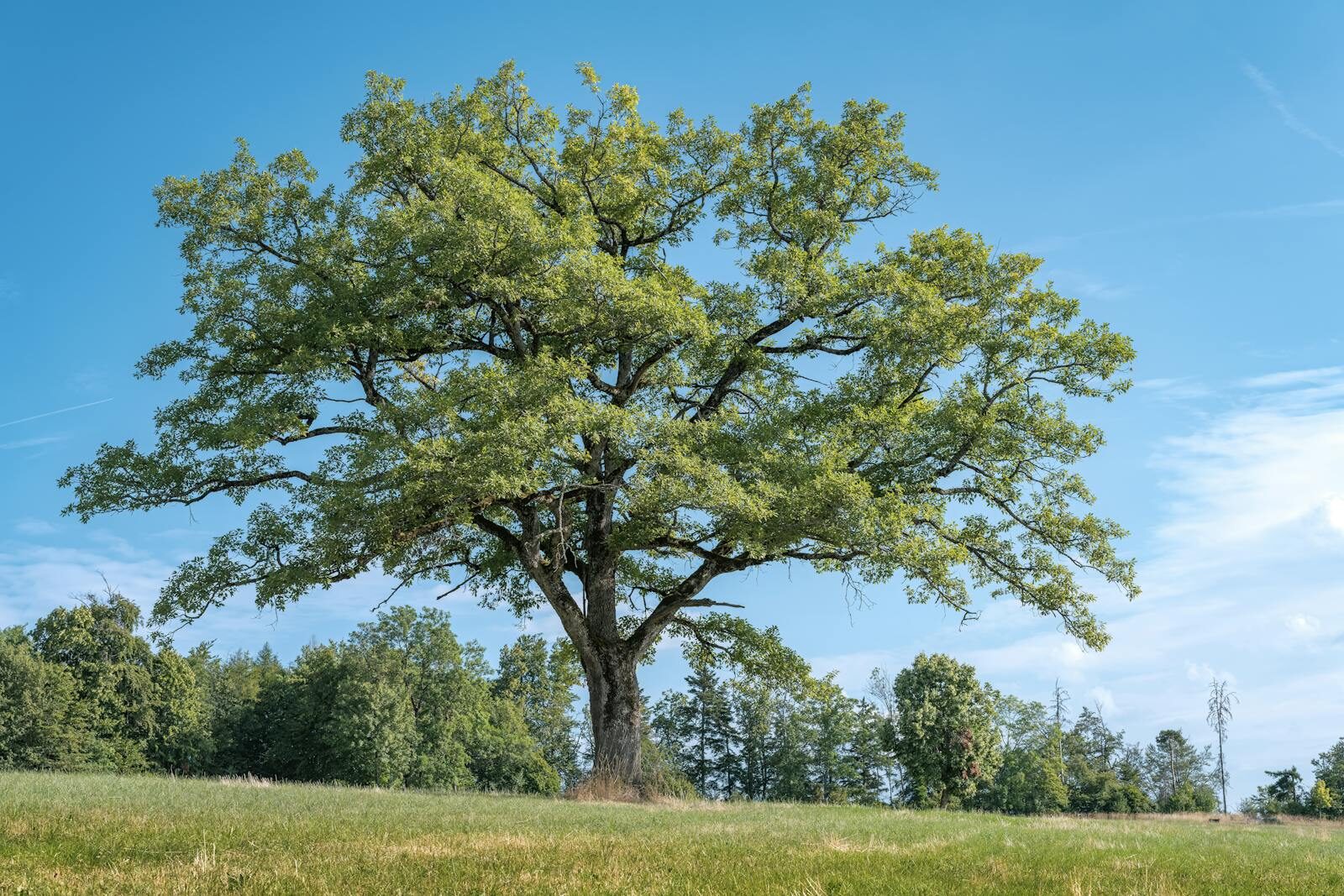
Stand under a fully grown oak tree and try to count how many living things depend on it.
I did this once during my ecology studies. Not literally counting, that would take years, but working through the numbers from research data. Over 280 species of insects that depend specifically on oak. Birds that eat those insects. Mammals, fungi, lichens, beetles all living in the bark and dead wood. A single mature oak supports more wildlife than almost any other tree in temperate Europe.
One tree doing all of that.
I want to be upfront about something though. An oak tree planted today will not reach full maturity in your lifetime. A mature English oak takes well over a century to develop. You are planting it for the future, not for next summer.
I know that sounds like the opposite of exciting. But stay with me.
During my ecology and ecophysiology of plants studies, I looked at how oak woodland ecosystems function at both the community level and the individual plant level. What surprised me was not just the biodiversity an oak supports but how the tree itself drives the chemistry of the soil around it.
Oak leaf litter acidifies the soil as it breaks down, creating specific conditions that favour particular fungi and invertebrates. The tree shapes its own environment over time. I found that connection between plant chemistry and ecosystem structure fascinating and it has stayed with me.
Planting an oak is one of the most worthwhile things you can do in a garden. And the practical side is much simpler than most people expect.
Here is how I would approach it.
Which Oak Should You Grow?
There are over 500 species of oak in the genus Quercus. For temperate European and North American gardens these are the ones I consider most useful:
English oak (Quercus robur)
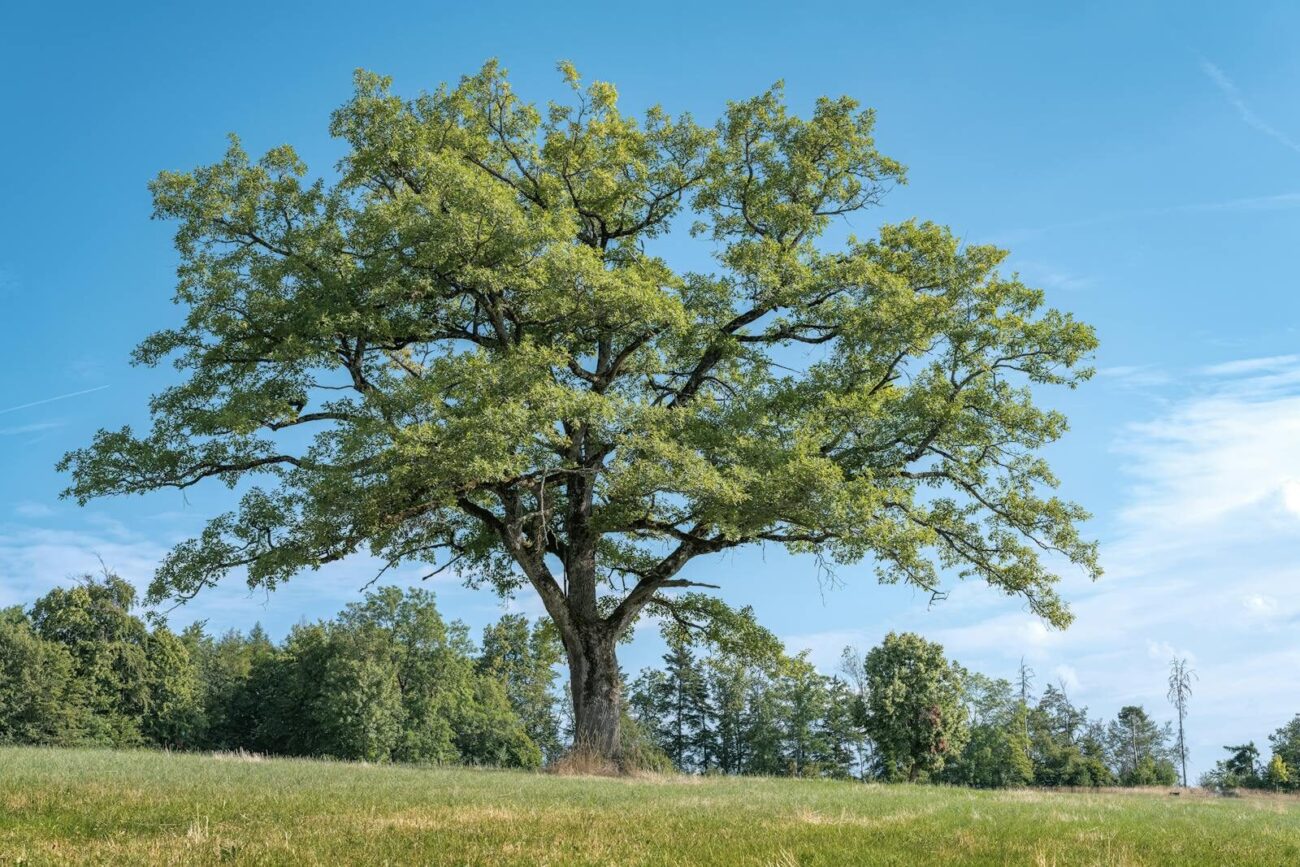
Broad spreading canopy, deeply lobed leaves, produces acorns from around age 20. This is the species I studied most in my ecology coursework as it dominates many temperate European woodland ecosystems. If I were choosing one oak for ecological value in a British or European garden this is the one I would pick without hesitation.
Sessile oak (Quercus petraea)
Very similar to English oak but better suited to hillier and more acidic soils. My ecology training covered how sessile oak often dominates on challenging upland sites where English oak does not thrive as well.
Turkey oak (Quercus cerris)
Grows faster than English oak and handles drier conditions well. Less valuable for native wildlife but a solid practical choice where faster establishment matters.
Red oak (Quercus rubra)
A North American species with spectacular orange and red autumn colour. It grows noticeably faster than English oak and I think it is underused in temperate gardens. If you want an oak that looks incredible in October and reaches a decent size in your lifetime, red oak is worth serious consideration.
My recommendation for most home gardeners is English oak for ecological value or red oak for faster growth and autumn colour. Both are excellent for different reasons.
How Fast Do Oak Trees Actually Grow?
Slowly. I will not pretend otherwise.
English oak adds approximately 30 to 60 cm per year when young and well established. A 10 year old tree in good conditions might reach 3 to 5 metres. Full height of 20 to 40 metres takes well over a century.
Red oak grows faster at 60 to 90 cm per year and reaches a useful size more quickly. If I had a large garden and wanted an oak that would make a real visual impact within my lifetime, red oak would be my first choice.
One thing worth knowing. If someone sells you a “fast-growing oak” they almost certainly mean Turkey oak or red oak rather than English oak. Both are real oaks and perfectly good trees. Just know what you are buying before you commit.
Growing an Oak From an Acorn
This is one of my favourite things to recommend. Acorns germinate easily and there is something deeply satisfying about growing a tree from a seed you picked up off the ground yourself.
I have suggested this to friends who thought they could not grow anything. Every single one of them managed it. If you can put a bag in a fridge and remember to water a pot occasionally, you can grow an oak from an acorn.
Step 1. Collect acorns in autumn
Collect between September and November. Pick plump firm acorns with caps still attached and avoid any with holes, soft spots, or mould. The first check worth doing is a float test. Drop them in a bowl of water. Acorns that sink are viable. Those that float are usually not worth planting.
Step 2. Cold stratification
Oak acorns need a cold moist period to break dormancy before they germinate. When I studied seed dormancy and germination timing during my plant physiology coursework this requirement made complete biological sense. It stops acorns germinating in autumn only to get killed by the first hard frost.
The cold period resets the seed’s internal biochemical clock, signalling that winter has passed and conditions are safe for growth. The same temperature-driven dormancy mechanisms I studied in my germination biology work apply directly here.
Place viable acorns in a zip-lock bag with slightly damp compost or sand and put them in the fridge for 4 to 6 weeks.
One practical tip, label the bag clearly. You do not want to explain to your family why there are acorns in the vegetable drawer.
Step 3. Sow in deep pots
Use pots at least 20 cm deep for oak. This species develops a long taproot right from the start and restricting it stunts the tree permanently. Plant each acorn on its side about 3 to 4 cm deep in good quality compost and keep it moist in a cool bright spot.
Step 4. Germination
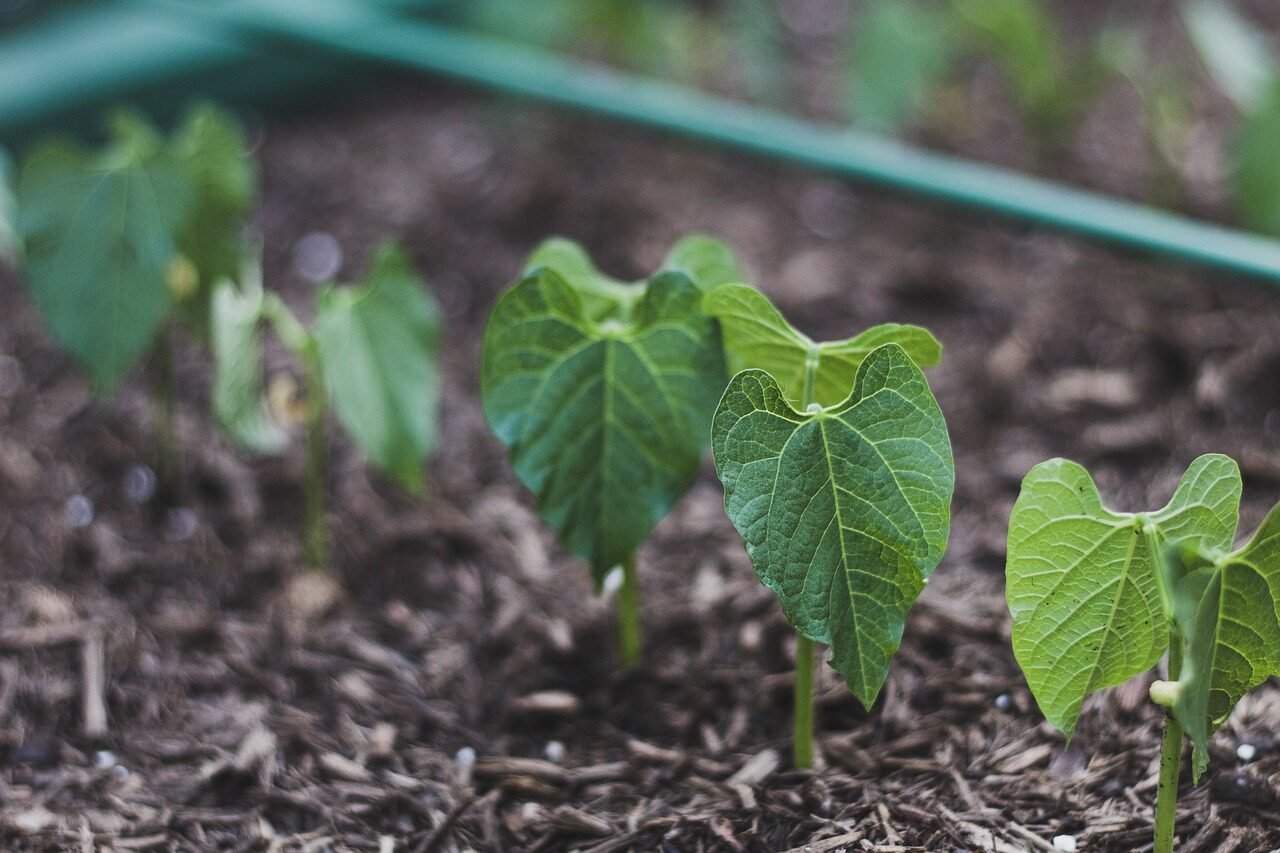
Typically happens in spring within 3 to 6 weeks after cold stratification. The taproot pushes down first, then the shoot comes up. When I first studied germination processes in plant physiology I found this sequence fascinating. Watching a future 300 year old tree emerge from a small seed never gets old.
Step 5. Grow on for a year or two
My recommendation is to keep oak seedlings in deep containers for one to two growing seasons before planting out. Young oaks establish much better when they have a decent root system first. Rushing this stage is one of the most common mistakes with homegrown oaks. Give it time.
Where to Plant an Oak
Position matters enormously with an oak because once it is in the ground it stays there. Here is how I think through the decision:
Space: A mature English oak needs significant room. Plan for a canopy spread of 15 to 25 metres eventually and keep at least 10 metres from buildings, boundaries, and underground services. Red oak and Turkey oak take up less space at maturity which makes them better for smaller gardens.
Sun: My preference is full sun. Full sun produces faster growth and a more even canopy. Oaks grow more slowly and develop less evenly without good light.
Soil: One thing I appreciate about oaks is how adaptable they are. English oak handles clay, loam, and sandy soils well. During my biochemical techniques in botany training I learned how soil chemistry affects nutrient uptake at a cellular level and oaks show more tolerance of pH and mineral variation than many other tree species. Aim for slightly acidic to neutral pH between 5.5 and 7.0 for best results.
Drainage: Moderately moist soil works fine. Permanent waterlogging does not suit oaks. If your garden holds water after heavy rain I would lean toward sessile oak which tolerates wetter conditions better than English oak.
How to Plant an Oak Tree
Bare-root trees are my first recommendation between November and March. They cost less, handle easily, and establish just as well as container trees when planted correctly.
Container-grown trees work at any time but autumn planting works best when soil stays warm and rainfall reduces watering needs.
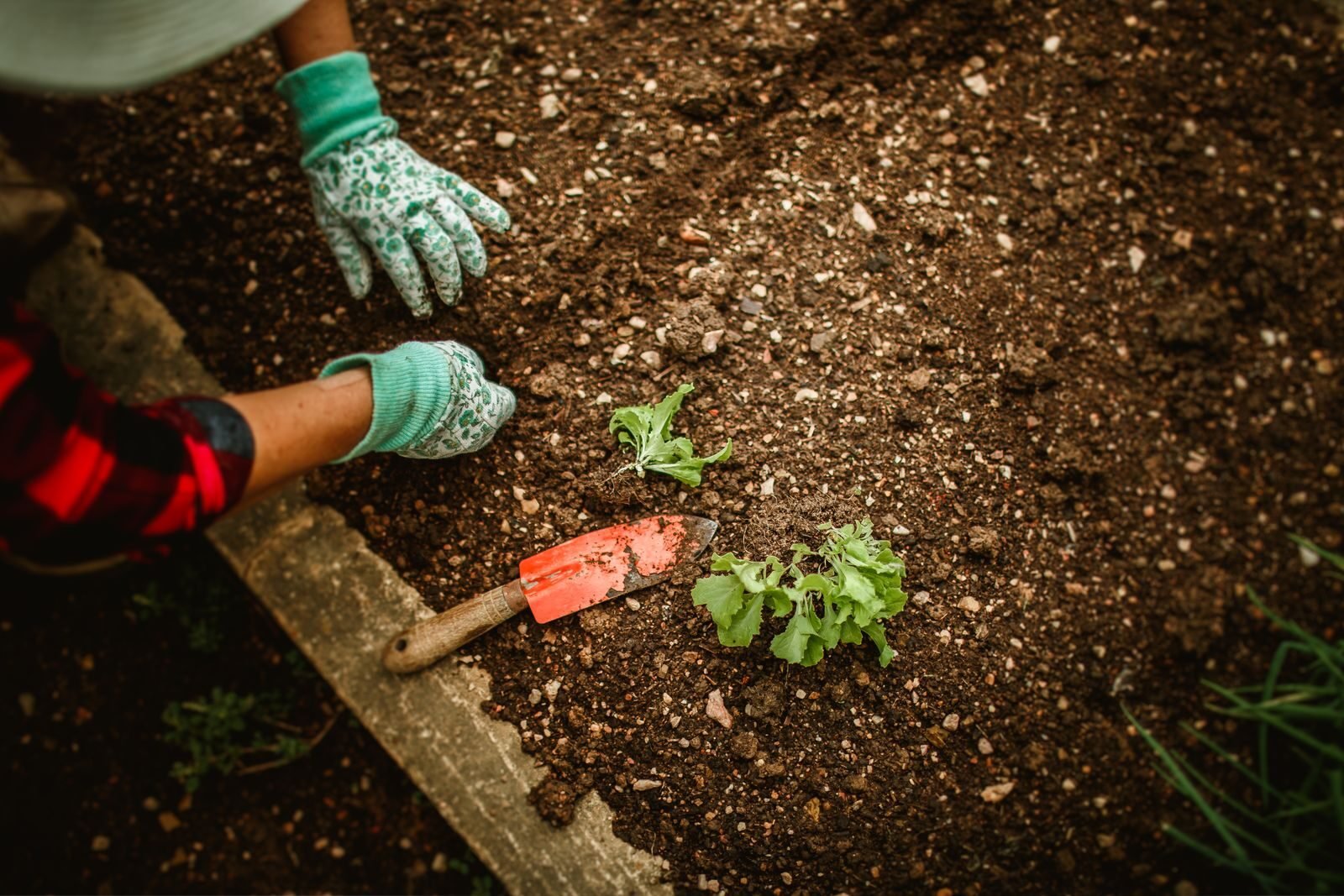
Dig a hole at least twice the width of the root ball. Do not add compost or fertilizer directly into the planting hole. Oak roots need to push out into native soil to develop a strong root system. Amend the surrounding area rather than the hole itself.
Plant at the same depth the tree grew in the nursery. The root flare, where the trunk widens at the base, sits at or just above soil level after planting.
Stake for the first two to three years using a stake driven at a 45 degree angle rather than straight down alongside the trunk. This allows slight trunk movement in wind which builds stronger denser wood.
My plant physiology studies covered how mechanical stimulation influences cell wall development in stems and this is one of those cases where understanding the biology gives you a practical advantage most people miss. A tree that moves slightly in wind develops more lignified tissue than one held completely rigid.
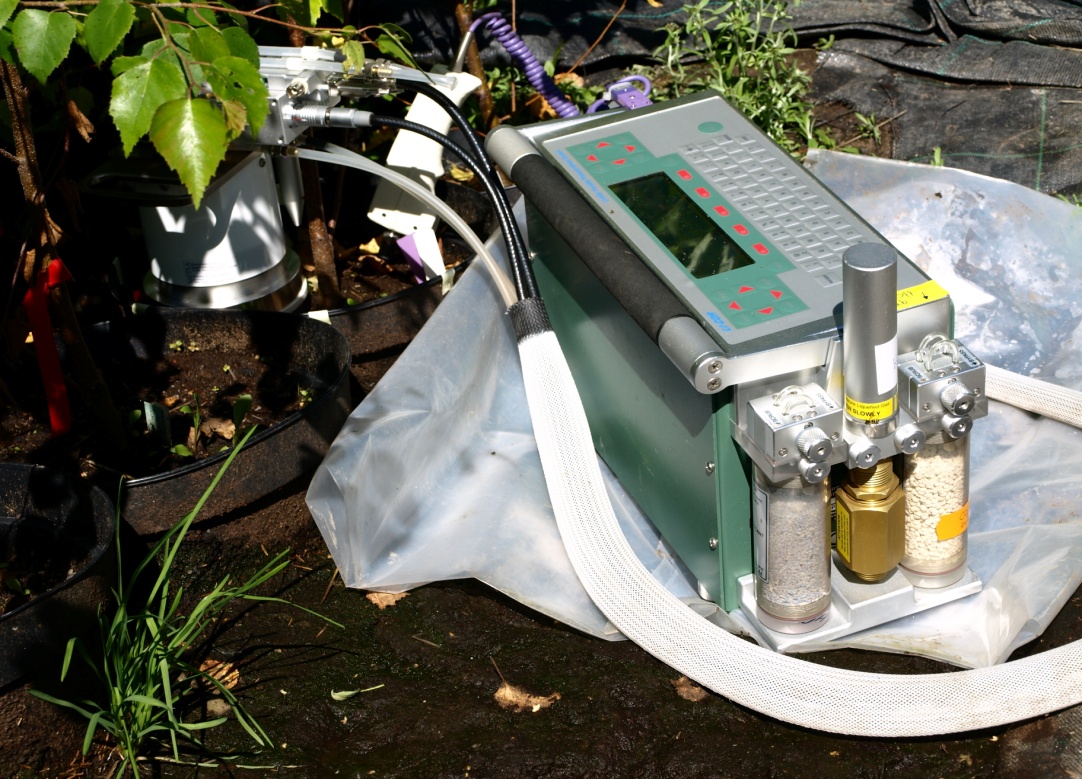
Mulch a circle of wood chip about 5 to 8 cm deep extending to the canopy edge and keep it away from the trunk. This suppresses competing grass and weeds, retains moisture, and improves the soil as it breaks down. During my postgraduate field research I measured CO₂ efflux from forest soil using a LICOR gas analyser and one thing those measurements showed clearly was how biologically active the organic surface layer is.
The decomposition happening in that layer drives nutrient cycling for the whole tree root system. Recreating that layer with a simple wood chip mulch is one of the most cost-effective things you can do for a young tree.
Pruning
Oaks need less pruning than most garden trees. They develop a strong structure on their own without much help.
My recommendation is to remove dead, diseased, or crossing branches in winter when the tree is dormant. Avoid pruning in spring and early summer. Oak is susceptible to Sudden Oak Death caused by Phytophthora ramorum and open wounds during active growth increase infection risk significantly.
For significant work on an established oak always use a qualified arborist. Large oak branches are heavy and the tree has significant legal protection in many areas. Do not remove major branches from a protected oak without checking the rules first.
Why I Think Every Large Garden Should Have an Oak
A mature English oak supports over 280 species of insects that depend on it specifically. Those insects feed birds. Acorns feed everything from mice to deer to jays. The bark, dead wood, and leaf litter support distinct communities of fungi, beetles, and invertebrates.
When I studied general ecology and ecophysiology of plants together, I started seeing how individual tree species drive entire ecosystem structures around them. Oak is one of the clearest examples of this.
The tannins in oak bark and leaves, the specific chemistry of its root exudates, the structure of its canopy, all of these create conditions that specific organisms have evolved to depend on over thousands of years. My biogeochemistry studies reinforced this further by showing how trees influence nutrient cycling in the soil around them long after their leaves fall.
Planting an oak genuinely starts that process in your garden. Even a young oak begins providing ecological value within a few years as its canopy grows and insects find it. For any space where a big tree can grow properly I think an oak is one of the best choices you can make.
I would also recommend my Young Tree Problem Solver if your young oak has been in the ground for a few years and has barely grown. It takes you through simple checks to find out why and what to do next.
Frequently Asked Questions
How long does it take an oak tree to grow to 10 feet?
In good conditions with full sun and adequate water, a young oak typically reaches 3 metres in about 5 to 8 years. Red oak grows faster and may reach this height in 4 to 5 years. English oak is slower. Growth rate varies significantly with soil quality, sun, and climate.
Are oak trees difficult to grow?
In my experience no. Once positioned correctly they are among the easier trees to establish. Growing from acorns is straightforward and I recommend it to anyone. The main requirement is patience rather than technical skill.
Can an oak tree grow from an acorn?
Yes, reliably. My recommendation is to collect fresh acorns in autumn, cold stratify in the fridge for 4 to 6 weeks, sow in deep pots in spring, and grow on for a year or two before planting out. Oak acorns germinate well and seedlings grow quickly in their first season.
How much do oak trees grow per year?
English oak grows approximately 30 to 60 cm per year when young. Red oak grows faster at 60 to 90 cm per year. Growth rate slows with age as the tree puts more energy into canopy expansion and trunk development rather than height.
Do oak trees stop growing?
They never completely stop but growth slows significantly with age. Very old oaks may add only a few centimetres of height per year while continuing to expand their canopy and thicken their trunk. The oldest oaks in Britain are over 1000 years old and still growing. That fact never stops being remarkable to me.
Should oak trees be pruned?
My recommendation is minimal pruning. Remove dead, diseased, or crossing branches in winter. Avoid pruning in spring and early summer. Major work on established oaks should go to a qualified arborist.
Are oak trees good for gardens?
Ecologically yes and I feel strongly about this. A mature oak supports more wildlife than almost any other garden tree. They need significant space and create substantial shade at maturity. For large gardens and open land I think they are one of the best tree choices available. For small gardens the eventual size is worth thinking through carefully before planting.
When do oak trees produce acorns?
English oak begins producing acorns from around age 20 to 25. Production increases with age. Older trees produce thousands of acorns in a good year. Acorn production varies naturally from year to year which is completely normal.
Will an oak tree grow back from a stump?
English oak regenerates strongly from cut stumps through coppicing. New shoots emerge quickly and grow vigorously. This was used historically to produce continuous timber from a single root system. A coppiced oak stump can continue producing new growth for centuries.
Give It a Good Start and Step Back
The advice here is simple. Get the position right, plant it properly, stake it for the first couple of years, and mulch around the base. After that the oak looks after itself.
Plant it where it has room to grow properly and in 20 years you will have a tree that quietly supports more wildlife than almost anything else in your garden. That is a pretty good return on an afternoon’s work.