






This article was written and reviewed by Serge, MSc. I hold degrees in Plant Biology, Environmental Biology and Biogeochemistry, with research experience in plant physiology, ecosystem science, and field-based environmental studies. Every article on this site is grounded in real academic training and genuine scientific research.
Affiliate disclosure: This site has affiliate links, including Amazon. As an Amazon Associate I earn from qualifying purchases, at no extra cost to you.
People mix up the two pumps in hydroponics all the time…
An air pump puts oxygen into the water. A water pump moves the water itself. They are not the same tool and they do not do the same thing, and getting that straight is the first step to seeing why most hydroponic systems cannot run without a water pump at all.
A water pump is not about aeration. It is about delivery. To see why delivery is such a big deal, it helps to know how a nutrient reaches a root in the first place.
How a nutrient reaches a root
I studied how plants feed, and one part of it changed how I look at any growing system…
Nutrients do not simply sit in the water waiting to be used. They have to get to the root surface, and most of them arrive by travelling with moving water. As Cornell describes it, the main route is mass flow: dissolved nutrients move to the root as the plant takes up water, which is how nitrate, calcium, and magnesium reach it. In the ground that movement happens as the plant pulls water in and drags the dissolved nutrients along toward the root.
Now think about a still tank…
A root takes up the nutrients right at its surface and draws that thin layer down, leaving a pocket of water around itself that is weaker than the rest of the reservoir. If nothing moves, that depleted pocket just sits there, and the root is feeding from the poorest water in the tank even though the reservoir is full. Movement is what clears that spent layer away and brings fresh, full-strength solution back against the root.
That is what a water pump does. It adds nothing to the water. It makes the water move, so every root keeps meeting fresh solution instead of sitting in a pocket it has already drained.
The two pumps, and why people confuse them
This is where the air pump comes back in…
In my post on why roots need an air pump, the point was oxygen: aerating a still reservoir so the roots can breathe. A water pump answers a different need, moving the solution so the roots keep meeting fresh nutrients. The two are easy to confuse because both sit in or near the reservoir and both hum away in the background, but they solve different problems.
There is a little overlap. Moving water also picks up some oxygen at the surface as it churns, so a water pump helps aeration a bit. But an air pump is still the better tool for oxygen, and a water pump is the better tool for circulation. Some systems need one, some the other, and some both.
Which systems need a water pump
A water pump is built into the design of some systems and absent from others, which I lay out in full in my guide to the types of hydroponic systems.
Here is the quick split.
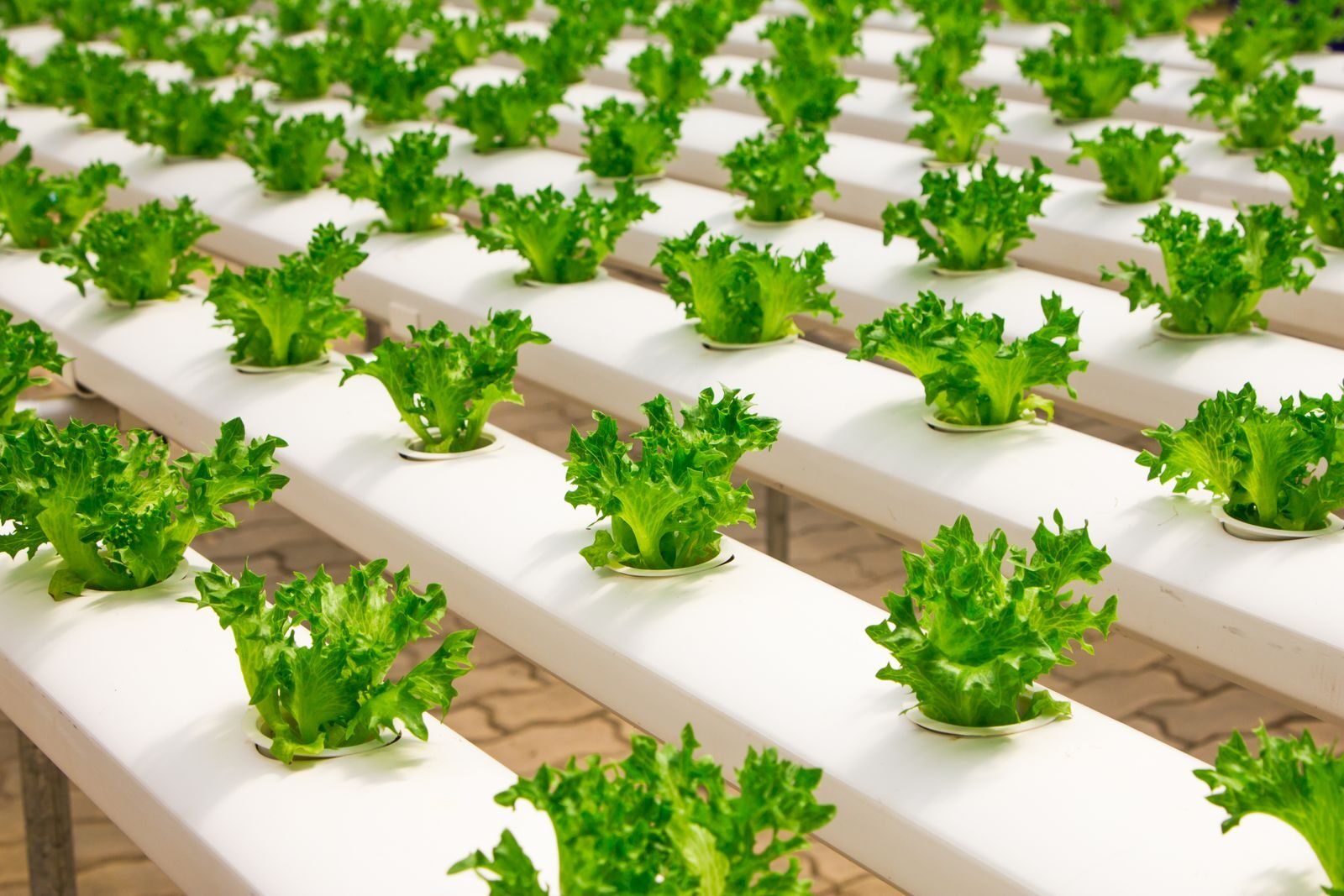
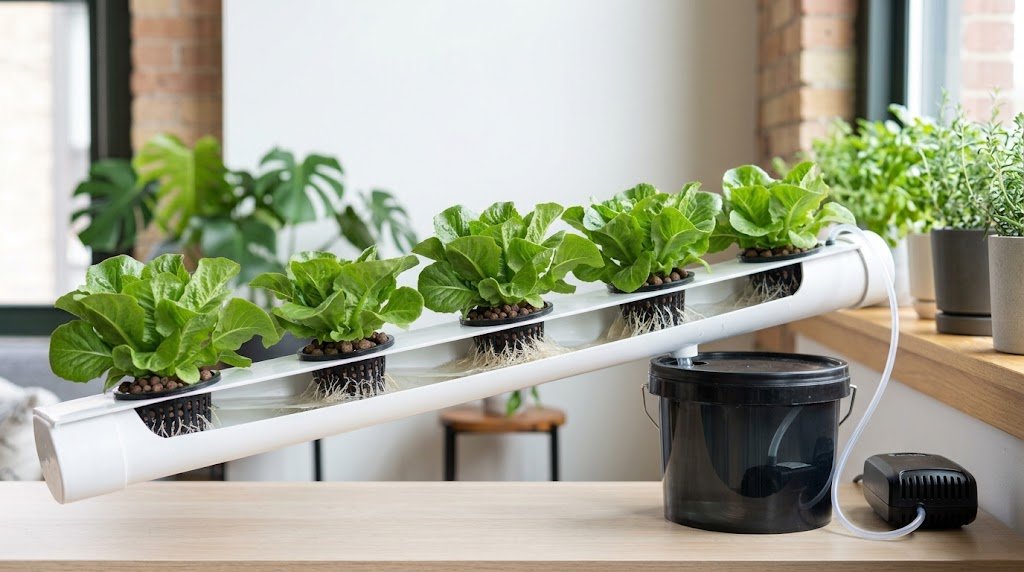
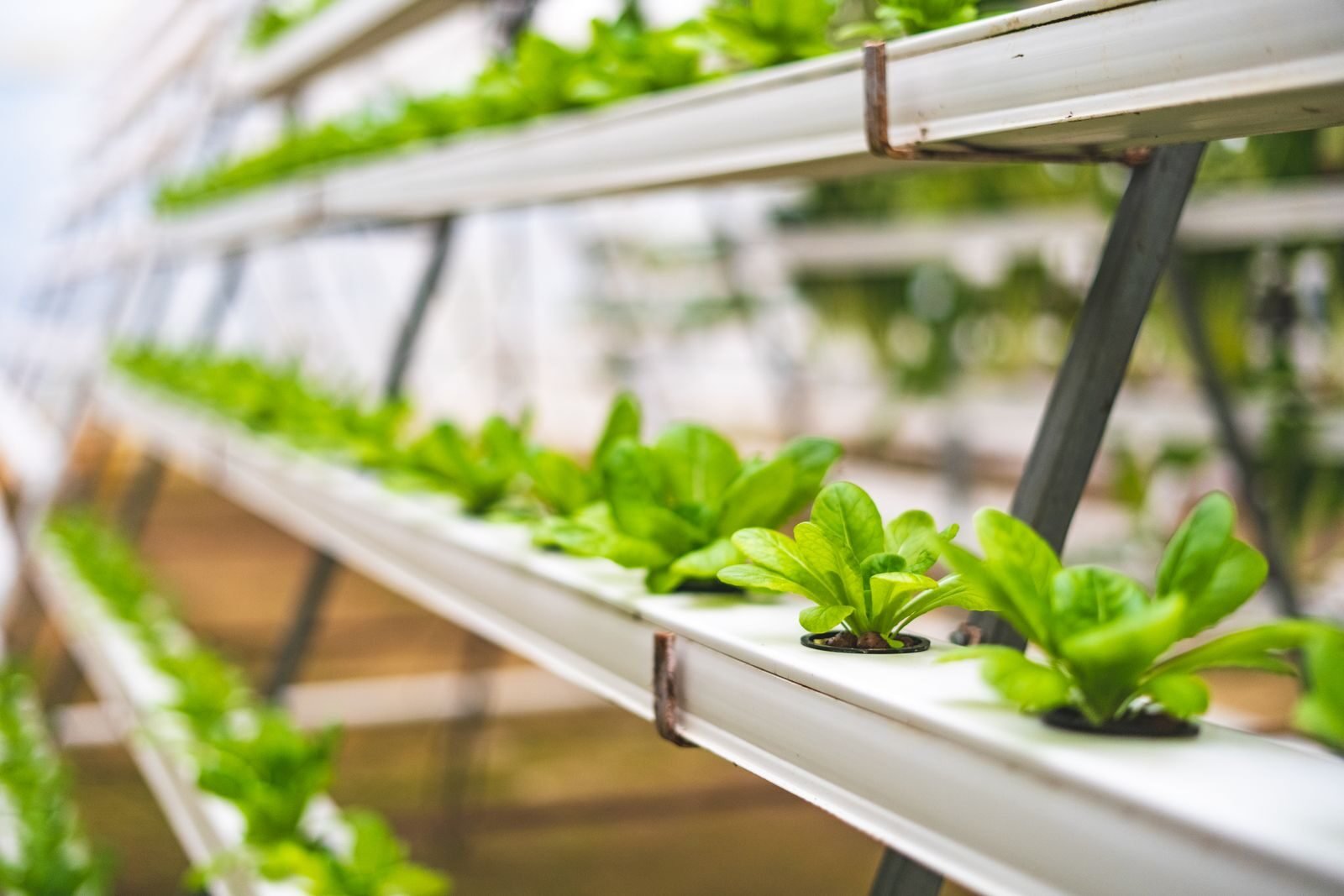
Nutrient film technique, drip systems, and ebb and flow all depend on a water pump. Each one is defined by solution being moved somewhere: a thin film running over the roots, solution dripped onto each plant, or a tray flooded and drained on a cycle. Take the pump out and the solution stops moving, and within hours the plants are either dry or sitting in stagnant water.
Deep water culture, Kratky, and wick systems use no water pump at all. In those the roots sit in or draw from standing water, so there is nothing to circulate. Deep water culture uses an air pump instead, which is the exact confusion I opened with.
Sizing one without guesswork
Two numbers decide the pump: flow rate and head height.
Flow rate is how much water it moves, usually in litres or gallons per hour, and it needs to match how quickly your system should turn its solution over. Too little and the far end of the system is starved, too much and you are wasting power and stirring the roots harder than they need.
Head height is the number people miss. It is the vertical distance the pump has to lift the water, and the higher it pushes, the less it actually delivers. A pump that looks strong on paper can arrive weak at the top of a tall setup, because its rated flow is usually measured with no lift at all. So I read the flow at the height I am actually lifting to, not the headline figure, and I leave some margin above the minimum.
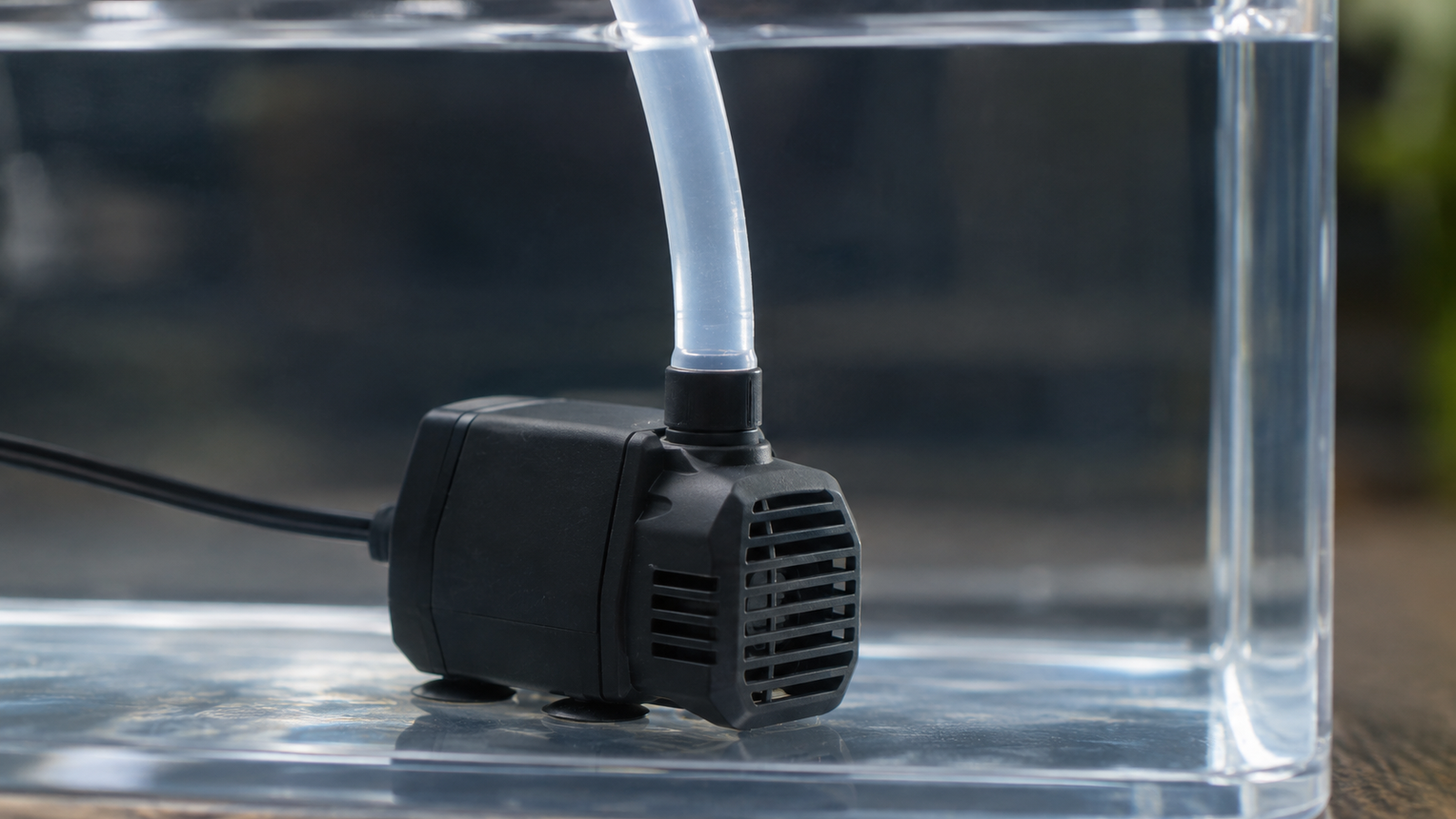
Most home setups use a submersible pump that sits in the reservoir. It is simple and runs quietly, because the water around it keeps it cool. Larger builds sometimes use an inline pump that sits outside the tank, but for a first system the submersible is the easy choice, and it is the one I set up in my guide to starting a hydroponic garden.
The failure that takes down everything
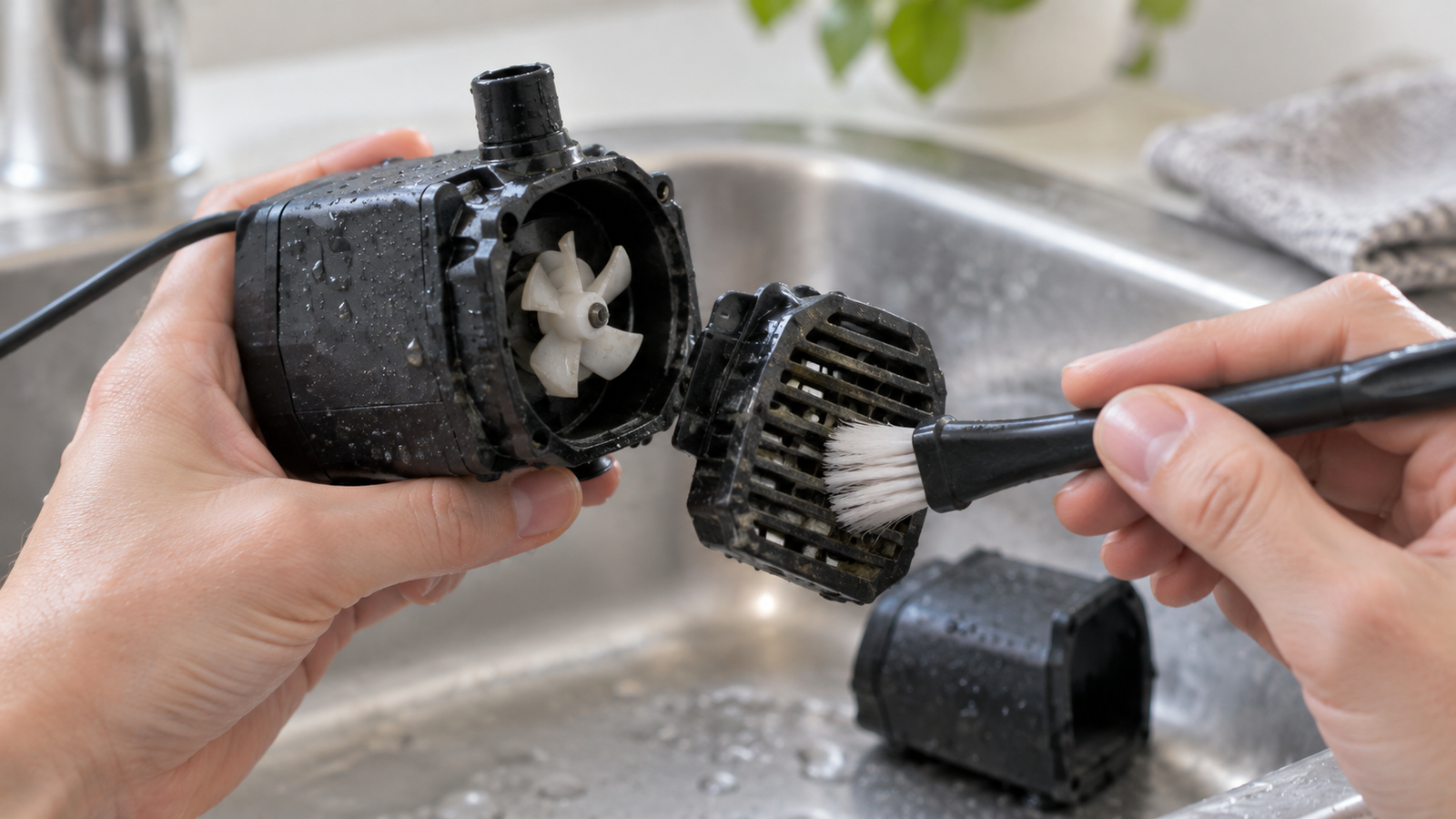
A water pump has one weakness worth respecting: when it stops, the whole system stops with it. Roots creep into the intake, salts build up on the impeller, or the pump runs dry and burns out. In a circulating system a dead pump is a dead system within hours, which is a sharper kind of trouble than a slow nutrient drift.
So I clean the intake and impeller on a schedule, keep any filter clear, and never let the pump run without water. If flow drops off, or a system that was running well suddenly stalls, the pump and its intake are the first things I check.
That kind of symptom-to-cause tracing is what I built my Fix Your Hydroponics guide to walk through, because when flow fails the plants go downhill fast.
A few questions I get
Is a water pump the same as an air pump?
No, and this is the one I answer most. An air pump pushes air through a stone to oxygenate still water. A water pump moves the solution around the system. Deep water culture uses the first, nutrient film technique uses the second.
Can I run it on a timer?
It depends on the system. Ebb and flow is designed to run on a timer, flooding and draining on a cycle. Nutrient film technique usually runs continuously, because the film has to keep moving over the roots.
My pump feels too strong, is that a problem?
It can stir the roots harder than they need and waste power. A flow valve or a bypass that returns some solution straight to the reservoir lets you dial it back without buying a smaller pump.
What it comes down to
A water pump is easy to overlook next to lights and nutrients, but in a circulating system it is doing something basic and vital: keeping fresh solution moving against every root, so none of them sit in water they have already drained.
Match the flow and the head height to your system, keep the intake clean, and the pump keeps the whole thing fed without you thinking about it.