

This article was written and reviewed by Serge, MSc. I hold degrees in Plant Biology, Environmental Biology and Biogeochemistry, with research experience in plant physiology, ecosystem science, and field-based environmental studies. Every article on this site is grounded in real academic training and genuine scientific research.
Affiliate disclosure: This site has affiliate links, including Amazon. As an Amazon Associate I earn from qualifying purchases, at no extra cost to you.
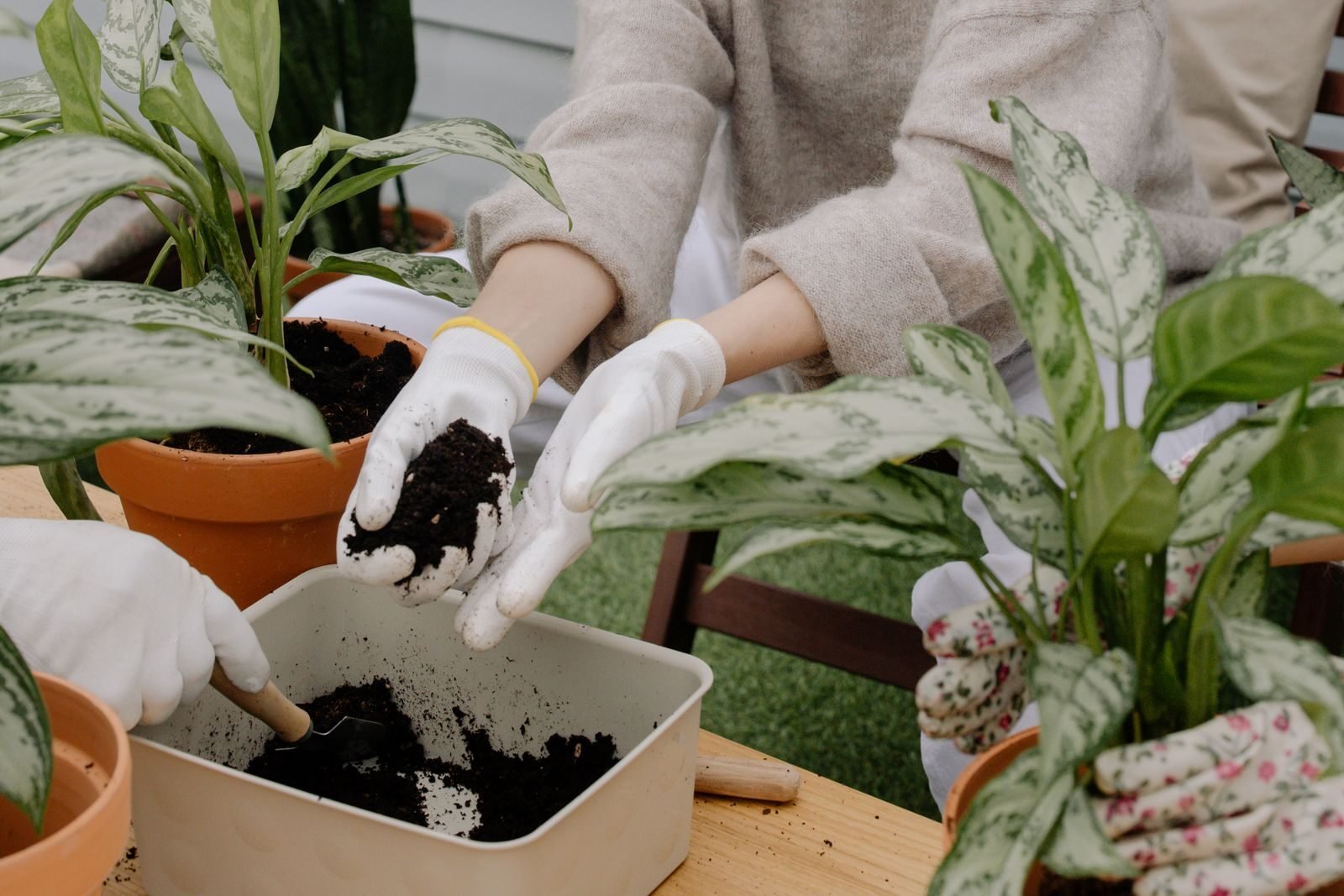
If there’s one thing to get right for a houseplant, it’s the soil..
It’s the part people think about least and the part that quietly decides whether a plant thrives or struggles, because everything the roots do happens down there. Soil is my area. I studied its chemistry, how it holds air, water, and nutrients, and I’ve handled plenty of it moving young plants from one container into another.
So let me walk you through what a good potting mix is doing, why that bag of garden soil in the shed is the wrong choice, and how to pick or fix a mix so your plant’s roots can do their job.
Why garden soil fails in a pot.
This is the mistake I’d most want to save you from…
Garden soil works beautifully in the ground, where it’s part of a huge living system with worms, drainage, and weather keeping it open. Scoop that same soil into a pot and it turns against you.
In a container it packs down hard, the air spaces collapse, and it holds on to far too much water. We covered in why overwatering kills plants that roots need air as much as water, and compacted garden soil is exactly what starves them of it. The roots sit in dense, wet soil with no oxygen, and they suffocate.
On top of that, garden soil brings in pests, weed seeds, and disease. It’s also not the same thing as the bagged stuff, and the difference between topsoil and garden soil trips a lot of people up. University of Illinois Extension says plainly that garden soil alone won’t drain well enough in a pot and is best avoided. So the bag labelled “topsoil” or “garden soil” is not what you want.
What a good potting mix is really made of.
Here’s the part that surprises people: a good potting mix usually isn’t soil at all. It’s a blend of materials put together to do three jobs at once, hold enough water for the plant to drink, drain the rest away fast, and keep air pockets open around the roots the whole time.
From studying how soil holds water and air, I can tell you that last job, the air, is the one most people overlook and the one that keeps roots alive. UNH Extension makes the same point, that air space is one of the most important things in a potting mix, and without it a plant usually doesn’t survive.
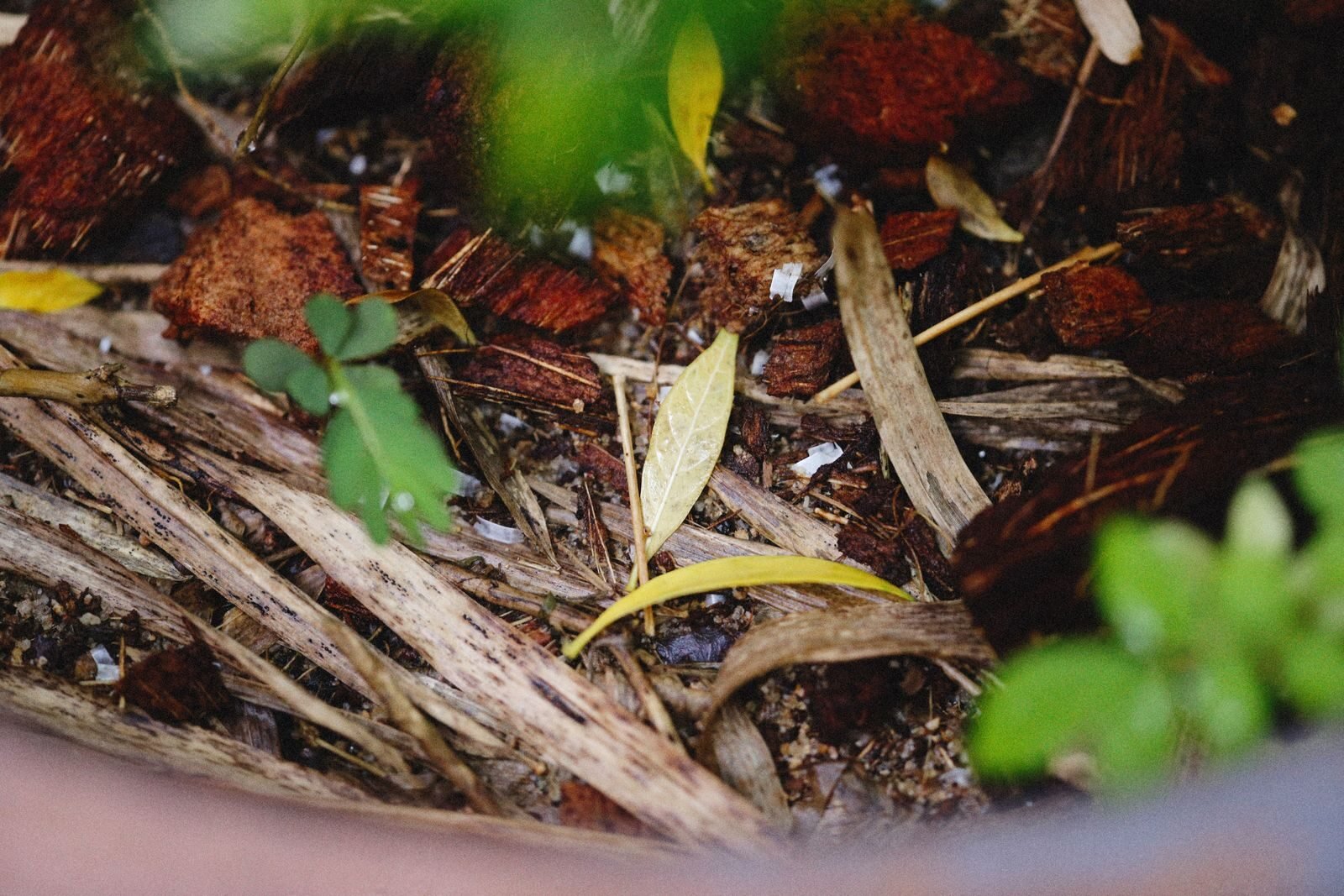
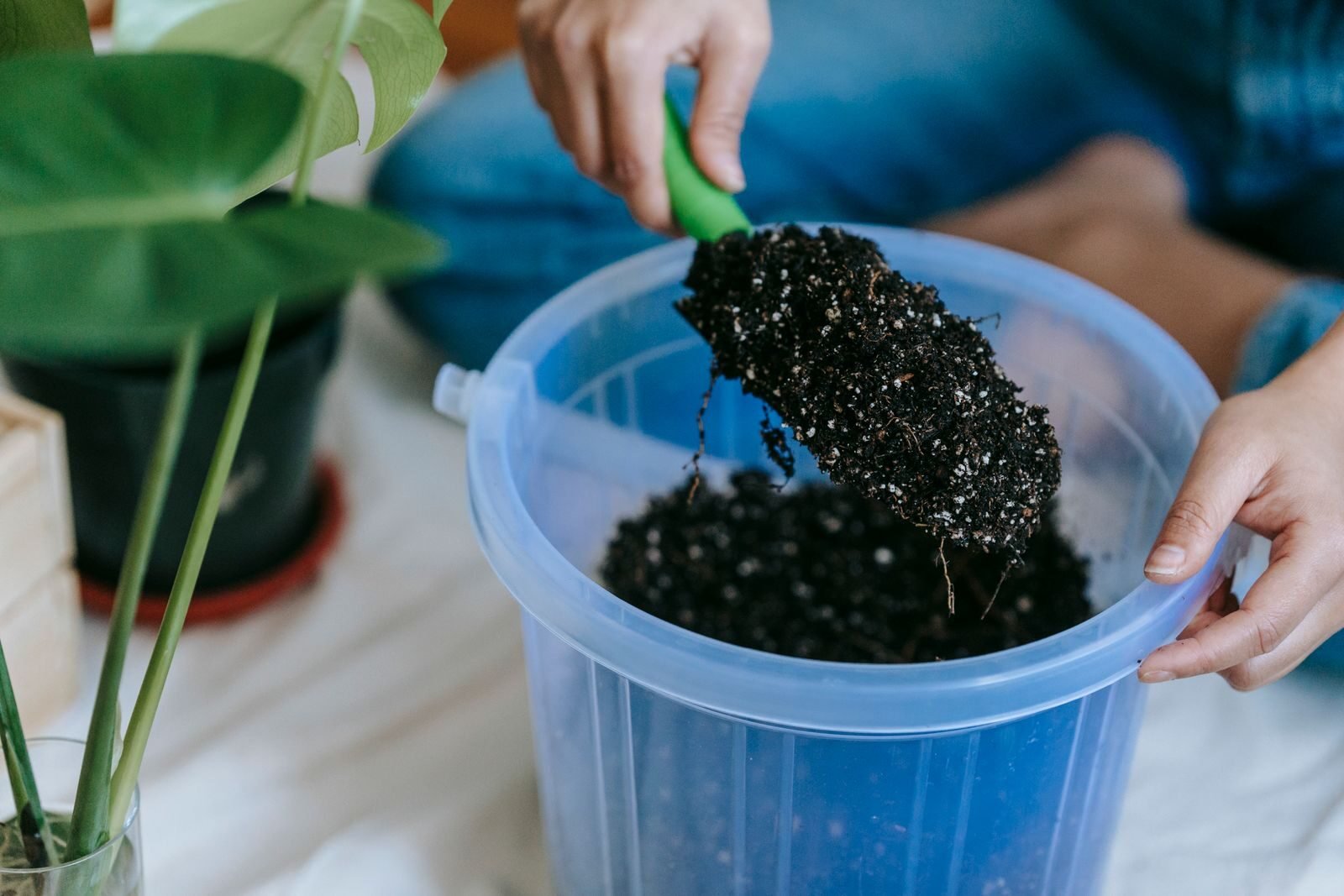
A typical good mix is built from a few things, each doing its own job. Peat moss or coconut coir forms the base and holds moisture without turning to sludge. Perlite, those little white specks, or pumice opens the mix up so water drains and air gets in.
Bark is added for plants that want chunkier, airier roots. And some compost or other organic matter feeds the plant and the soil life. You don’t need to memorise recipes. What you’re looking for on the bag is a mix made for indoor or container plants that feels light and fluffy rather than heavy and dense. If a mix feels heavy and wet in the bag, it’ll be worse in the pot.
If you’d rather not buy bagged mix, it’s worth reading up on the cheapest ways to get good soil before you start mixing your own.
Drainage: the thing almost nobody checks
This one I feel strongly about, because it’s so easily missed. People bring home a potted plant and never once look at whether the pot has a drainage hole and a saucer underneath. It seems like a small detail. It isn’t.
The hole is what lets the extra water escape after you water, and when that water leaves, air moves back into the soil to take its place. No hole, and the water has nowhere to go, so it collects at the bottom and the soil stays waterlogged, which is how roots rot even in a perfect mix.
So before you worry about anything else, check the pot. If it has a drainage hole and a tray to catch what comes out, you’re set. If you’ve fallen for a beautiful pot with no hole, and plenty of us have, the easy fix is to keep the plant in its plain plastic nursery pot, which does have holes, and sit that inside the decorative one. Lift it out to water, let it drain, and drop it back. You get the look and the drainage.
The plant you just bought is probably root-bound
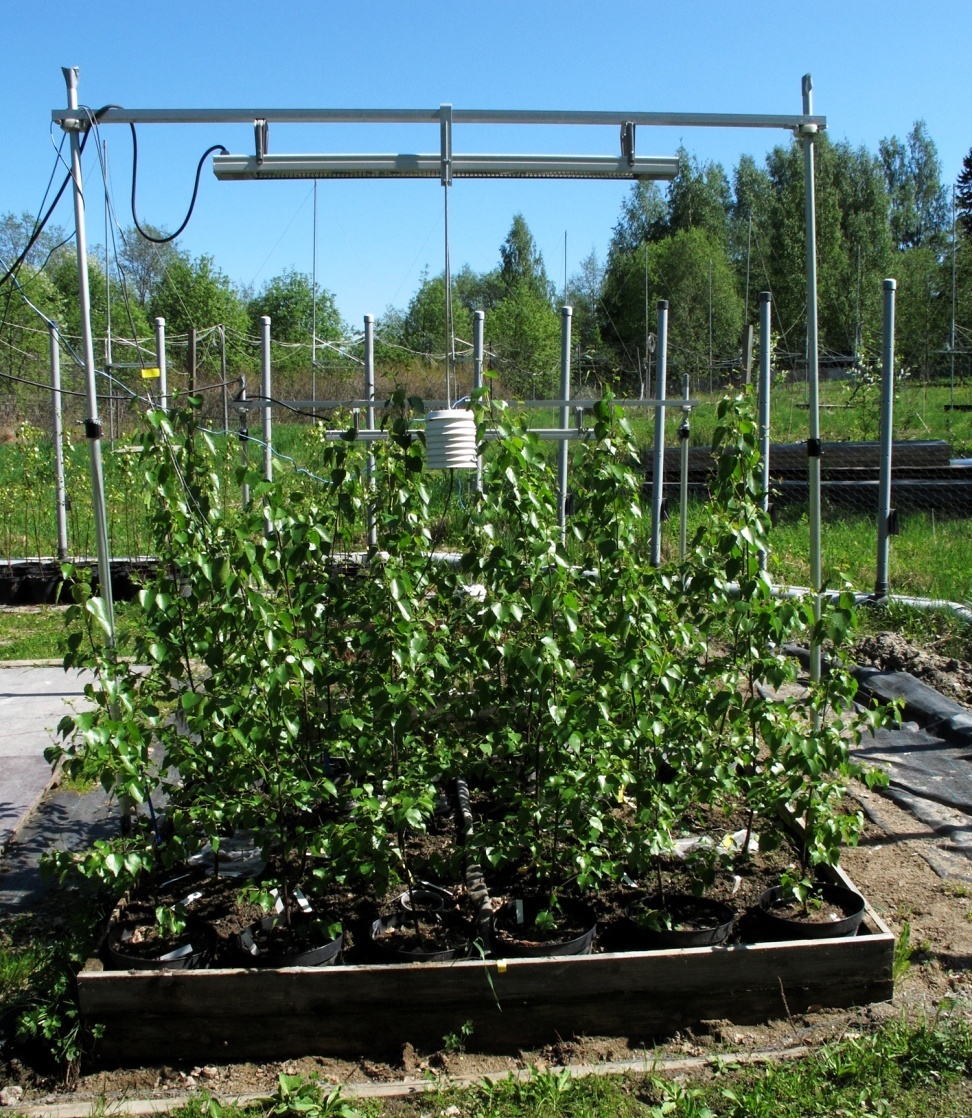
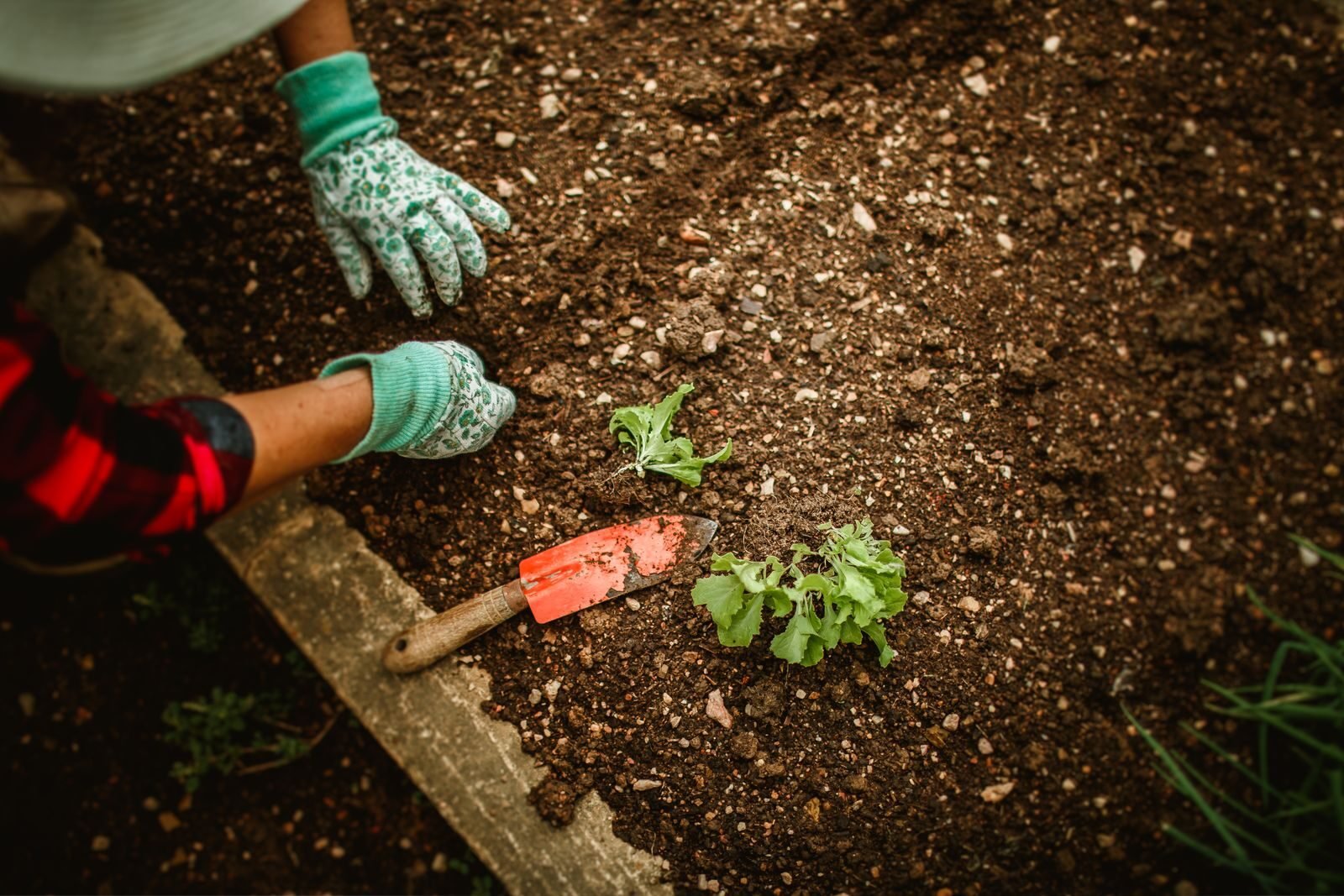
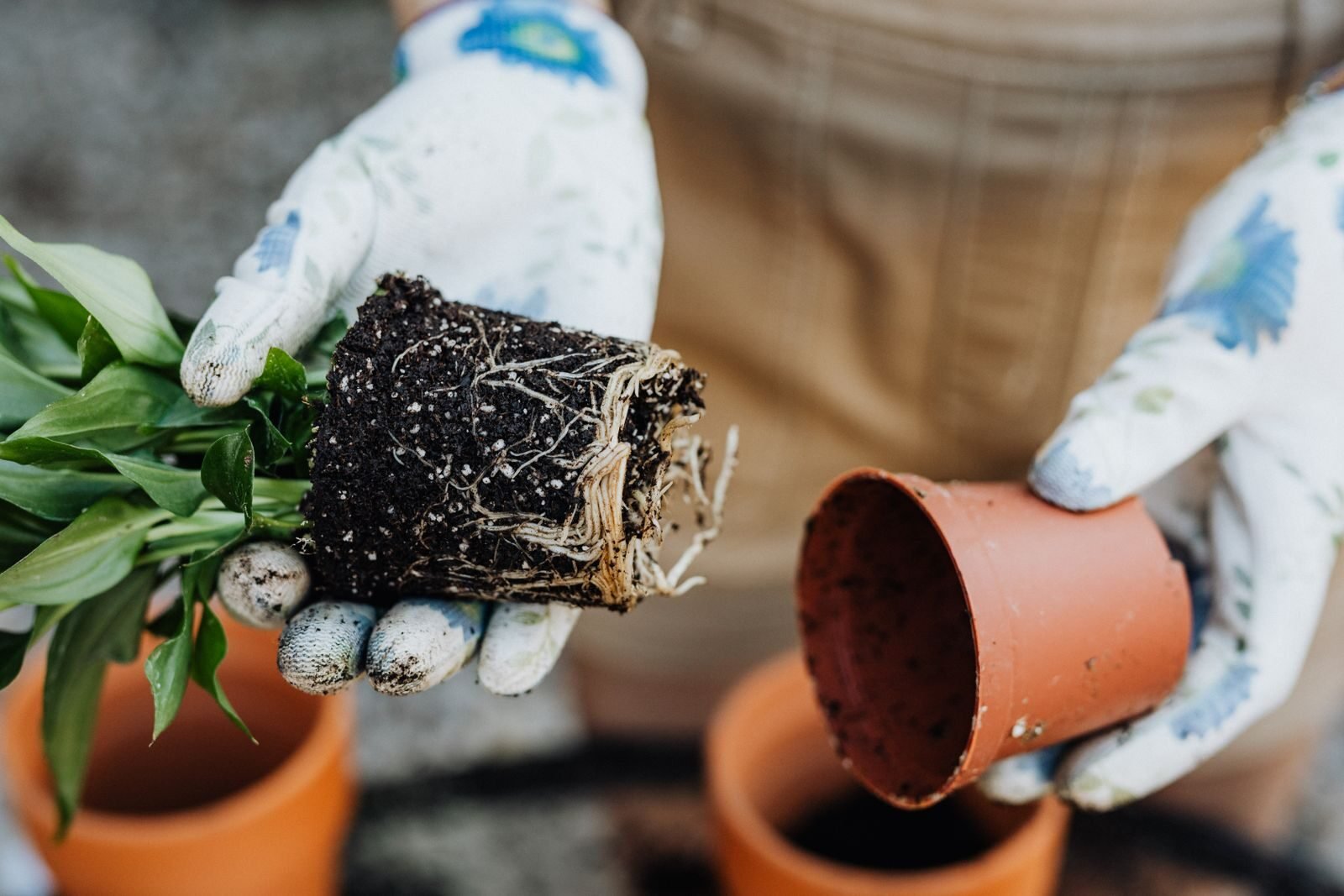
Here’s something from my own field work that applies directly to the plant you carry home. The young trees I worked with arrived in small plastic nursery pots, and when I went to transplant them, the roots were packed in tight and pushing against the sides of the plastic. They’d been grown fast in rich nursery soil to get them to a sellable size quickly, and they’d outgrown their pots. I moved each one into fresh, prepared soil with room to spread.
The plant you buy from a shop is often in the same state…
It’s been raised quickly in a small pot of rich growing media, and by the time it reaches you the roots may be circling the bottom, running out of room. That’s your cue to pot it on, lift it out, have a look at the roots, gently tease them loose if they’re wound tight, and move it into a slightly larger pot with fresh mix around it.
Don’t jump to a huge pot, just one size up, because a pot that’s too big holds a mass of wet soil the small root ball can’t use, and you’re back to soggy soil and no air. Fresh mix and a little more room is what lets a root-bound plant get going again.
Not every plant wants the same mix
Most leafy houseplants do well in a good general potting mix, but a few want something different, and it’s worth knowing. Succulents and cacti want a grittier, faster-draining mix with extra sand or perlite, because they rot in anything that stays damp. Orchids aren’t grown in soil at all but in chunky bark, since their roots need lots of air.
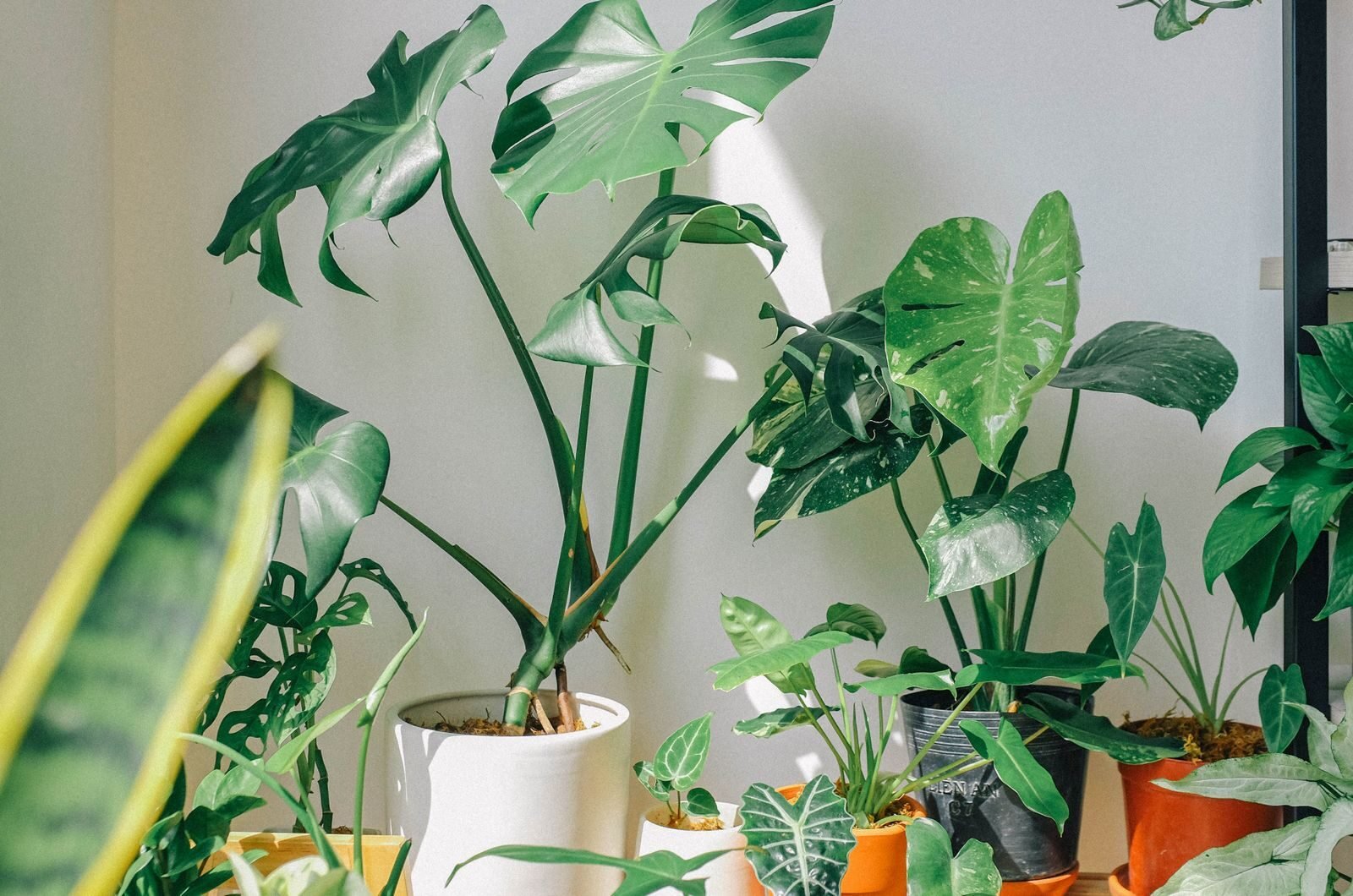
Aroids like monstera and philodendron do best in a chunky mix with added bark and perlite. Ferns and other moisture-lovers want a mix that holds a bit more water. The simple rule: match the mix to where the plant comes from. Desert plants want it lean and gritty, jungle plants want it rich and airy.
If a plant of yours is already struggling in soil that stays wet, lower leaves yellowing or a sour smell from the pot, it may be sliding toward root rot, and the mix is often part of the story. If you want help working out what’s gone wrong, that’s what I built What’s Wrong With My Plant? for.
Frequently asked questions
Can I use garden soil for houseplants?
Better not to. Garden soil packs down hard in a pot, holds too much water, and starves the roots of air, and it can bring in pests and disease. Use a mix made for container or indoor plants instead.
What is the best soil for indoor plants?
A light, well-draining potting mix, not soil from the garden. Look for one made for indoor or container plants, built on peat or coir with perlite for drainage and some compost for feeding. It should feel light and fluffy, not heavy and wet.
Do I really need to add perlite?
Most bagged mixes already contain some. If yours feels dense or stays wet for a long time, mixing in extra perlite opens it up, improves drainage, and gets more air to the roots. Plants that hate wet feet, like succulents, benefit most.
Why does my pot need a drainage hole?
So the extra water can escape after you water, which lets air back into the soil. Without a hole, water collects at the bottom and the soil stays waterlogged, which rots the roots. If a pot has no hole, keep the plant in a plastic nursery pot inside it.
What soil should I use for succulents and cacti?
A gritty, fast-draining mix, either a bagged cactus mix or a general mix with extra sand and perlite. They store their own water and rot in anything that stays damp.
How often should I replace the soil?
Potting mix breaks down and compacts over time, so refreshing it every year or two, usually when you pot the plant on, keeps the air and drainage you need. If the soil has gone hard or water runs straight through without wetting it, it’s time.
Get the soil right and you’ve solved a lot of problems before they start. A light, open mix that drains, a pot that lets water out, and a little attention to root-bound plants when you bring them home, that’s most of the job done. Free plant guides are on the site whenever you want to go further.