





This article was written and reviewed by Serge, MSc. I hold degrees in Plant Biology, Environmental Biology and Biogeochemistry, with research experience in plant physiology, ecosystem science, and field-based environmental studies. Every article on this site is grounded in real academic training and genuine scientific research.
Affiliate disclosure: This site has affiliate links, including Amazon. As an Amazon Associate I earn from qualifying purchases, at no extra cost to you.
A plant can sit in a reservoir full of nutrients and still turn pale and weak.
I have seen people watch that happen, decide the feed is too thin, and add more. It does nothing, because the problem was never food. It was air. The roots could not use the food already in front of them.
That one idea is the most useful thing I can tell you about air pumps, so let me unpack it before we get to what to buy.
Why a full tank doesn’t mean a fed plant
During my studies, I learned how plants take up minerals, and the detail that stayed with me was the cost of it. A root does not soak nutrients up like a sponge. Most of the minerals a plant needs sit at a higher concentration inside the root than out in the water, so the root cannot just let them drift in. It has to spend energy dragging them inward, uphill against that difference. Feeding, I came to understand, is work.
And work needs fuel…
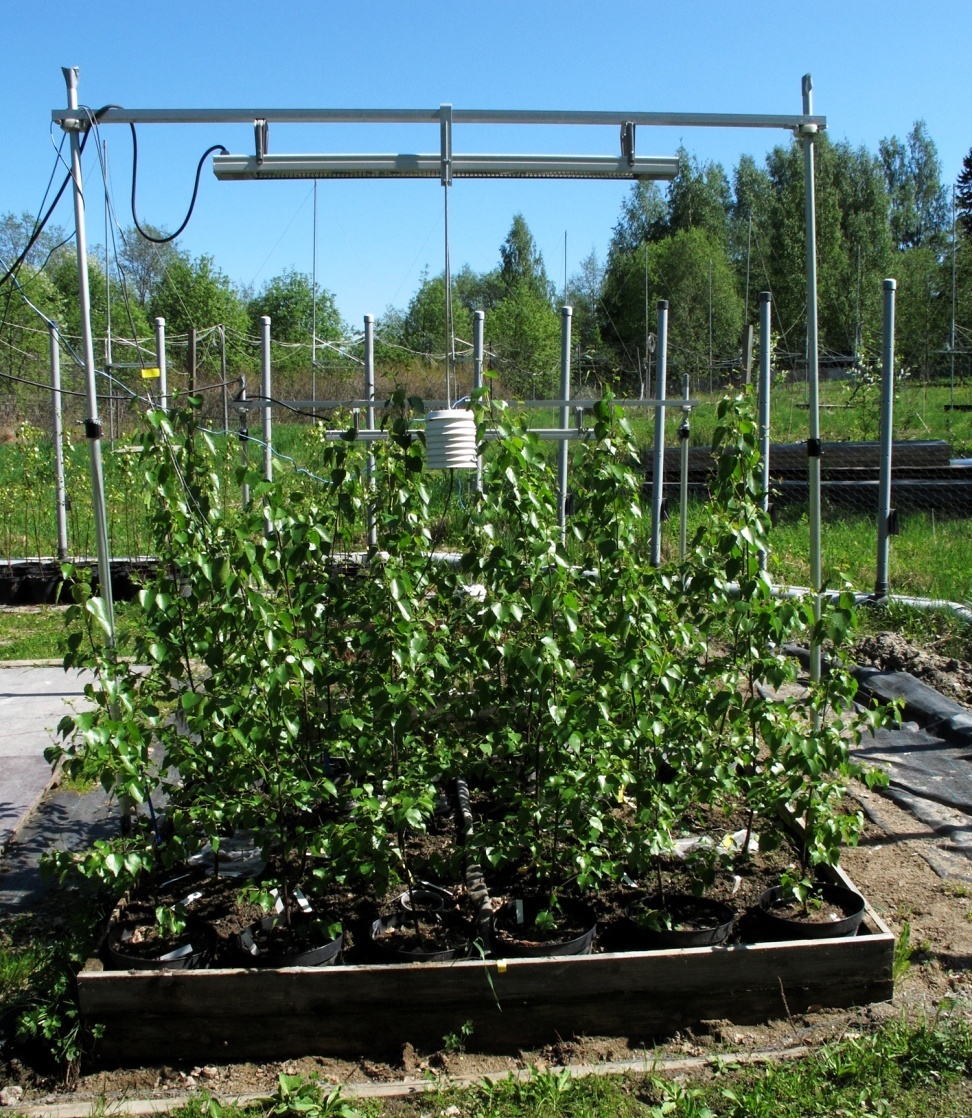
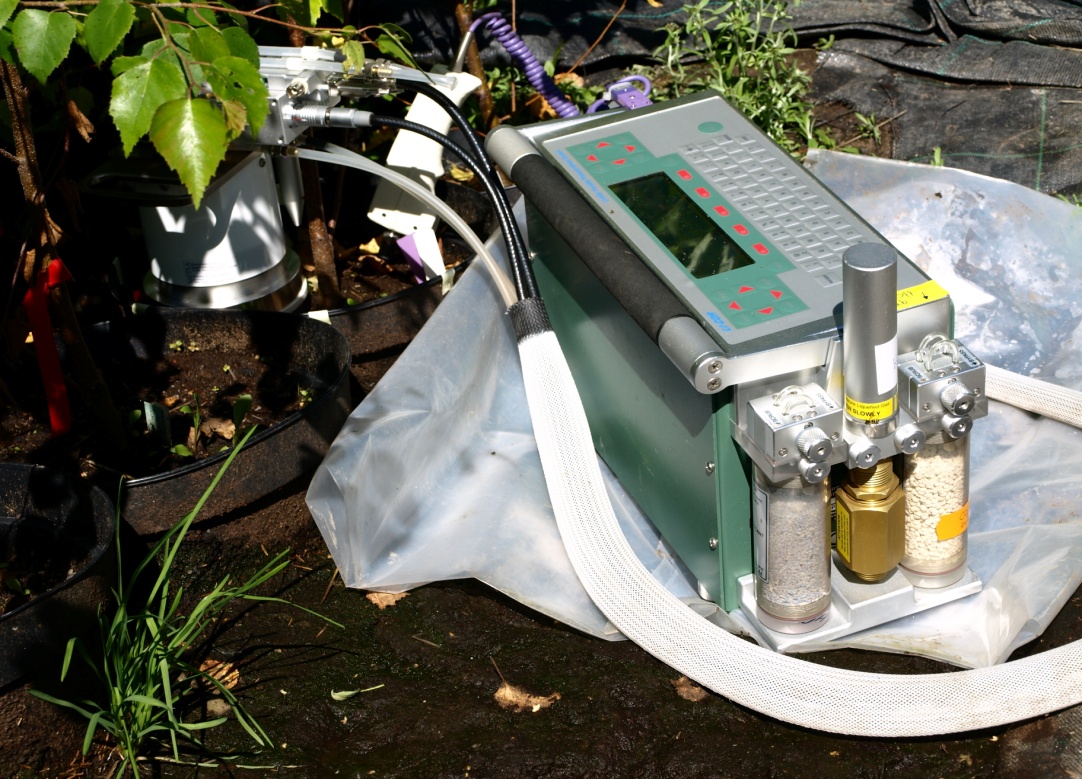
The root makes that fuel by respiring, which burns oxygen, the same way my own muscles need oxygen to keep going. I have measured how much gas roots and the soil around them move while they do this, and it is far more than I would have guessed before I saw the numbers myself.
I measured it in soil rather than a tank, but a root breathes the same way wherever it sits, in a field or in a reservoir. Roots are not quiet. They are busy, and oxygen is what keeps them working.
So here is the chain I always come back to: no oxygen at the root means no energy, and no energy means the root cannot pull nutrients in, however much is dissolved around it. That is how a plant can fail to feed with food all around it.
Once I started seeing feeding as something the roots have to power, an air pump stopped looking like an accessory to me and started looking like the thing that lets the plant feed at all.
So where does the oxygen come from?
In soil, I would expect roots to take oxygen from the air pockets between particles. A reservoir has none of that. It is just water, and water only carries a small amount of dissolved oxygen to start with. An air pump is how I keep putting it back.
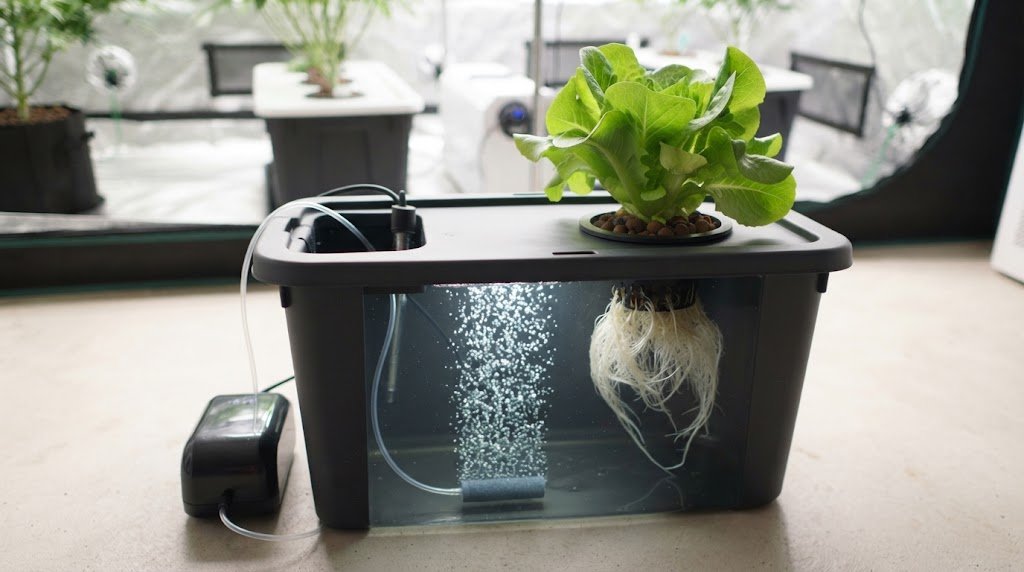
The kit is simple, and I like that about it. A pump sits outside the tank and pushes air down a tube to an air stone resting on the bottom. The stone breaks that air into a column of small bubbles.
On the way up they do two things: a little oxygen crosses straight from each bubble into the water, and the rising stream churns the surface, which is where most of the real exchange happens. I always go for finer bubbles over fat ones, because a cloud of small bubbles has far more surface touching the water than a few big ones blurping up from an open tube.
Why a still reservoir goes flat
Leave water still and it will not stay oxygenated for long. The roots keep drawing oxygen down as they feed, and nothing replaces it.
A university water-science page says it directly: a stagnant body of water can end up very low in oxygen, while mixing air into water, which it calls aeration, raises it back up. To me an air stone is simply aeration in a bucket.
Heat makes it worse. Warm water holds less oxygen in the first place, so a warm, still reservoir is the worst of both, and it is why I see so many systems crash in summer. I go deeper into that side in my guide on hydroponic water chillers and heaters, but my short point is that aeration and temperature are two halves of the same oxygen problem.
If you want a number to aim for, I use about 6 parts per million of dissolved oxygen, the level Ohio State University lists for a healthy root zone. A running air stone is the easiest way I know to hold it there, and I do not measure it obsessively to get the benefit.
Does your system even need one?
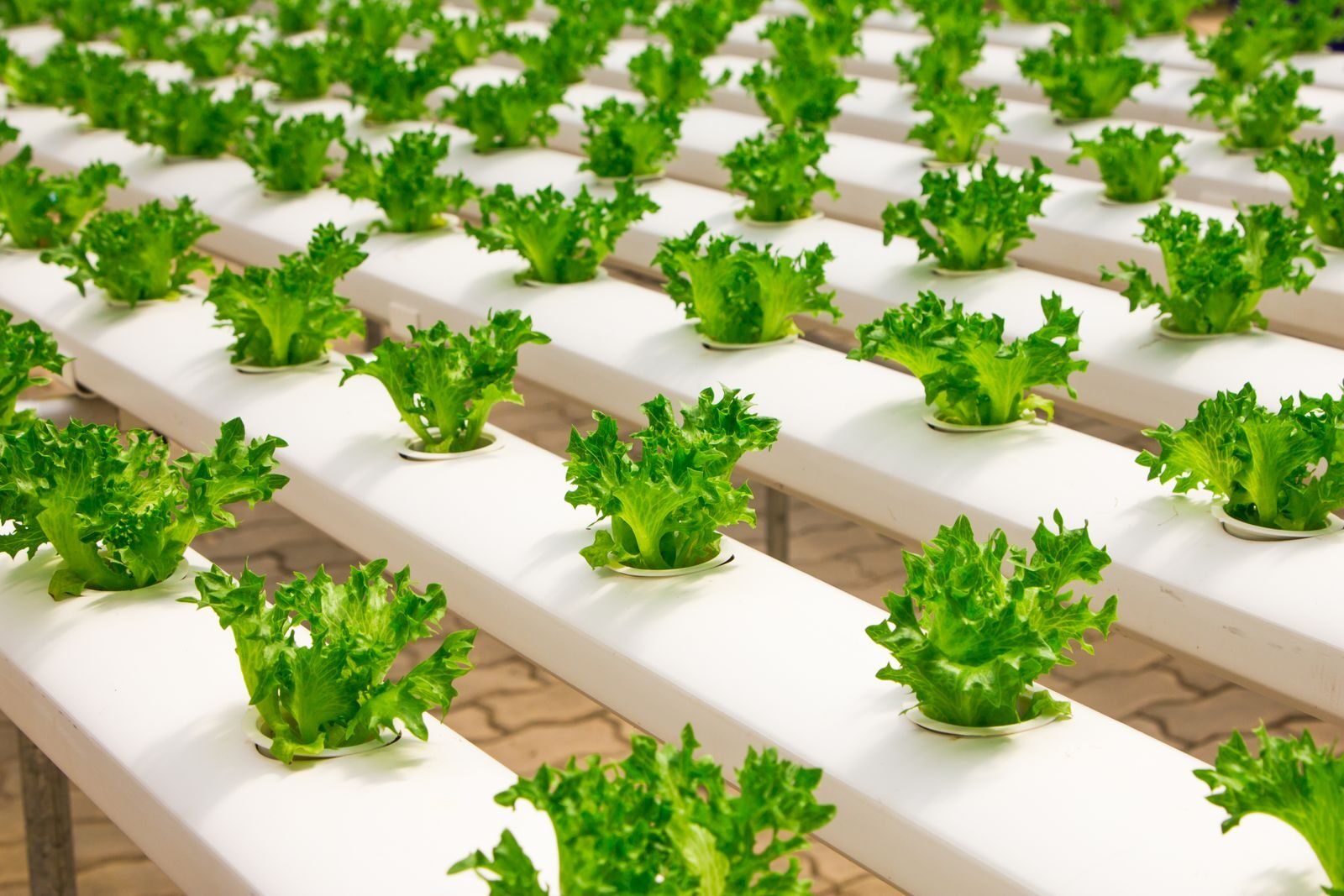
Not every setup does, and for me it comes down to how the system already handles air. I walk through each one in my guide to the types of hydroponic systems, but here is how I sort them.
Deep water culture needs an air pump more than anything else, and I would not argue the point. The roots hang in a large body of still water, and without aeration that water goes flat fast. Here I run the pump day and night, because roots feed around the clock and I do not want a timer leaving them gasping in the gaps.
The others lean on it less. Nutrient film technique trickles a thin film over the roots, so the water grabs air as it moves. Aeroponics mists the roots in open air, so oxygen is never the shortfall. And a proper Kratky jar is built around a deliberate air gap, where the upper roots breathe dry while the lower roots drink, which is why I can run one with no pump at all.
Matching aeration to the system is one of the first things I set up in my beginner’s guide to starting a hydroponic garden.
How I’d buy one without overthinking it
I size the pump to the reservoir. Output is rated in litres or gallons of air per hour, and a bigger tank wants more. If I am between sizes, I go up, because I have never managed to over-oxygenate a reservoir and I have easily starved one.
I also reach for an ordinary aquarium air pump and stone, because they are the same tools doing the same thing and I see no reason to pay a markup for the word “hydroponic.”
Two small parts save me real grief. I fit a check valve on the tube, a cheap one-way valve that stops water siphoning back into the pump if the power drops. And I sit the pump on something soft or hang it, because most of the noise people complain about is just the box buzzing against a hard shelf.
When the roots are already in trouble
Oxygen starvation hides behind other symptoms, which is why I find it gets missed so often. White roots turn brown, then slimy, sometimes with a sour smell. The plant wilts in the heat with a full reservoir underneath it, because suffocating roots stop drinking. Growth stalls, and the leaves start showing what look like deficiencies.
That last one is the trap, and it loops right back to where I started. A root with no oxygen cannot power its own feeding, so a shortage of air looks exactly like a shortage of food. Add more nutrients and you have treated the wrong thing.
If you are staring at that pattern and want to work it symptom by symptom, that is exactly what I built my Fix Your Hydroponics guide for, and it puts checking oxygen before adding anything as rule one.
A few things people ask me
Does the pump really need to run all night?
In deep water culture, yes, and I keep mine on constant. Roots feed in the dark too, so the oxygen has to keep coming.
Will it help with root rot?
It does, in my experience. The organisms behind rot settle into warm, low-oxygen water, so aerating the reservoir takes away one of the things they need. Algae is a separate issue, a light one, so for that I block light from the water instead.
Can I really just use aquarium gear?
I do. The air pump and stone from an aquarium are built for the same job, and they work fine in a home hydroponic tank.
The one thing I’d hold onto
An air pump and a stone are a few dollars of kit standing between a reservoir full of food and roots that can actually eat it. In deep water culture I would not run without one for a single day, and everywhere else I let the system decide.
But if you remember nothing else from me here, remember this: the next time a plant looks starved in a full tank, check the air before you touch the feed.