
This article was analyzed by Serge, MSc. Leveraging a background in Botany, Plant Physiology, and Biogeochemistry, I provide evidence-based insights into plant health, soil science, and sustainable cultivation. My focus is on delivering scientifically accurate data to help you grow with confidence.

Some plants stay green and strong during a dry summer, while others dry up, even when you water them. The reason is not just the leaves. It depends on what is working in the soil.
Most people look at a garden and only see plants. But the real strength is underground. If you only focus on what you can see, you miss the part that helps everything grow. To build a garden that lasts, you need to understand the tiny world in the soil. Thousands of small living things are working all the time to feed your plants. They protect them from disease and help create healthy soil.
I spent months outside in the field and a lot of time in the lab. I studied trees like the Silver Birch (Betula pendula). My research looked at how heat and air change soil respiration.
What I discovered is that soil is not just dirt. It’s full of life and energy that moves between living things. If you want a healthy garden, don’t just rely on fertilizer. Instead, support this partnership in the soil.

1. The Soil Microbiome.
Soil is full of life, called the Microbiome. It contains bacteria, fungi, and tiny insects. In just one small spoonful of healthy soil, there can be billions of living organisms. Soil is not just dirt, it is a living network that recycles waste and provides nutrients to plants.
In the lab, we study the Rhizosphere, the thin layer of soil that touches plant roots. This is one of the most active places on Earth.
Plants release sugars through their roots to attract beneficial microbes. These microbes break down rocks and minerals, turning them into nutrients the plant can absorb. Without this microbial community, plants cannot access these essential nutrients.
2. Partnerships: How Roots and Microbes Work Together
During my research, I looked closely at how microbes help plants handle stress. There are two main partners you should know about:
Nitrogen-Fixing Bacteria
Plants need Nitrogen to grow fast and stay green. Even though the air is full of it, plants cannot “eat” it from the sky. They need a helper. Certain bacteria, like Rhizobium, live inside little bumps on the roots of plants like beans or peas.
They pull Nitrogen from the air and turn it into food for the plant. It is a perfect deal. The plant provides a safe home, and the bacteria provide the fuel.
Mycorrhizal Fungi
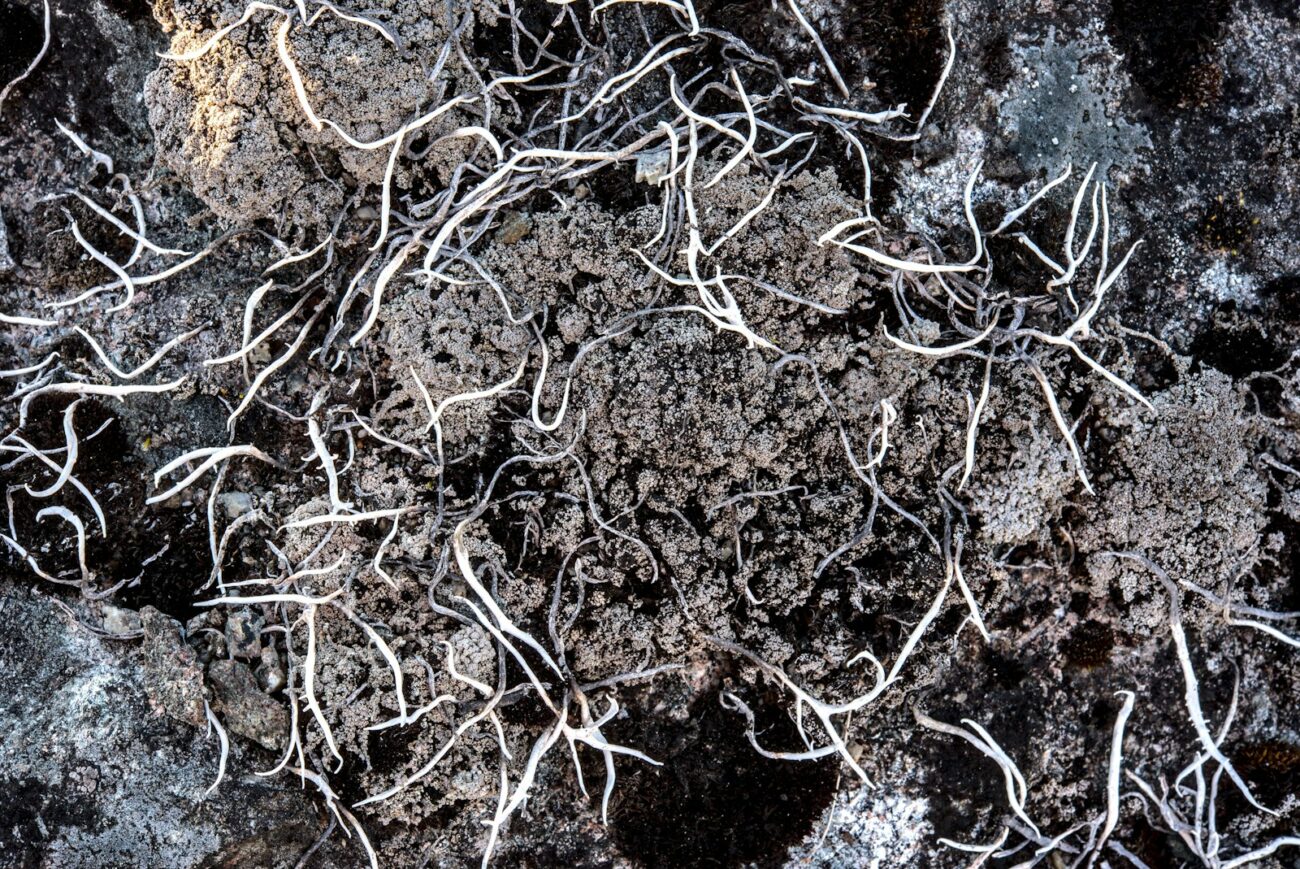
I talk about these a lot because they are so important. Fungi like Glomus intraradices plug into the plant roots. They grow long, white threads called Hyphae. These threads act like an extra set of roots. They can reach water and food in tiny spaces. A thick plant root could never fit into those spots.
3. Pathogens: How to Spot Problems Early
Not all microbes in the soil are beneficial. Some are harmful, and these are called pathogens. When soil is healthy, harmful microbes usually cannot take hold. Problems occur when soil is weakened by too many chemicals, poor drainage, or compaction.
Fungal Problems: The most common issue is root rot. If you pull up a plant and the roots are mushy, brown, or smell bad, a fungus such as Phytophthora may be responsible. You might also notice fuzzy white mold on leaves. This often happens when soil is compacted and cannot breathe properly.
Bacterial and Viral Problems: Bacterial infections often appear as dark, greasy spots on leaves that gradually turn yellow or black. Viral infections are different, they can cause leaves to twist, form bumps, or develop unusual yellow patterns.
The key lesson is that healthy soil protects plants naturally. Beneficial microbes around the roots prevent harmful microbes from spreading and keep plants strong.
4. Nutrient Help and “Soil Breathing”
One of the main parts of my research was soil respiration. This is how we measure the health of the soil. When roots and microbes are active and healthy, they release carbon dioxide (CO2). They “breathe,” similar to animals.
Microbes are essential for plant nutrition. Most minerals in the soil are not directly available to plants. Microbes produce acids that break down organic matter and rocks, turning these materials into nutrients that plants can absorb.
In my research, I found that when the weather warms, soil respiration increases. This means microbes are more active. But if the soil is poor or contains too many chemicals, they cannot function effectively. A healthy soil system relies on a diverse community of microbes to ensure plants have access to nutrients, even when conditions change.
5. Frequently Asked Questions (FAQ)
Q: Can good microbes help myindoor plants?
Yes. Most potting soil you buy in a bag is sterilized. That means it is “dead.” Adding a little bit of organic compost or a microbe booster can stop your plants from getting “stuck.” It helps them grow much faster.
Q: How can I tell if a microbe is harmful or helpful?
You do not need a microscope. Just look at the plant. If the roots are firm, white, and have an “earthy” smell, the microbes are doing great. If the roots are slimy, brown, or smell like rot, the bad microbes have won. Usually, this is because there was no air in the soil.
Q: Do hydroponic plants need microbes?
They can grow without them, but they grow better with them. Adding good bacteria like Bacillus subtilis to the water creates a “shield” around the roots. This stops bad slime from growing and helps the plant take in food better.
Q: Will fertilizer kill my soil microbes?
Chemical fertilizers are mostly salts. In high amounts, they dry out the tiny microbes and kill them. It is like putting salt on a slug. If you use too many chemicals, you kill your “workers.” Then you have to do all the work yourself.
Conclusion: Working with Nature, Not Against It
After months in the field and hours in the lab, one thing is clear: biology is more effective than chemicals. Fertilizers can give plants a quick boost, but they do not improve the long-term health of the soil.
Overuse of chemicals can leave soil compacted and depleted. A biological approach strengthens the soil over time, improving water retention, aeration, and natural protection for plants.
| Feature | The Chemical Way | The Biological Way |
| Feeding | Forced salts | Natural sharing |
| Defense | Toxic sprays | Living shields |
| Soil Health | Becomes “dead” and hard | Becomes a living system |
| Workload | High (you do all the work) | Low (microbes do the work) |
It is important to stop thinking of your garden as something to fix with chemicals. Focus instead on maintaining healthy soil. When the microbial community in the soil is strong, it supports plant growth naturally. Microbes help make water and nutrients available and suppress diseases.
To build a self-sustaining garden system, start with the soil. Provide the microbes with the conditions they need, and they will support your plants effectively.
