

This article was analyzed by Serge, MSc. Leveraging a background in Botany, Plant Physiology, and Biogeochemistry, I provide evidence-based insights into plant health, soil science, and sustainable cultivation. My focus is on delivering scientifically accurate data to help you grow with confidence.

Plants remain fixed in place throughout their lives, exposed to shifting temperatures, changing soil conditions, fluctuating water availability, and atmospheric stress. Despite this apparent vulnerability, plants persist across nearly every terrestrial environment on Earth. Their success lies not in movement, but in adaptation, an ongoing process that integrates structure, physiology, and biochemistry.
Through academic training in plant biochemistry, environmental biology, and biogeochemistry, and through direct participation in field-based environmental research, I came to understand adaptation not as a single response, but as a layered system of adjustments.
Plants respond continuously to their surroundings, often in subtle ways that only become visible when measured carefully over time.
Adaptation as a Biological Process
In plant biology, adaptation refers to traits or responses that improve performance under specific environmental conditions. These traits may be inherited through generations, or they may arise as flexible responses during a plant’s lifetime. Both forms operate together.
Some adaptations are visible, such as leaf shape or growth form. Others occur internally, involving metabolic pathways, enzyme regulation, and chemical signaling. Importantly, adaptation is rarely absolute. A plant is not “adapted” once and for all; instead, it constantly adjusts within the limits set by its genetics and environment.
Environmental factors rarely act alone. Temperature, soil chemistry, moisture, and atmospheric composition interact, and plants respond to these combined influences rather than to single variables in isolation.
Structural Adjustments to Environmental Conditions
Plant structure reflects environmental pressures. Leaves, stems, and roots develop in ways that influence how plants capture resources and avoid stress.
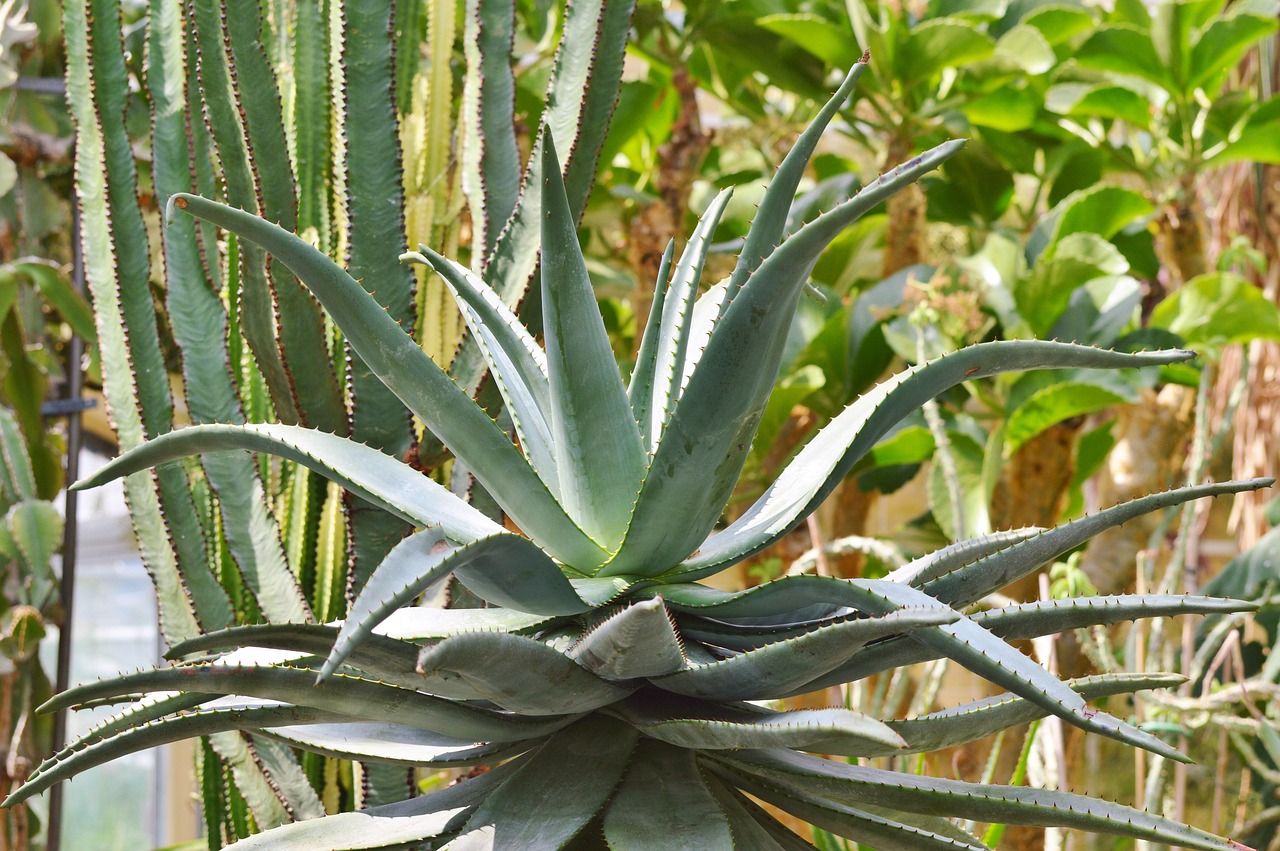
Leaf form varies widely depending on exposure. In dry or windy environments, plants often produce smaller or thicker leaves that reduce water loss. In shaded habitats, broader and thinner leaves increase light capture. Protective surface layers, such as waxy cuticles or dense hairs, further regulate temperature and evaporation.
Roots show equally important variation. During field measurements, excavating root systems revealed how responsive they are to local conditions.
Some plants invest in deep roots to access stable water sources, while others spread dense networks near the soil surface where nutrients are more available. Root architecture often changes during development, responding to soil structure, moisture gradients, and nutrient distribution.
These structural traits do not function independently. Leaf characteristics influence water demand, which in turn affects root growth and soil interactions.
Physiological Flexibility and Resource Regulation
Physiology allows plants to adjust internal processes in response to external conditions.
Photosynthesis, respiration, and water regulation are central to this flexibility. These mechanisms are especially important for coping with stresses such as drought, where the coordination of multiple processes determines survival and growth.
Photosynthesis depends on temperature, light intensity, and gas exchange. Plants regulate the opening of stomata to balance carbon uptake with water conservation. Under stressful conditions, photosynthetic rates may decline, not as a failure, but as a protective response that limits damage to cellular machinery.
Respiration reflects how plants allocate energy. Measurements of stem growth, leaf development, and soil respiration during environmental studies highlighted how temperature influences both above-ground growth and below-ground activity.
Increases in temperature often stimulate growth early in the season, while later responses depend on interactions with other factors, including atmospheric conditions and genotype.
Physiological responses are dynamic. They shift daily and seasonally, responding to environmental cues rather than following fixed patterns.
Biochemical Responses at the Cellular Level
Adaptation is also controlled at the molecular scale. Environmental stress alters metabolic demands, and plants respond by adjusting enzyme activity and biochemical pathways.
Enzymes function optimally within specific temperature and chemical ranges. When conditions change, plants regulate enzyme production or activate alternative pathways to maintain metabolic balance. These adjustments are critical for sustaining growth under fluctuating environments.
Stress conditions can also lead to the accumulation of reactive oxygen species, which damage cellular components. Plants counter this by producing antioxidant compounds and protective proteins. These responses vary among species and even among individuals, reflecting genetic differences in biochemical regulation.
Such molecular responses are rarely visible without measurement, yet they strongly influence how plants cope with environmental variation.
Temperature as a Driver of Adaptation
Temperature influences nearly every aspect of plant function, from enzyme kinetics to seasonal growth patterns. Plants respond to warming or cooling by adjusting growth rates, leaf development, and carbon allocation.
In experimental field conditions, measuring stem height, diameter, leaf number, and leaf area over time showed that temperature effects are often strongest early in the growing season. However, these effects are not uniform. Different genotypes of the same species can respond differently to identical temperature conditions, producing variation in growth form and biomass distribution.
These genotype-dependent responses highlight an important point: adaptation does not occur at the species level alone. Individual genetic backgrounds shape how plants respond to environmental change.
Atmospheric Influences and Plant Responses
Plants are directly exposed to atmospheric conditions, which influence photosynthesis, respiration, and cellular integrity.
Carbon dioxide availability affects carbon assimilation and water-use efficiency. Other atmospheric components, such as ozone, can interfere with photosynthetic processes and induce oxidative stress. Plant responses involve physiological regulation and biochemical defense rather than structural change alone.
Environmental studies measuring growth and soil respiration alongside atmospheric variables show that interactions matter. Temperature can amplify or reduce the effects of atmospheric stressors, demonstrating that plant adaptation emerges from combined influences rather than single causes.
Soil, Microorganisms, and Below-Ground Adaptation
Plant adaptation cannot be understood without considering the soil environment. Nutrient availability depends on chemical form, microbial activity, and water movement, not simply on total nutrient content.
Roots release compounds into the soil that influence microbial communities and mineral solubility. Mycorrhizal fungi extend the effective root system, improving access to nutrients and water. Bacteria transform nutrients into forms plants can absorb.
Measuring soil respiration alongside plant growth revealed how below-ground processes respond to environmental conditions. Changes in soil carbon dioxide efflux reflect both root activity and microbial metabolism, linking plant adaptation to ecosystem-level processes.
Variation as a Source of Resilience
Even within a single species, plants rarely respond identically to environmental conditions. Differences in growth, leaf development, and below-ground activity reflect genetic variation and local context.
This variation is not noise; it is a source of resilience. When environments change, some individuals perform better than others, allowing populations and ecosystems to persist.
Conclusion
Plant adaptation is not a single mechanism but a coordinated system of structural traits, physiological regulation, and biochemical control. These processes operate across scales, from enzymes to ecosystems, allowing plants to persist in diverse and changing environments.
Close observation, careful measurement, and long-term study reveal that plants are not passive organisms shaped solely by their surroundings. They are responsive systems, continuously adjusting to the conditions they encounter.
FAQs
1. Do plants actively sense their environment?
Yes. Plants detect changes in light, temperature, moisture, and chemical signals and adjust growth and metabolism accordingly.
2. Are adaptations always visible?
No. Many important adaptations occur at the physiological or biochemical level and require measurement to detect.
3. Can plants adapt within a single growing season?
Yes. Short-term physiological and biochemical responses allow plants to adjust during their lifetime.
4. Why do individuals of the same species respond differently?
Genetic variation and local environmental conditions influence how plants respond to stress.
5. Are plant adaptations isolated from ecosystem processes?
No. Adaptation involves interactions with soil chemistry, microbes, and atmospheric conditions.
