


This article was analyzed by Serge, MSc. Leveraging a background in Botany, Plant Physiology, and Biogeochemistry, I provide evidence-based insights into plant health, soil science, and sustainable cultivation. My focus is on delivering scientifically accurate data to help you grow with confidence.

When I first started studying plants, I thought nutrient uptake would be a straightforward topic. Nutrients go in through the roots, move upward, and that’s that.
But the longer I studied plant biochemistry, environmental biology, and biogeochemistry, the more I realized that plants don’t follow simple rules. They respond, negotiate, adjust, and sometimes struggle, quietly, underground, and often out of sight.
What follows isn’t a step‑by‑step explanation, but rather how I’ve come to understand plant nutrition by moving between classrooms, laboratories, and natural landscapes.
What Plants Actually Need.
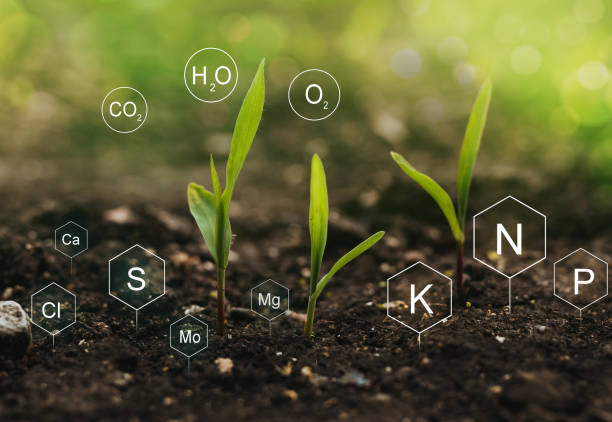
Early on, nutrients were presented as lists. Nitrogen. Phosphorus. Potassium. Calcium. Magnesium. Sulfur. Then a second list, iron, zinc, manganese, copper, and others in much smaller amounts. On paper, it looked neat. In reality, it never was.
I noticed quickly that plants don’t respond to nutrients in isolation. Nitrogen might be abundant, but without enough phosphorus, growth still stalls.
Magnesium can be present, but if soil chemistry locks it up, chlorophyll production suffers anyway. Nutrients only matter if they are available, balanced, and accessible at the right moment.
Over time, it became clear that:
– Macronutrients shape overall growth and structure,
– Micronutrients quietly control enzymes and metabolic reactions,
– Availability matters more than total quantity.
Plants don’t “need” nutrients in the abstract. They need them in specific chemical forms, at specific times, and in relation to everything else happening around their roots.
What stood out to me: nutrient limitation is often subtle, not dramatic.

Roots: More Than Anchors in the Soil
If there is one thing fieldwork changed for me, it was how I saw roots. Digging plants out of the ground, carefully, slowly, you begin to notice how active roots really are.
Root hairs, for example, are easy to overlook. Under magnification, they are everywhere, increasing contact with soil particles and thin films of water where dissolved nutrients reside. But roots don’t just absorb passively.
They release compounds into the soil, organic acids, sugars, signaling molecules, that alter the chemistry and biology around them.
In some soils, I observed plants growing reasonably well despite low nutrient content. The explanation was almost always belowground:
Fungal networks extending far beyond the roots
Bacterial communities transforming unavailable nutrients
Root exudates changing mineral solubility
Legumes made this especially obvious. Their association with nitrogen‑fixing bacteria isn’t just helpful—it reshapes the entire nutrient economy of the surrounding soil.
What became clear: roots are active participants in their environment, not just intake pipes.
Nutrients in Soil Are Not Waiting to Be Taken
One misconception I had early on was imagining soil nutrients as readily available, just sitting there. In reality, most nutrients are locked away.
Nitrogen may exist in organic matter, unavailable until microbes break it down. Phosphorus often binds tightly to minerals. Iron can be abundant and still inaccessible depending on soil pH and oxygen levels. What plants absorb is only a fraction of what’s actually present.
Through research, I learned that nutrient uptake depends heavily on:
Soil chemistry (especially pH and redox conditions)
Microbial activity
Water movement through soil pores
Plants evolved transport proteins that selectively pull ions into root cells. Some of these processes require energy. Others depend on gradients that shift throughout the day. None of it is static.
What surprised me: soil richness does not guarantee plant nutrition.
Inside the Plant: A Constant Redistribution
Once nutrients cross into the plant, their journey is far from over.
Watching tracer studies in lab settings changed how I understood internal transport. Water and dissolved minerals move upward through xylem, driven largely by evaporation from leaves.
It’s an elegant system, but also a fragile one, shaped by environmental conditions. Meanwhile, the phloem moves sugars and redistributes certain nutrients, sometimes from old leaves to new ones, sometimes toward developing seeds.
Not all nutrients move freely. Calcium, for instance, tends to stay where it first arrives. Nitrogen, on the other hand, is constantly relocated. This difference explains many growth patterns I saw in both wild and cultivated plants.
What stayed with me: plants are constantly reallocating resources, even when they look still.
Plants Don’t Do This Alone
The longer I studied nutrient cycles, the harder it became to draw clear lines between plants and their surroundings. Soil microbes are everywhere, and they are busy.
Decomposers release nutrients from dead organic matter. Mycorrhizal fungi trade minerals for carbon. Bacteria alter nitrogen chemistry in ways plants cannot manage themselves. In many ecosystems, plants would struggle, or fail, without these invisible partners.
Environmental conditions layer on top of this:
Moisture affects nutrient movement
Temperature alters microbial activity
Soil structure controls root access
I saw this most clearly in nutrient‑poor environments, where plant survival depended less on raw resources and more on cooperation and efficiency.
What this taught me: nutrient uptake is an ecosystem process, not a plant-only process.
Recycling as a Survival Strategy
One of the most underappreciated aspects of plant nutrition is recycling. Plants don’t waste what they’ve already absorbed.
As leaves age, valuable nutrients are withdrawn and sent elsewhere. Seeds often receive a concentrated supply reclaimed from older tissues. In environments where nutrients are scarce, this internal recycling can mean the difference between persistence and decline.
Watching seasonal changes made this visible. What looks like decline in autumn is often redistribution, not loss.
Conclusion
Over years of study and observation, my understanding of how plants get nutrients shifted from something mechanical to something relational. Plants absorb nutrients, yes, but they also modify soils, engage microbes, redistribute internally, and respond continuously to changing conditions.
The quiet complexity beneath our feet is easy to miss. But once you start paying attention, it becomes difficult to see plants as passive organisms ever again.
FAQs
1. Do plants create nutrients themselves?
Plants create organic compounds using carbon, water, and energy from light, but mineral nutrients must come from their environment.
2. Why do some soils seem rich but plants still struggle?
Nutrients may be present but chemically unavailable due to soil conditions or lack of microbial activity.
3. Are roots the only way plants obtain nutrients?
Roots are primary, but leaves can absorb small amounts under certain conditions.
4. Why are fungi so important to plants?
Fungi greatly extend nutrient access and help mobilize elements plants cannot reach alone.
5. Do plants reuse nutrients internally?
Yes. Many nutrients are relocated from older tissues to support new growth or reproduction.
