


This article was analyzed by Serge, MSc. Leveraging a background in Botany, Plant Physiology, and Biogeochemistry, I provide evidence-based insights into plant health, soil science, and sustainable cultivation. My focus is on delivering scientifically accurate data to help you grow with confidence.

Every time I look at a fern (Nephrolepis exaltata) in the forest or a pothos (Epipremnum aureum) on my windowsill, I wonder what keeps it alive. Inside every plant cell, tiny structures work quietly to provide energy. Among them, mitochondria stand out as the powerhouses of life.
Most people think mitochondria are only in animals. But plants have them too. In fact, plants rely on mitochondria for energy, growth, and survival. They help plants respond to changes in the environment, like light levels, temperature, or water availability.
During my studies in plant biology, biochemistry, and environmental biology, this aspect of plant mitochondria really caught my attention. I was fascinated by how these tiny organelles control energy in every cell, day and night.
In this post, we will explore what mitochondria are, how they work in plant cells, and how they interact with chloroplasts.
We will look at how they produce energy step by step, their role in nature and indoor plants, and some special features that make plant mitochondria unique. Finally, we will answer common questions about these tiny engines of life.

What Are Plant Mitochondria?
Mitochondria are small, oval-shaped structures found in the cytoplasm of plant cells. They have two membranes: an outer membrane that protects the organelle, and an inner membrane that folds into cristae, increasing the surface area for chemical reactions. Inside the inner membrane is the matrix, a jelly-like space containing enzymes, mitochondrial DNA, and ribosomes.
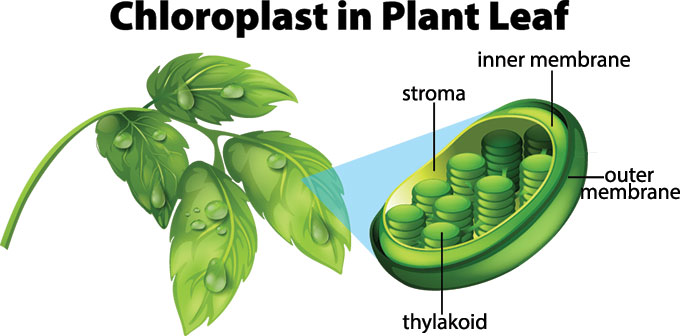
Mitochondria are different from chloroplasts. Chloroplasts capture sunlight and produce sugars, while mitochondria break down those sugars to release energy. In plant cells, mitochondria and chloroplasts work together to balance energy production, especially in leaves exposed to light.
During the day, chloroplasts produce sugars through photosynthesis. When light is absent, mitochondria take over, converting stored sugars into energy that the cell can use. This coordination ensures that plant cells always have a supply of energy for growth and other functions.
What Do Mitochondria Do?
The main job of mitochondria is to make ATP, or adenosine triphosphate. ATP is the energy currency of the cell. Plants use it to grow, move nutrients, and respond to stress.
Mitochondria also:
– Process sugars: They turn sugars made by chloroplasts into energy and other useful molecules.
– Support respiration: Through the TCA (Krebs) cycle, they release energy from pyruvate and other molecules.
– Signal stress responses: They produce reactive oxygen species (ROS) that help the plant respond to changes in its environment.
– Help nitrogen metabolism: In nitrogen-fixing plants like alfalfa (Medicago sativa) and common bean (Phaseolus vulgaris), mitochondria provide energy to root nodules where nitrogen is converted into usable forms.
Think of mitochondria as multitasking energy factories. They do more than make ATP. They help plants adapt, grow, and survive in challenging conditions.
How Plant Mitochondria Make Energy
Energy production is a step-by-step journey. Each step happens inside or near mitochondria.
Step 1: Glycolysis
This happens in the cytosol, outside the mitochondria. Glucose is broken into pyruvate, releasing a small amount of ATP and NADH. Pyruvate then moves into the mitochondria for the main energy conversion.
Step 2: Pyruvate Oxidation
Inside the mitochondrial matrix, pyruvate is converted into acetyl-CoA. This produces NADH and releases carbon dioxide. This step links cytosolic metabolism to the mitochondrial powerhouse.
Step 3: The TCA Cycle
Acetyl-CoA enters the TCA cycle. This is where most of the energy carriers, NADH and FADH2, are produced. A small amount of ATP is also made, and carbon dioxide is released.
Step 4: Electron Transport and ATP Synthesis
Electrons from NADH and FADH2 travel along the electron transport chain in the inner mitochondrial membrane. This creates a proton gradient. ATP synthase uses the gradient to produce ATP. Oxygen combines with electrons to form water.
This process turns sugar into energy that fuels all cell activities, from root growth in maize (Zea mays) to leaf expansion in fiddle-leaf figs (Ficus lyrata). Without mitochondria, plants could not grow, repair tissues, or respond to changes in their environment.
Mitochondria and Chloroplasts: Working Together
Mitochondria do not work alone. In photosynthetic tissues, they coordinate closely with chloroplasts, forming a dynamic partnership. Chloroplasts capture sunlight and produce sugars, while mitochondria break down sugars into ATP, supplying energy for the plant’s growth and daily functions.
Together, they maintain a balance between energy production and storage, making sure energy is available when needed.
Excess electrons produced during photosynthesis can be harmful. Mitochondria help manage these electrons and prevent damage, acting as regulators that keep cells stable. This cooperation allows plants to adapt to changing light conditions, whether in low-light environments or under full sunlight.
During the day, chloroplasts drive photosynthesis, producing sugars. When light decreases, mitochondria take over, making ATP from stored sugars. This cycle of energy production and storage continues continuously, sustaining the plant’s life and supporting its growth.
Mitochondria in Nature and Indoors
In Nature
In forests, light is often limited. Ferns (Nephrolepis exaltata) and understory shrubs rely on mitochondria to keep growing when photosynthesis is slow. In arid regions, species like Acacia nilotica depend on mitochondria to extract energy from stored carbohydrates during dry periods.
Nitrogen-fixing legumes such as Medicago sativa and Phaseolus vulgaris show another important role. Their root nodules need lots of energy to convert atmospheric nitrogen into usable forms. Mitochondria supply ATP for this process, helping the plant and improving soil fertility.
Indoors
Even houseplants rely on mitochondria. In low-light rooms, when photosynthesis slows, mitochondria take over. A pothos (Epipremnum aureum) growing on a shelf can continue to thrive because its mitochondria keep producing energy. Snake plants (Sansevieria trifasciata) and ferns (Nephrolepis exaltata) use mitochondria to survive long periods without direct sunlight.
Observing indoor plants is like watching mitochondria at work. When leaves grow, fronds unfurl, or roots expand in a pot, it is mitochondria supplying the energy needed.
Special Features of Plant Mitochondria
Plant mitochondria have some unique traits that make them different from those in animals:
– Alternative pathways: Some can bypass parts of the electron transport chain. This helps prevent damage from reactive oxygen species (ROS) during stress.
– Dynamic shapes: Plant mitochondria can fuse, divide, and change shape to meet energy demands.
– Complex DNA: Plant mitochondrial DNA is larger and more intricate than animal mitochondria. It contains repeated sequences that help regulate their functions.
These features make plant mitochondria highly flexible. They can adapt to changing energy needs and environmental conditions, ensuring plant survival in diverse habitats.
Frequently Asked Questions
1. Are mitochondria in all plant cells?
Yes. They are in leaves, roots, stems, and reproductive tissues. Cells that need more energy, like growing root tips, have more mitochondria.
2. How do mitochondria differ from chloroplasts?
Chloroplasts make sugars using sunlight. Mitochondria break down sugars to make ATP. Both have DNA and membranes, but their roles are different and complementary.
3. Can mitochondria work without oxygen?
Mostly no. Oxygen is needed for the electron transport chain. Without oxygen, plants can use anaerobic pathways, but these are much less efficient.
4. How do mitochondria help with stress?
They produce ROS that signal cells to respond. They also adjust energy production to maintain stability during environmental changes.
5. Do indoor plants rely more on mitochondria?
Yes. In low-light conditions, mitochondria take on a bigger role to supply energy when photosynthesis is limited.
6. How do mitochondria affect plant growth?
They provide energy for cell division, elongation, and differentiation. Healthy mitochondria support root growth, leaf development, and overall plant health.
Conclusion
Mitochondria are small, but they play an essential role in every plant cell. They take the sugars produced by chloroplasts and turn them into energy the plant can use for growth, root development, and leaf formation.
They also help plants respond to changes in light, water, and temperature, both outdoors and indoors. Their ability to adapt, manage stress, and adjust energy production makes them crucial for the plant’s survival and development.
Understanding how mitochondria work shows how plants manage energy and stay active throughout their life cycle.
